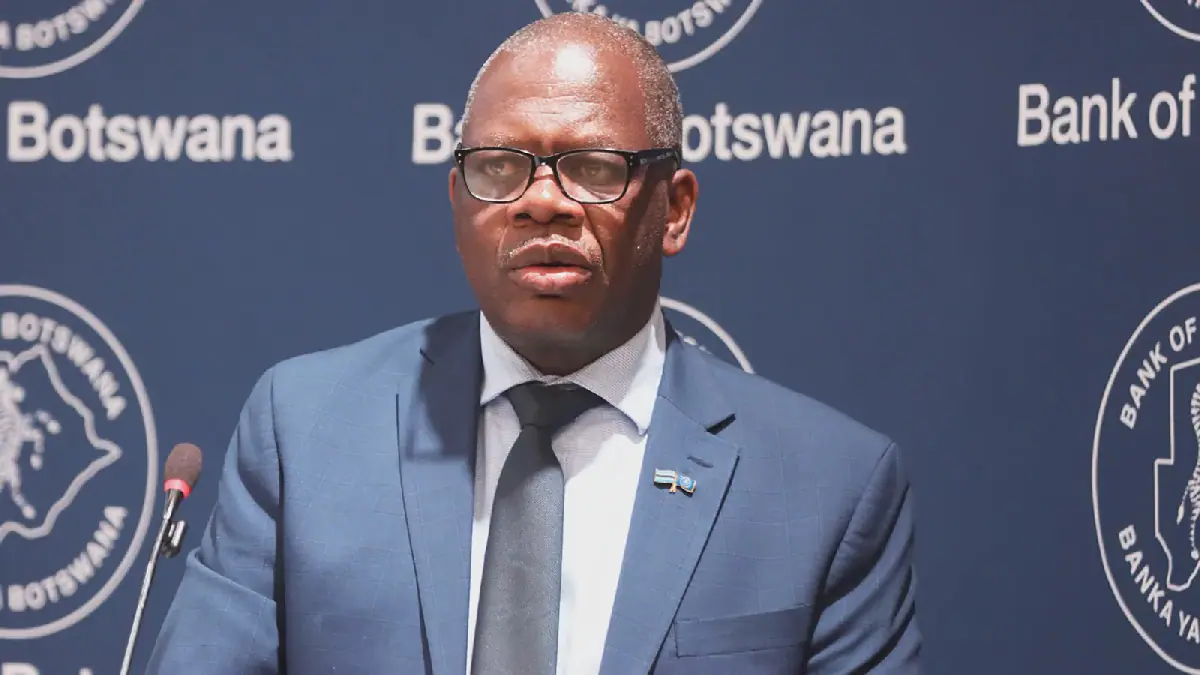
The Bank of Botswana has decided to maintain its main interest rate at 5.5 percent, a move that reflects the central bank's cautious approach to balancing the need to control inflation with the goal of supporting economic growth. This decision, made during the Monetary Policy Committee meeting, signals that policymakers are prepared to keep borrowing costs steady for now, rather than risking a fragile economic recovery. The committee, led by Governor Lesego C. Moseki, voted unanimously to keep the Monetary Policy Rate unchanged.
Inflation in Botswana has shown signs of easing, dropping to 7.8 percent in September from 9.3 percent in the previous month. However, this decline is partly attributed to a statistical effect related to fuel price adjustments last year. Underlying inflation remains a concern, with prices still above the Bank's target range of 3 to 6 percent. The committee expects inflation to stay elevated for much of the coming year, driven by rising fuel and electricity costs, and forecasts an average inflation rate of 8.1 percent for 2026.
The Bank of Botswana's decision to hold interest rates steady is also influenced by its assessment of economic growth. The economy grew by 3.7 percent in the year to June 2026, marking an improvement from the 2.9 percent contraction in the same period the previous year. Mining, particularly the diamond trade, has been a key driver of this growth. However, the committee described growth as "weak," constrained by global demand, slow economic transformation, and low productivity.
A significant aspect of the Bank's policy adjustment was not the interest rate decision itself but the removal of the moratorium on commercial banks' prime lending rates. This move allows lenders to set their own interest rates for credit, reflecting the Bank's confidence in improving liquidity and competition in the financial sector. The expectation is that this will lead to lower prime rates, supporting economic activity.
The global economic environment presents challenges for Botswana, with the International Monetary Fund revising its global growth forecast downward to 3.1 percent for this year. Factors such as geopolitical tensions, high energy prices, and trade policy uncertainties could impact the diamond market and, by extension, Botswana's economy. The mining sector, crucial for the country's treasury, faces structural challenges that need to be addressed.
The Bank of Botswana's approach is characterized by "disciplined patience" and a data-driven strategy. Policymakers believe that current measures have helped ease liquidity, improve policy transmission, and stabilize the foreign exchange market. The committee will reconvene on December 3 for its final meeting of the year, which will provide further insights into the inflation trajectory and economic outlook.
Looking ahead, the Bank of Botswana faces the challenge of navigating inflation risks while supporting economic growth. With inflation expected to remain above target for some time, the central bank's cautious approach aims to anchor expectations and ensure that the economic recovery gains momentum. The lifting of the moratorium on prime lending rates is a step towards enhancing market-driven solutions in the financial sector.
Key points
- The Bank of Botswana maintains its interest rate at 5.5 percent amid inflation concerns.
- Inflation eased to 7.8 percent in September but remains above the target range.
- The central bank removed the moratorium on commercial banks' prime lending rates to enhance market competition.