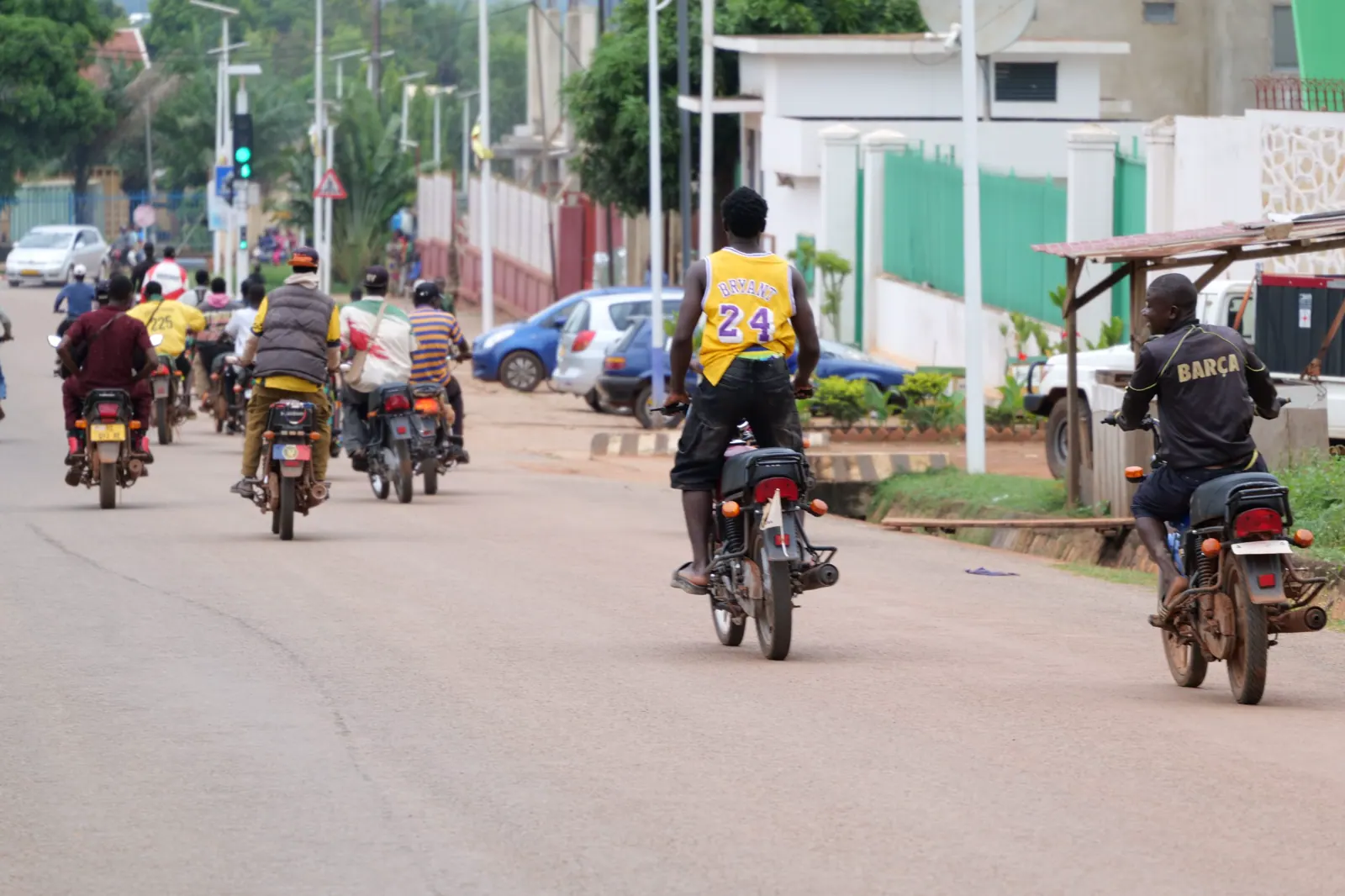
The Central African Republic's capital, Bangui, was remarkably calm on Monday morning following an appeal for a "dead city" strike by a consortium of civil society organizations. Although traffic was significantly reduced and motorcycles were scarce in the streets, a substantial number of businesses opened by midday. However, attendance was extremely limited, and the city operated at a slow pace. Passersby were fewer than usual, with only a few high school students on their way back home adding some life to the sidewalks.
A large crowd had gathered at the Martyrs' gas station, where taxis and motorcycle taxis were waiting impatiently to receive free fuel offered by the government. Yvon Bounjou-Poma, a representative of the MCU's sixth arrondissement sub-federation, stated that the government's gesture aimed to ensure normal activities. The authorities had made arrangements to facilitate the distribution of fuel without difficulties. This move was intended to encourage economic activity and minimize disruptions.
However, some motorcycle taxi drivers expressed disappointment at not receiving the promised fuel. One driver mentioned that they had been informed about the free fuel but questioned the sustainability of this initiative. He emphasized that if the government could provide 2 liters of fuel daily, they would continue to collect it; otherwise, they would no longer appreciate the gesture. This mixed response highlighted the complexities of implementing such measures during times of tension.
Despite the slow pace of activities in the city center, businesses kept their doors open. Nicolas, a chicken vendor, confirmed the low attendance, stating that the city center was not bustling as usual. With few clients visiting, he decided to return the chickens to their enclosure and go home. The reduced foot traffic was a clear indication of the impact of the "dead city" call.
At KM5, Bangui's largest market, businesses were operating by the end of the day, but the attendance was significantly lower than on ordinary days. Some shops had chosen to remain closed, while the circulation was mainly dominated by motorcycles and personal vehicles. The atmosphere was subdued, reflecting the cautious approach adopted by the city's residents in response to the strike call.
The partial observation of the "dead city" strike highlighted the divisions within the civil society and political actors in the Central African Republic. While some organizations and individuals supported the strike, others chose not to participate or expressed mixed feelings about its effectiveness. The varied responses underscored the complexities of the situation and the challenges faced by those calling for action.
As the situation in Bangui continues to evolve, residents and authorities alike are navigating the delicate balance between expressing grievances and maintaining economic stability. The government's fuel distribution effort was a step towards mitigating the impact of the strike, but the overall effectiveness of this measure and the future of the "dead city" initiative remain to be seen.
Key points
- The "dead city" strike had a mixed impact on Bangui, with reduced traffic and business activity but no complete shutdown.
- The government's offer of free fuel to drivers was met with both appreciation and skepticism.
- The strike highlighted divisions within the civil society and political actors in the Central African Republic.