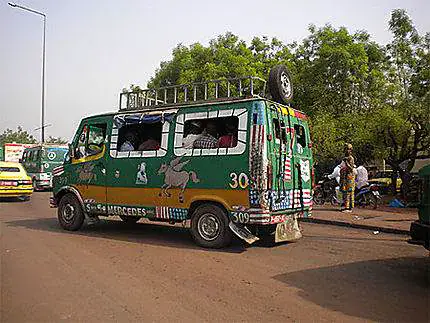
Bamako, the capital city of Mali, faces significant challenges in its transportation system. The city's residents often rely on improvisation to get around, with a mix of Sotrama, yellow taxis, moto-taxis, and private vehicles providing the bulk of transportation services. However, this informal system leads to congestion, anarchic stops, disorganized competition, and safety concerns for users. With a population of several million, Bamako cannot sustain such a disorganized system.
In contrast, other major African cities like Dakar have developed public bus networks and mass transportation systems. Bamako does not have to wait for a tramway to improve its transportation system. Plans for an organized system have been proposed before. In March 2018, Turkish President Recep Tayyip Erdoğan suggested a Metrobus project to modernize Bamako's circulation during his visit to Mali. However, the project was not implemented.
Recently, Mali signed a contract with Russian manufacturer KAMAZ for 350 vehicles, worth over 30 billion CFA francs. The fleet includes urban buses, with plans for local maintenance, training, and assembly. This investment presents an opportunity to create a coherent network with identified lines, schedules, designated stops, known fares, and connections to peri-urban areas. Private transporters can still play a role, but within an organized framework.
The current transportation system in Bamako is characterized by a lack of coordination and infrastructure. With multiple types of vehicles operating without a unified plan, the city's residents face significant challenges in getting around. The proposed investments in new vehicles and infrastructure could be a step towards addressing these challenges.
A modern capital city like Bamako requires a well-organized transportation system. This is essential for the city's development and the well-being of its residents. The transportation system is not a secondary service, but a critical infrastructure that underpins the city's future. It affects how residents work, study, access healthcare, and travel.
The Malian government and local authorities have a crucial role to play in developing a coherent transportation plan. This plan should prioritize the needs of residents, ensure safety, and reduce congestion. By working together with private transporters and investing in new infrastructure, Bamako can create a modern and efficient transportation system.
The future of Bamako depends on its ability to provide a reliable and efficient transportation system. With a growing population and increasing demands on the city's infrastructure, the need for a well-planned transportation system has never been more pressing. By seizing the opportunity presented by the new investments, Bamako can take a significant step towards becoming a modern and sustainable capital city.
Key points
- The Malian government has signed a contract with KAMAZ for 350 vehicles to modernize the transportation system in Bamako.
- A coherent transportation plan is essential for Bamako's development and the well-being of its residents.
- The city needs a well-organized transportation system to address congestion, safety concerns, and disorganized competition.