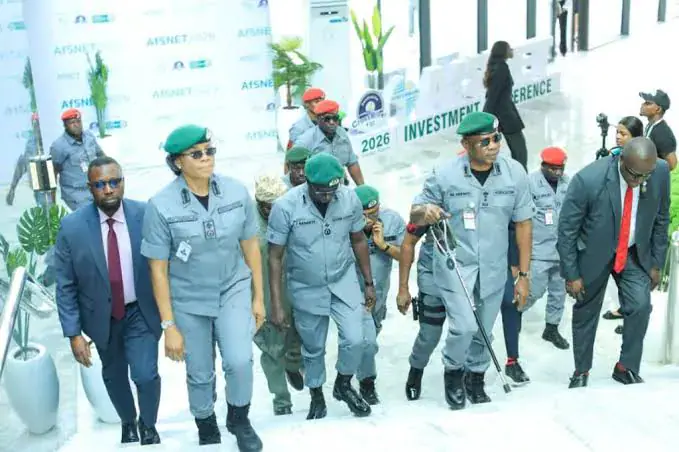
The Comptroller-General of Customs, Bashir Adewale Adeniyi, has announced that the proposed Bakassi Deep Sea Port and planned modernisation of strategic border corridors will unlock Cross River State's economic potential. Speaking at the 6th AfSNET Investment Conference 2026 in Calabar, Cross River State, Adeniyi expressed optimism that these developments will transform the state's economic fortunes and strengthen its participation in international trade. He noted that the state is on the path to reclaiming its historic position as one of Nigeria's foremost commercial hubs.
Adeniyi highlighted Calabar's rich commercial heritage, recalling that the city once hosted Nigeria's busiest Customs port, with a trading history dating back approximately a century. He also noted that Nigeria's first indigenous and longest-serving Comptroller-General of Customs hailed from Calabar, underscoring the state's historic contribution to the Service and the country's commercial development. The Customs boss described the groundbreaking ceremony for the proposed Bakassi Deep Sea Port as a significant milestone.
The proposed Bakassi Deep Sea Port, alongside the modernisation of strategic border corridors, is expected to create opportunities for investment, expand exports, generate employment, and stimulate economic activities across the region. However, Adeniyi stressed that infrastructure development must be accompanied by operational reforms, noting that constructing ports and border facilities alone will not eliminate existing trade bottlenecks. He emphasised the need for a comprehensive approach to address these challenges.
To improve cargo clearance and reduce delays, the Nigeria Customs Service has conducted a Time Release Study to identify areas requiring improvement. Adeniyi also disclosed that establishing effective One-Stop Border Posts at the Mfum-Ekok and Seme borders is critical to improving cross-border trade, eliminating duplicate examinations, and reducing cargo clearance delays. This initiative could increase trade volumes by as much as 70 per cent, according to him.
Modernising the border corridors will require supporting infrastructure, including warehouses, storage facilities, weighbridges, and scanners, to improve cargo handling, operational efficiency, and border management. Adeniyi acknowledged the support of the African Export-Import Bank (Afreximbank) in advancing trade development and modernisation initiatives. He stressed the importance of stronger partnerships among government institutions, financial organisations, and private-sector operators.
Adeniyi called for greater private-sector participation in developing trade infrastructure and unlocking investment opportunities, noting that government alone cannot provide all the resources required to create sustainable wealth. He also emphasised that Customs administrations must strike a balance between facilitating legitimate trade and enforcing regulations to prevent smuggling and other illegal activities.
With the right partnerships, investments, and implementation, Adeniyi expressed confidence that the proposed Bakassi Deep Sea Port and border modernisation will have a transformative impact on Cross River State's economy. The developments are expected to reposition the state as a major gateway for international trade, creating new opportunities for economic growth and development in the region.
Key points
- The proposed Bakassi Deep Sea Port and border modernisation aim to unlock Cross River State's economic potential and reposition it as a major trade hub.
- The developments are expected to create opportunities for investment, expand exports, generate employment, and stimulate economic activities across the region.
- Effective implementation of the One-Stop Border Posts initiative could increase trade volumes by as much as 70 per cent.