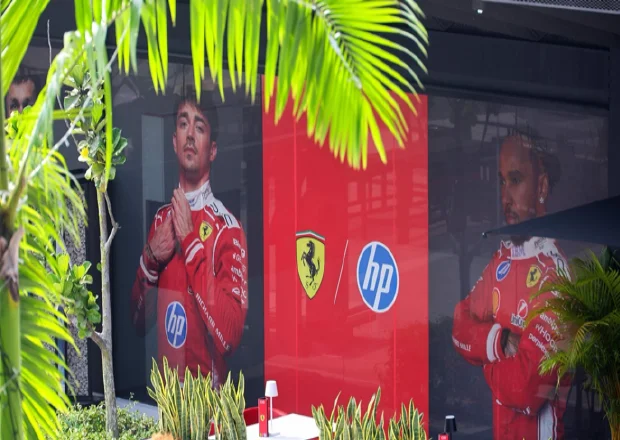
The Bahrain Grand Prix, scheduled to take place in Malaysia this weekend, has been officially designated as a heat-hazard race. This marks the third instance of such a declaration this year. The designation is given to events where temperatures are expected to exceed 31C during the race. The Sepang track, located near Malaysia's capital Kuala Lumpur, is known for being one of the most demanding circuits for drivers due to its proximity to the equator.
The forecasted temperatures for the race weekend are expected to range from 31-33C, accompanied by high humidity levels and a chance of rain each day. The event is being held in Malaysia as a substitute for the original April date, which was postponed due to the conflict in the Middle East. Various Bahrain-related activities are planned throughout the weekend to highlight the Gulf kingdom's involvement in the event.
The heat-hazard designation allows drivers to utilize an in-car cooling system that circulates cooled liquid through a fireproof top worn under their overalls. This system is not mandatory; however, drivers who choose not to use it must carry 5kg of ballast in their car to prevent any competitive advantage. This ruling follows the Austrian and Italian Grands Prix, which were also declared heat hazards earlier this year.
The heat-hazard designation was first introduced last year, after the development of the cooling vest technology. Some drivers prefer not to use the cooling kit due to discomfort and issues with the coolant depleting before the grand prix is completed. In such cases, the liquid reaches car temperature, which is significantly higher than ambient temperature.
Temperatures inside the cockpit of an F1 car can exceed 40C, and drivers wear multiple layers of fireproof clothing, including a balaclava and helmet, making overheating a serious concern. The Sepang track's demanding conditions, combined with the heat-hazard designation, are expected to pose a significant challenge to drivers during the Bahrain Grand Prix.
The Bahrain Grand Prix in Malaysia is set to take place this weekend, with drivers facing a challenging event due to the heat and humidity. The event's organizers have planned various activities to emphasize Bahrain's role in the Grand Prix. The drivers will have to adapt to the demanding conditions and make strategic decisions regarding the use of the cooling kit.
The use of the cooling kit or the 5kg ballast will be crucial for drivers to manage the heat and humidity during the race. The teams and drivers will have to carefully consider their strategies to ensure optimal performance and safety.
Key points
- The Bahrain Grand Prix in Malaysia has been declared a heat-hazard race due to forecasted temperatures of 31-33C and high humidity.
- Drivers can use an in-car cooling system that circulates cooled liquid through a fireproof top worn under their overalls.
- The heat-hazard designation was first introduced last year, after the development of the cooling vest technology.