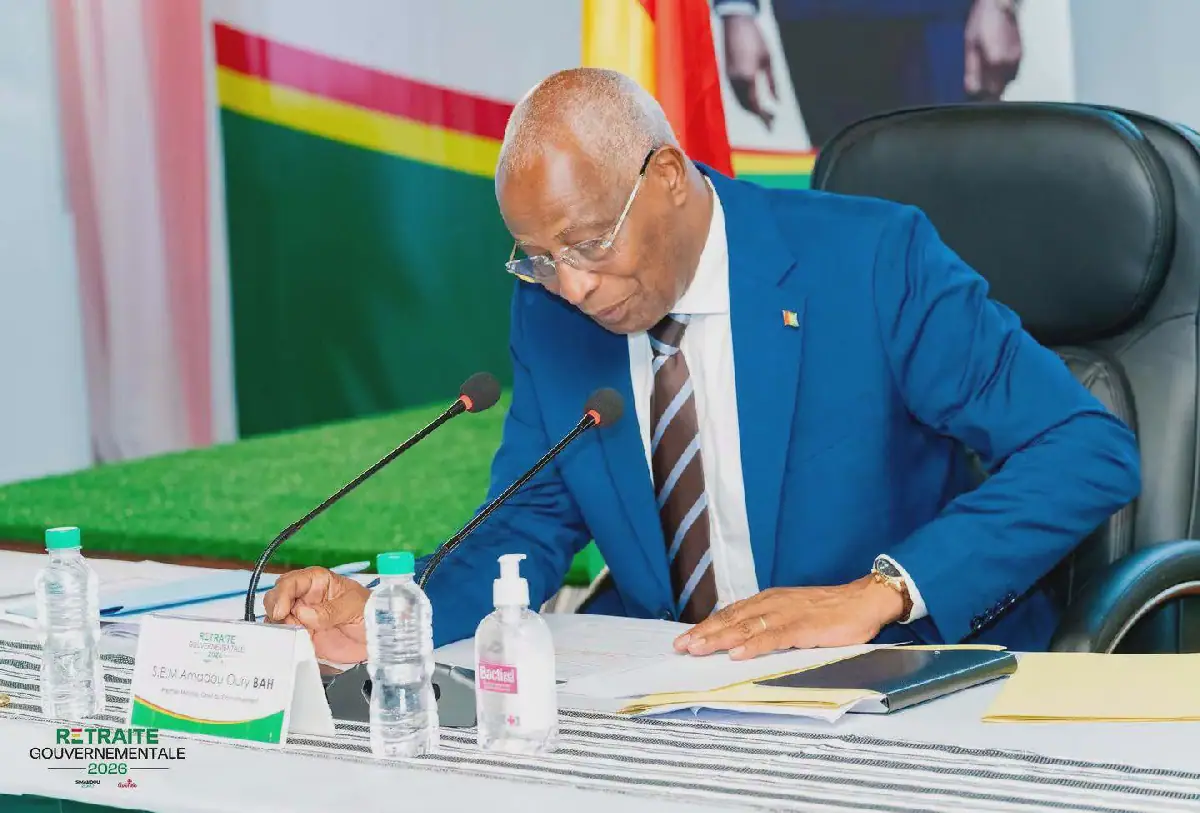
Guinea's Prime Minister Bah Oury has introduced the 'Mamadi Doumbouya Doctrine', a guiding framework for the country's governance. The doctrine emphasizes national sovereignty, prioritizing national interests, and maintaining neutrality in global power rivalries. This development follows a government retreat held from November 22 to 24 in Forécariah. The doctrine aims to provide a stable foundation for decision-making and ensure a unified approach to governance.
The 'Mamadi Doumbouya Doctrine' is built on Guinea's historical and cultural heritage, drawing from the country's four natural regions. According to Bah Oury, the Fouta Djalon region has bequeathed Guinea with the authority of knowledge and the art of institutions. The doctrine also reflects the influences of the Haute Guinée, Basse Guinée, and Guinée forestière regions. By embracing this shared heritage, the government seeks to foster a sense of national unity and purpose.
A key component of the doctrine is the implementation of 'letters of mission', which will outline specific commitments for each government department starting from 2027. Bah Oury has tasked the Secretariat General du Gouvernement and his cabinet with monitoring the progress and addressing any obstacles. He emphasized his personal commitment to resolving any issues that may arise, ensuring the effective implementation of the doctrine.
The Prime Minister highlighted the importance of a unified government vision, stating that a cohesive team and shared working methods are insufficient without a lasting vision to guide public decisions. The 'Mamadi Doumbouya Doctrine' is intended to serve as this guiding vision, providing a stable foundation for governance. Bah Oury expressed his hope that the doctrine will help Guinea navigate its development path while maintaining its sovereignty and independence.
The doctrine is also linked to Guinea's historical choices, including the country's decision to gain independence in 1958. Bah Oury noted that the nation's history and cultural heritage have contributed to its current identity and must serve as the foundation for future decision-making. By embracing this shared memory, the government aims to develop a doctrine that will guide its strategic choices and ensure national stability.
The 'Mamadi Doumbouya Doctrine' is aligned with Guinea's development ambitions, including the Programme Simandou 2040. Bah Oury emphasized that the doctrine will help mobilize national resources for economic transformation and human development. The Prime Minister presented the doctrine as a common framework for all national actors, from government members to citizens, to guide their actions and decisions.
The launch of the 'Mamadi Doumbouya Doctrine' marks a significant milestone in Guinea's governance. Bah Oury declared the government retreat closed and officially launched the doctrine, which is expected to guide the country's development path. The Prime Minister expressed his confidence that the doctrine will provide a sense of national pride and direction for Guinea's future.
Key points
- The 'Mamadi Doumbouya Doctrine' emphasizes national sovereignty and neutrality in global power rivalries.
- The doctrine draws from Guinea's historical and cultural heritage, including the influences of its four natural regions.
- The implementation of 'letters of mission' will outline specific commitments for each government department starting from 2027.