A Non-Governmental Organisation (NGO), Badagry Heritage Memory Initiative (BHMI), has urged the Lagos State Government, Badagry Local Government, and agencies in the tourism sector to establish a coordinated Badagry Heritage Development and Conservation Framework. This framework aims to conserve and develop the cultural and historical heritage of Badagry. The President of BHMI, Chief Hunkanlin Ijinla, made this appeal in a statement.
According to Ijinla, various stakeholders should be involved in the development of the framework, including traditional institutions and royal authorities of Badagry, National Commission for Museums and Monuments (NCMM), Nigeria National Commission for UNESCO, and relevant Federal Government ministries, departments, and agencies. Other stakeholders include Lagos State tourism and cultural institutions, tour guides, tourism practitioners, heritage professionals, historians, community leaders, community associations, youth and women groups, museums, and educational institutions.
Ijinla emphasized that the framework should begin with practical steps, such as systematic documentation of historical buildings, monuments, sacred places, traditional institutions, oral histories, cultural practices, routes, waterfronts, archaeological resources, and other heritage assets. He stressed that documentation is crucial for conservation, as what is not documented can easily be forgotten. Deliberate efforts are needed to identify vulnerable heritage resources and develop appropriate conservation and management measures.
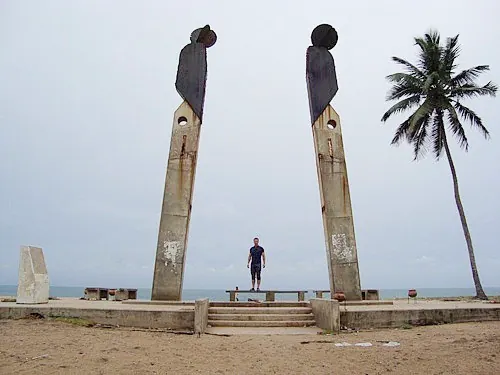
The NCMM already has a national mandate covering documentation, conservation, preservation, and management of cultural heritage. Ijinla suggested that the Point of No Return in Badagry should be developed not merely as another tourist attraction but as a professionally interpreted heritage destination. Visitors should be able to understand the history, people, routes, landscape, and human stories associated with the site.
Ijinla emphasized the importance of community participation in the development of Badagry's heritage. The people of Badagry must not become spectators in the development of their own heritage. Tour guides, boat operators, artisans, souvenir producers, women, young people, historians, cultural practitioners, traditional institutions, and local businesses should all have meaningful opportunities to participate.
Ijinla also mentioned that Badagry's possible journey toward UNESCO recognition must be approached through proper research, documentation, comparative analysis, conservation planning, community participation, and the appropriate Nigerian institutional processes. This should become a professional, evidence-based, and community-supported heritage programme. Heritage conservation and tourism should support one another, and if properly managed, heritage tourism can create opportunities for employment, local businesses, and investment.
Ijinla called for a multi-stakeholder Badagry Heritage Roundtable involving the community, traditional institutions, BLG, LASG, NCMM, Nigeria National Commission for UNESCO, and relevant tourism and cultural organisations. The purpose is to develop a coordinated roadmap for the documentation, conservation, interpretation, development, and international promotion of Badagry's heritage.
Key points
- The Badagry Heritage Memory Initiative (BHMI) is pushing for a coordinated framework.
- The framework aims to conserve and develop Badagry's cultural and historical heritage.
- Community participation and proper management are crucial for the success of the framework.