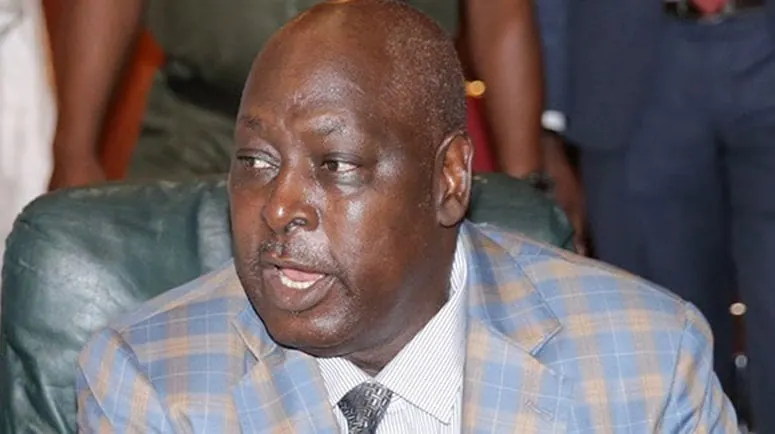
Former Secretary to the Government of the Federation, Babachir Lawal, has disclosed that Atiku Abubakar, the African Democratic Congress presidential candidate, wanted to work with him. However, Lawal revealed that he couldn't work with Atiku because he was engaged in the administration of the late former President Muhammadu Buhari. This was made known in an interview with Diaspora Digital Media.
Lawal emphasized that he is not a man of divided loyalty, which was a major reason he couldn't work with Atiku during his time as SGF. He stated that his loyalty was with President Buhari while he was in office, and now that his term has ended, he is open to working with Atiku. Lawal's decision not to work with Atiku was based on his commitment to serving one administration at a time.
The face-off between Lawal and Atiku stems from the former SGF's resignation from the ADC in June 2026. Following his resignation, Lawal alleged that the party's 2027 presidential primaries were massively rigged in Atiku's favour. He claimed to possess documentary evidence of collation discrepancies and characterized an eventual Atiku presidency as a continuation of a "Muslim-Fulani" power monopoly.
Atiku's camp responded to Lawal's allegations, attributing his outbursts to personal bitterness rather than facts. They noted that the same primary process Lawal condemned also produced his own allies for other positions without his prior objection. The disagreement between the two has sparked debate within the Nigerian political landscape.
Lawal revealed that he had discussions with other notable politicians, including Tambuwal, about uniting the North to give bloc votes to a candidate. He claimed that they had meetings and agreed to expand their efforts to achieve this goal. However, the details of these discussions and their outcomes remain unclear.
The rift between Lawal and Atiku has significant implications for Nigerian politics, particularly in the context of the 2027 elections. Lawal's allegations of rigging and his characterization of Atiku's presidency as a continuation of a "Muslim-Fulani" power monopoly have sparked concerns about the inclusivity and fairness of the electoral process.
As the 2027 elections approach, the Nigerian political landscape is becoming increasingly complex. The disagreement between Lawal and Atiku highlights the challenges of building coalitions and achieving consensus within the country's diverse political landscape. The outcome of these developments will likely have a significant impact on the country's future.
Key points
- Babachir Lawal refused to work with Atiku Abubakar due to his loyalty to former President Muhammadu Buhari.
- Lawal alleged that the ADC's 2027 presidential primaries were rigged in Atiku's favour.
- The disagreement between Lawal and Atiku has significant implications for Nigerian politics, particularly in the context of the 2027 elections.