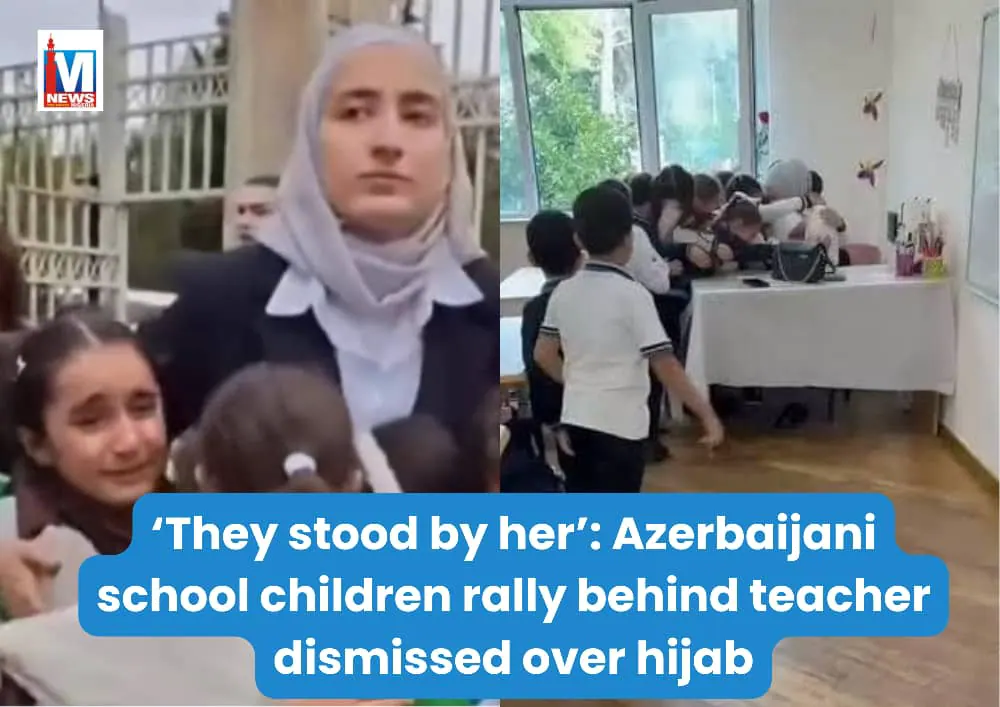
Schoolchildren in Baku, Azerbaijan, have rallied around their teacher, Zahra Hasanova, in a show of solidarity after she was reportedly dismissed over her hijab. The protests followed the introduction of new school dress regulations that have led to hijab-wearing students and teachers being denied entry to educational institutions. This has raised concerns about religious freedom, equal access to education, and the rights of Muslim women in Azerbaijan, where Muslims constitute approximately 96% of the population.
A video circulating online shows pupils hugging Hasanova, expressing support for their teacher as reports emerge of hijab-wearing students being prevented from entering some schools. The scenes have drawn attention to concerns about religious freedom, access to education, and the implementation of Azerbaijan's secular school dress code. The protests have provided a striking demonstration of solidarity, with students reportedly refusing to attend lessons to demand that their hijab-wearing classmates be allowed to return to school.
At Baku Secondary School No. 69, students protested in support of their female classmates, challenging the enforcement of the new dress regulations against those wearing headscarves. The protests followed reports of hijab-wearing girls being turned away from school premises, with some seen in videos leaving school in tears. The reported dismissal of a teacher over her headscarf has further fueled public concern about the treatment of Muslims who choose to wear the hijab in public institutions.
In a video published by Turkish news outlet Haberler on October 9, Hasanova recounted how school authorities allegedly told her she could no longer teach while wearing the hijab. She said the practice was being implemented despite the absence of an official decision explicitly banning it. Hasanova explained that she could seek other work to earn a living but felt compelled to speak up for girls whose education could be affected by the restrictions.
Hasanova recalled studying late into the night by the light of an oil lamp in the 1990s and said her mother had worked as a cleaner to support her education. She emphasized that she wants freedom for the hijab and is against forcing anyone to wear the hijab or to uncover her head. Hasanova's comments have sparked a wider debate over the treatment of Muslims who choose to wear the hijab in public institutions in Azerbaijan.
The controversy followed amendments to Azerbaijan's school uniform regulations approved by the Cabinet of Ministers on September 21, 2026, after legislative changes signed by President Ilham Aliyev in July introduced provisions concerning clothing requirements for students and teachers in public schools. The authorities have justified the changes on the grounds of preserving the secular character of public education. However, the regulations do not explicitly name the hijab as prohibited clothing.
Azerbaijan's Constitution guarantees equality and freedom of conscience, with Article 25 guaranteeing equality before the law and prohibiting restrictions on rights based on religion and beliefs. Article 42 recognizes every citizen's right to education and guarantees free and compulsory secondary education. The dispute has drawn attention to the balance between preserving the secular character of public education and protecting the rights of Muslim women to wear the hijab.
Key points
- The protests in Baku highlight the tensions between preserving the secular character of public education and protecting the rights of Muslim women to wear the hijab.
- The Azerbaijani government's introduction of new school dress regulations has led to reports of hijab-wearing students and teachers being denied entry to educational institutions.
- The controversy has sparked a wider debate over the treatment of Muslims who choose to wear the hijab in public institutions in Azerbaijan.