Rice farmers in Northern Bahr el Ghazal state's Aweil area are turning to China for better equipment and farming technology to boost production. The World Food Programme (WFP) is exploring cooperation with China to expand rice cultivation on flood-prone land. This initiative aims to improve local food supplies and enhance food security.
Santino Akech, a 45-year-old farmer in Aweil, reported that his community switched to rice cultivation after repeated floods damaged sorghum crops in low-lying areas. Last year, his group harvested 42 bags of rice, each weighing 90 kilogrammes, from four feddans. The income from rice helped farmers pay school fees and medical expenses, and working in groups enabled them to expand cultivation.
Despite the success of rice cultivation, farmers in Aweil face challenges, including a lack of equipment such as ox-ploughs, necessary for preparing land on time and increasing production. Akech mentioned that some farmers owned bulls and could contribute to the cost of ox-ploughs. The WFP Aweil Field Office programme, led by Haileselassie Berhanu, is working with communities to cultivate flood-prone land with rice.
The WFP programme involves over 2,100 farmers or households and has planted about 1,000 hectares of rice this year. However, the programme requires machinery, improved seeds, training, and equipment for harvesting, drying, threshing, and polishing rice. Technical expertise on rice varieties is also crucial, and possible cooperation with China is being explored.
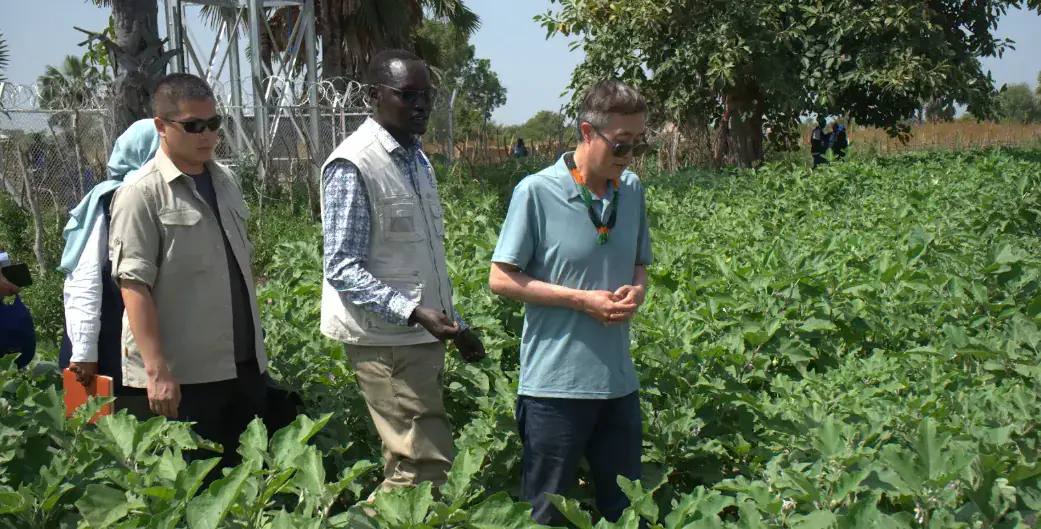
Chinese Ambassador to South Sudan Ma Qiang visited agricultural activities in Aweil and noted the area's favourable conditions for rice production. He mentioned that China had previously donated agricultural machinery to local communities and that further cooperation on farming technology was possible. Ma emphasized the need for proper management of natural resources, including water, to address flooding.
WFP Country Representative Muntina Chimuka stated that rice cultivation could improve food security by enabling communities to grow their own crops and diversify food sources. However, expansion would depend on funding and stronger cooperation with the government. Chimuka also highlighted the challenges posed by climate change and unpredictable weather.
Local authorities, including caretaker minister of agriculture, environment, and forestry Deng Deng Bol, emphasized the need for equipment, training, and storage facilities to increase production and preserve harvests. The state has fertile land suitable for agriculture, but changing weather patterns remain a challenge.
Key points
- Over 2,100 farmers or households are involved in rice cultivation in Aweil this year.
- The programme needs machinery, improved seeds, training, and equipment for harvesting, drying, threshing, and polishing rice.
- China has previously donated agricultural machinery to local communities and may provide further cooperation on farming technology.