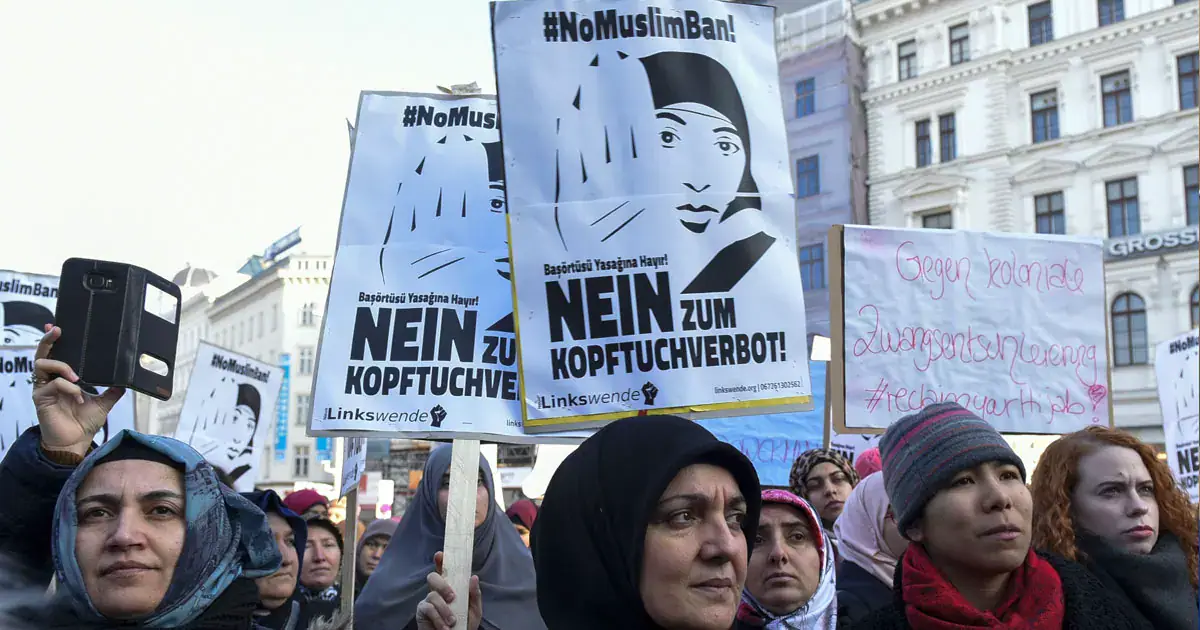
Austria's ban on hijabs in schools for girls under 14 has been in effect since September 2026. The ban, which aims to "protect children from external pressures," prohibits young girls from wearing any garment that covers their head according to Islamic traditions. Parents who fail to comply with the ban will face a fine of up to 800 euros. The ban has sparked controversy and debate, with some arguing that it is necessary to protect young girls from pressure, while others see it as discriminatory.
According to the Austrian Ministry of Education, 45 cases of non-compliance have been reported across Austria as of October 1, 2026. A total of 162 interviews have been conducted with school administrators since the ban took effect. In Vienna, 98 summons have been issued to parents. The ban has been met with criticism from some Muslim families and civil rights organizations, who argue that it unfairly targets Muslim girls and reinforces feelings of being under constant surveillance.
Sociological and demographic studies conducted by the Ministry of Integration and research institutes in Austria suggest that the wearing of hijabs among girls under 14 is historically minoritary and marginal compared to the overall Muslim student population. Observers and jurists argue that the relatively low number of young girls affected by the ban suggests that the law is more of a response to a political and ideological debate on neutrality and the role of religion in schools rather than a massive demographic phenomenon.
The ban has sparked concerns about its potential impact on social cohesion and the risk of marginalizing Muslim girls. Some argue that the ban may push conservative families to withdraw their children from public schools and opt for private Islamic schools or homeschooling, further exacerbating social divisions. Others argue that the ban is necessary to protect young girls from patriarchal pressures and to promote equality and democratic values.
The Austrian government argues that girls under 14 do not have the maturity or discernment to make informed decisions about wearing the hijab. The ban is seen as a way to protect them from external pressures and promote a neutral and inclusive learning environment. However, critics argue that the ban is discriminatory and targets a specific religious group.
The ban has been challenged in court, with some arguing that it infringes on the right to freedom of religion and equality. In 2020, a similar attempt to ban hijabs in primary schools was invalidated by the Austrian Constitutional Court, which ruled that the law discriminated against a specific religious group. The current ban is being challenged on the grounds of its compatibility with European law and the European Convention on Human Rights.
The debate over the hijab ban in Austria highlights the complexities of balancing neutrality, freedom of religion, and equality in public schools. While some see the ban as a necessary measure to promote social cohesion and protect young girls, others argue that it is a discriminatory measure that reinforces social divisions. The outcome of the court challenges and the impact of the ban on Austrian society remain to be seen.
Key points
- The Austrian government's ban on hijabs in schools for girls under 14 has sparked controversy and debate over neutrality, religion, and discrimination.
- Critics argue that the ban is discriminatory and targets a specific religious group, while supporters argue that it is necessary to protect young girls from external pressures.
- The ban has been challenged in court, with some arguing that it infringes on the right to freedom of religion and equality.