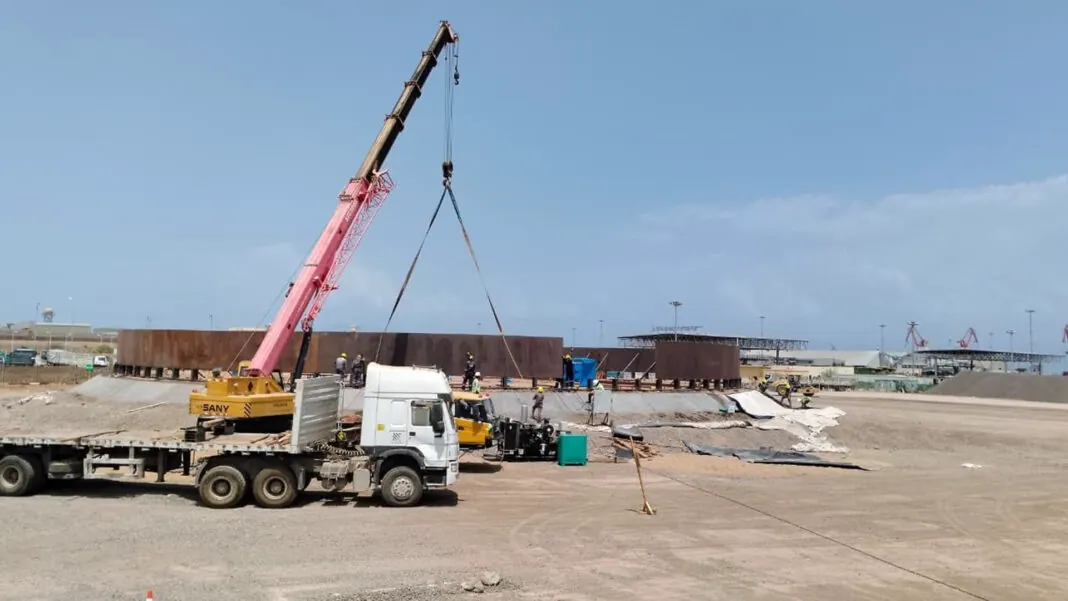
The African Terminal & Logistics Services (ATLS) project is underway in Djibouti, with the goal of creating a petroleum storage and distribution hub that connects maritime imports with Ethiopia's road and railway networks. The first phase of the project is expected to provide 288,000 cubic meters of storage and be commissioned by June 2027. This new facility will allow for more efficient storage and transportation of fuel, potentially reducing the pressure on the current road-based system.
Currently, Ethiopia imports most of its petroleum through Djibouti, and the fuel is transported inland via tanker trucks. This process is heavily dependent on road transport, with around 350 trucks carrying fuel from the Horizon Djibouti Terminal to Ethiopia each day. However, this system is vulnerable to congestion, border procedures, truck availability, and shipping delays, which can all impact supply. The addition of more storage capacity can help alleviate some of this pressure by allowing operators to receive fuel from vessels, hold it near the port, and dispatch it when demand or transport capacity allows.
The ATLS project is distinctive in its plan to include train-loading arms, which will enable the direct loading of fuel onto trains bound for Ethiopia. This would be a first for fuel imports into Ethiopia and could provide a more efficient way to transport large volumes of fuel inland. The Ethio-Djibouti Railway, which was built to provide a faster link between Djibouti's ports and Ethiopia's inland markets, has not played a significant role in moving fuel due to limited port access and loading infrastructure. However, the Ethio-Djibouti Joint Railway Commission has agreed to accelerate links to Doraleh and the Horizon terminal.
While trains will not replace trucks entirely, as many destinations in Ethiopia are beyond the railway network, the two modes of transport could provide operators with more flexibility when one route is disrupted or demand changes. The ATLS project is also installing several truck-loading stations, allowing tankers to be loaded in parallel. This will enable rail to serve high-volume destinations while trucks continue to reach places the railway cannot.
The success of the ATLS project will depend on how well it coordinates vessel arrivals, storage, loading bays, train wagons, tanker trucks, and border procedures. If the first phase is commissioned as scheduled in June 2027, the project will be tested on whether it can turn new storage and rail-loading capacity into dependable fuel movement. The project has the potential to bring more port activity and demand for logistics services to Djibouti, and add storage and a rail option to Ethiopia's fuel-import route.
The benefits of the project will not be limited to Ethiopia, as Djibouti also stands to gain from increased port activity and demand for logistics services. The project's impact on the fuel chain will be significant, but it will not resolve every challenge. Procurement, foreign-exchange availability, road conditions, railway performance, and coordination between agencies will continue to influence the cost and reliability of deliveries.
The construction of the ATLS project has moved from plans to physical work, marking a significant step towards changing Ethiopia's fuel import route. The first trains will matter for more than the terminal, as they will show whether Djibouti's port and Ethiopia's inland supply chain can work as one system.
Key points
- The ATLS project aims to provide 288,000 cubic meters of storage and be commissioned by June 2027.
- The project includes train-loading arms, enabling the direct loading of fuel onto trains bound for Ethiopia.
- The success of the project depends on coordination between vessel arrivals, storage, loading bays, train wagons, tanker trucks, and border procedures.