The Atlantic Council has emphasized that addressing Libya's financial division is a crucial step towards reunifying the country and achieving a democratic transition. According to the council, an agreement on a unified financial framework in April 2026, for the first time in 13 years, presents an opportunity to address the country's institutional division. This development follows a roundtable discussion organized by the council's North Africa program in Rome on October 16, 2026.
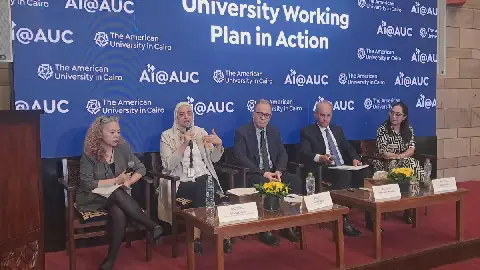
The roundtable discussion brought together Libyan officials, Italian decision-makers, and international experts, including participants from Algeria. The talks focused on US and UN efforts to unify Libya and find ways to hold credible elections. The council's article highlighted that participants stressed the need for enhanced oversight of public finances, transparency, and fair distribution of resources among Libya's regions. They also noted that Libya's public debt has exceeded 300 billion dinars, with continued high spending.
The council's article noted that the US initiative helped focus negotiations on parties with actual authority in Tripoli and Benghazi. It emphasized that a political solution must be led and owned by Libyans, free from external interference. Participants in the discussions agreed to reject dividing Libya, citing the interconnectedness of its financial, oil, and service institutions. They believe that a unified budget can pave the way for uniting political and administrative institutions.
The article highlighted that discussion participants preferred holding parliamentary elections over presidential ones. They argued that parliamentary elections can achieve broader political representation and avoid concentrating power. The participants also called for not postponing the elections again, given the erosion of legitimacy of existing institutions. This preference aims to overcome the current political stalemate and move towards stability.
According to the Atlantic Council, a unified budget is a key step towards resolving Libya's institutional division. The council's North Africa program organized the roundtable discussion to explore ways to support Libya's transition to democracy. The event brought together a diverse group of stakeholders to discuss the challenges facing Libya and potential solutions.
The council's emphasis on a unified budget reflects the need for Libya to address its deepening financial and institutional divisions. The country's continued instability has hindered efforts to hold elections and establish a stable government. A unified budget could help create a more favorable environment for elections and broader political reforms.
The Atlantic Council's recommendations and the outcomes of the roundtable discussion underscore the complexities of Libya's transition to democracy. The country's path forward will likely involve continued international support and Libyan-led efforts to address its institutional and financial challenges. Key to this process is ensuring fair representation, transparency, and accountability in the management of Libya's resources and finances.
Key points
- A unified budget is crucial for ending Libya's political division and achieving democratic transition.
Reporting sources
- المجلس الأطلسي: توحيد الميزانية مدخل أساسي لإنهاء الانقسام السياسي في ليبيا · Libya Al Ahrar TV