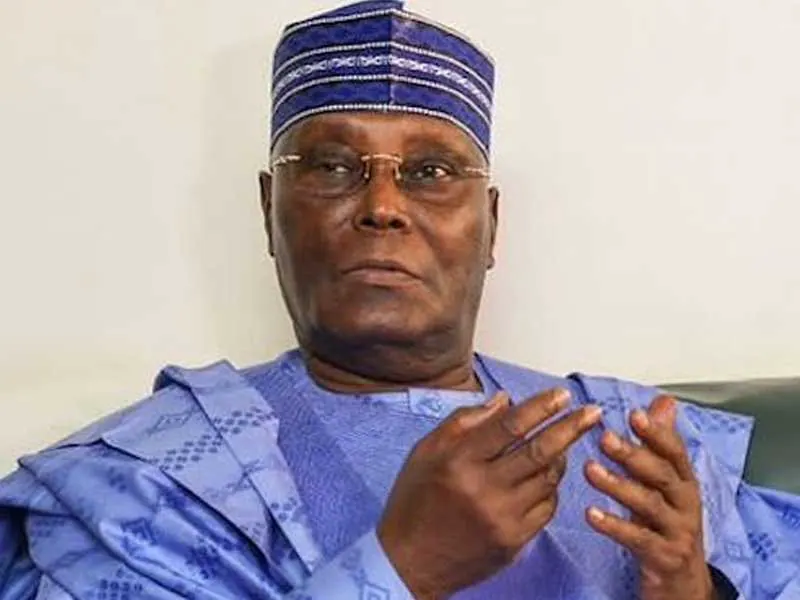
Former Vice-President Atiku Abubakar has urged President Bola Tinubu to increase the minimum wage, arguing that the current ₦70,000 level has lost significant purchasing power. Atiku, the presidential candidate of the African Democratic Congress (ADC), stated that the increase from ₦30,000 to ₦70,000 had not translated into improved welfare for workers due to higher expenses on transportation, food, rent, and other necessities.
Atiku highlighted that the removal of petrol subsidy has increased pressure on Nigerian workers. He noted that at ₦1,400 per litre, the entire ₦70,000 monthly minimum wage could only purchase about 50 litres of petrol. This starkly contrasts with April 2023, when the ₦30,000 minimum wage could buy about 118 litres of petrol at the prevailing price at the time.
The former vice-president questioned what remained for workers after transportation, feeding, and other household expenses had been deducted from their ₦70,000 monthly wage. He argued that although workers now earn a higher figure on paper, the value of their income had reduced due to inflation and increased living costs, stating, "The payslip has grown, but the fuel it can buy has more than halved."
Atiku compared Nigeria's minimum wage with those of some African countries, arguing that the country's wage level remained low when measured against current economic realities. He acknowledged that wage structures and living costs differ across countries but insisted that Nigerian workers require better protection against rising expenses.
Atiku urged the Federal Government to approve a substantial increase in the minimum wage to reflect the cost of food, transportation, rent, and electricity. He emphasized that the current wage level is insufficient to support workers' needs, given the high cost of living in Nigeria.
The call for a higher minimum wage comes as many Nigerians struggle with economic pressures. Atiku's statement was issued by Phrank Shaibu, Director of Strategic Communications of the ADC Presidential Campaign Council, and reflects the concerns of workers and citizens about the impact of economic policies on their livelihoods.
Atiku's advocacy for workers' welfare is part of his broader engagement with economic and social issues in Nigeria. As the presidential candidate of the ADC, he continues to offer his perspectives on critical national issues, including economic management and social policy.
Key points
- Atiku Abubakar calls for an increase in the minimum wage to ₦70,000 or more, citing the loss of purchasing power due to inflation and rising living costs.
- The current minimum wage of ₦70,000 can only buy 50 litres of petrol at ₦1,400 per litre, significantly less than the 118 litres it could buy in April 2023.
- Atiku urges the Federal Government to approve a substantial increase in the minimum wage to reflect the cost of food, transportation, rent, and electricity.