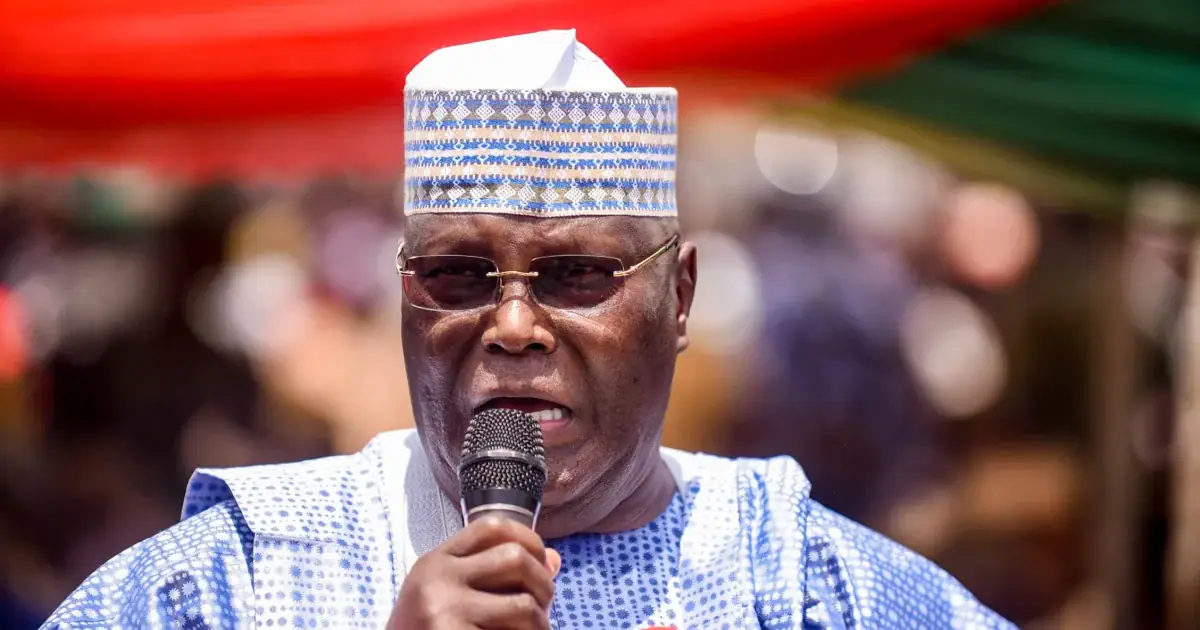
The presidential candidate of the African Democratic Congress, Atiku Abubakar, has called for the identification and prosecution of Independent National Electoral Commission officials implicated in introducing artificial intelligence-generated photographs and other questionable records into the preliminary register of voters. This demand follows INEC's admission that some registration officers across the country allegedly abused their access credentials to introduce irregularities into the voter registration database. Atiku's demand was made in a statement issued in Abuja on Friday by the Director of Strategic Communication of the ADC Presidential Campaign Council, Phrank Shaibu.
Atiku described the development as a serious breach of public trust and a failure of the commission's internal safeguards. He faulted the explanation offered by INEC's Director of Information and Communication Technology, Dr Lawrence Bayode, who reportedly said the commission knew how the irregularities were introduced but could not establish the reasons behind the actions of the officers involved. Atiku said INEC's admission that its registration officers had compromised the database raised fundamental questions about the security of the electoral register and the commission's capacity to guarantee credible elections.
The former vice president also called for an independent forensic audit of the preliminary voter register, arguing that the commission should not be allowed to remove questionable entries without preserving evidence of how they were introduced. He urged INEC to preserve all voter records, image files, access logs, and audit trails for examination by independent experts, political parties, civil society organisations, and credible international observers. This, he said, would ensure that the credibility of the 2027 election is not compromised.
Atiku renewed his demand for transparency in the award of contracts for the production of sensitive election materials, accusing INEC of failing to address concerns raised by opposition parties over the identities of the companies handling such assignments. He argued that opposition parties were entitled to know the companies involved, the nature of their assignments, and the security arrangements governing the production and handling of election materials.
The ADC presidential candidate threatened that the ADC would seek judicial intervention if the commission failed to provide the requested information. He also called on opposition leaders and the international community to demand an independent investigation, full disclosure, and accountability, accusing the Tinubu administration of allowing the electoral commission to operate without sufficient scrutiny. Atiku insisted that INEC had no right to demand trust while concealing evidence and shielding those responsible.
INEC's admission followed public concerns over suspicious photographs, alleged duplicate entries, and other inconsistencies in its preliminary register of voters, which was uploaded to the commission's website on October 26. The controversy attracted attention after photographs suspected to have been generated using artificial intelligence were spotted in voter records in parts of Edo State, including the Etsako West Local Government Area.
The commission maintained that the register was not the final certified version and that it was reviewing questionable entries ahead of the scheduled certification of the final register on December 15, 2026. The controversy has added to growing political scrutiny of INEC's preparations for the 2027 elections, with opposition parties demanding greater transparency over voter registration, personnel deployments, and the procurement of sensitive election materials.
Key points
- Atiku Abubakar demands identification and prosecution of INEC officials involved in introducing AI-generated photographs into the voter register.
- The ADC presidential candidate calls for an independent forensic audit of the preliminary voter register.
- Atiku threatens judicial intervention if INEC fails to provide transparency in the award of contracts for sensitive election materials.