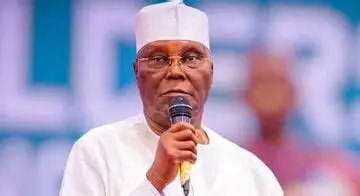
Former Vice-President Atiku Abubakar has called for a full reconciliation of Nigeria's public debt, including new borrowings, Treasury Bills, and external debt-service charges. This demand comes as the country's debt stock climbed to N166.79tn as of June 30, 2026. Atiku's request follows the latest data from the Debt Management Office, which published the debt figures on September 25. The total public debt comprises N91.59tn in domestic debt and N75.20tn in external debt.
Atiku contrasted the current debt figure with the N49.85tn public debt recorded in March 2023, before the President Bola Tinubu administration assumed office. He demanded a breakdown showing how much of the current debt represented inherited obligations, the naira impact of exchange-rate movements on foreign debt, and genuinely new borrowing since May 2023. Atiku also called for an explanation of the N22.71tn Ways and Means advances that were securitised and incorporated into the debt stock from June 2023.
The former Vice-President questioned the cost of servicing the country's debt, arguing that rising obligations were limiting resources available for public services and development. According to the Debt Management Office, Federal Government Treasury Bills outstanding stood at N19.48tn as of June 30, 2026. Atiku demanded a reconciliation showing which Treasury Bills had matured, which were redeemed, which were rolled over, and which represented new borrowing.
Atiku also sought clarification on $39.25m listed as "other charges" in the Debt Management Office's second-quarter 2026 external debt-service report. The report recorded no principal or interest payment against a $22.5m charge for a First Abu Dhabi Bank Total Return Swap, which was listed under other charges. Atiku demanded an explanation of the transaction, including the agreement that authorised it and the original facility.
The development comes amid a wide fiscal gap in the 2026 budget, which provides for expenditure of about N68.32tn against projected revenue of N36.87tn, leaving a deficit of roughly N31.45tn. Borrowing is expected to finance a substantial part of the gap. President Tinubu has highlighted the pressure created by debt servicing, saying Nigeria expected to spend about $11.6bn on debt service in 2026.
Atiku criticised the government for accumulating debt and asking Nigerians to endure higher living costs without showing increased revenues and improved macroeconomic indicators. He argued that the true test of economic policy is whether Nigerians can afford basic necessities like food, transportation, and housing. Atiku described the situation as a contradiction between improving government revenues and the economic experience of households.
The International Monetary Fund estimated poverty at 63 per cent under the national poverty line and said 27 million Nigerians faced food insecurity in the latter part of 2025. Atiku called on Tinubu and the All Progressives Congress to apologise to Nigerians over the hardship associated with the administration's economic policies. He urged the government to reconcile the borrowing figures, explain the debt-service charges, and disclose how borrowed funds had been deployed.
Key points
- Atiku Abubakar demands reconciliation of Nigeria's public debt and apology over economic hardship
- Nigeria's debt stock climbs to N166.79tn as of June 30, 2026
- Atiku questions $39.25m "other charges" in external debt-service report