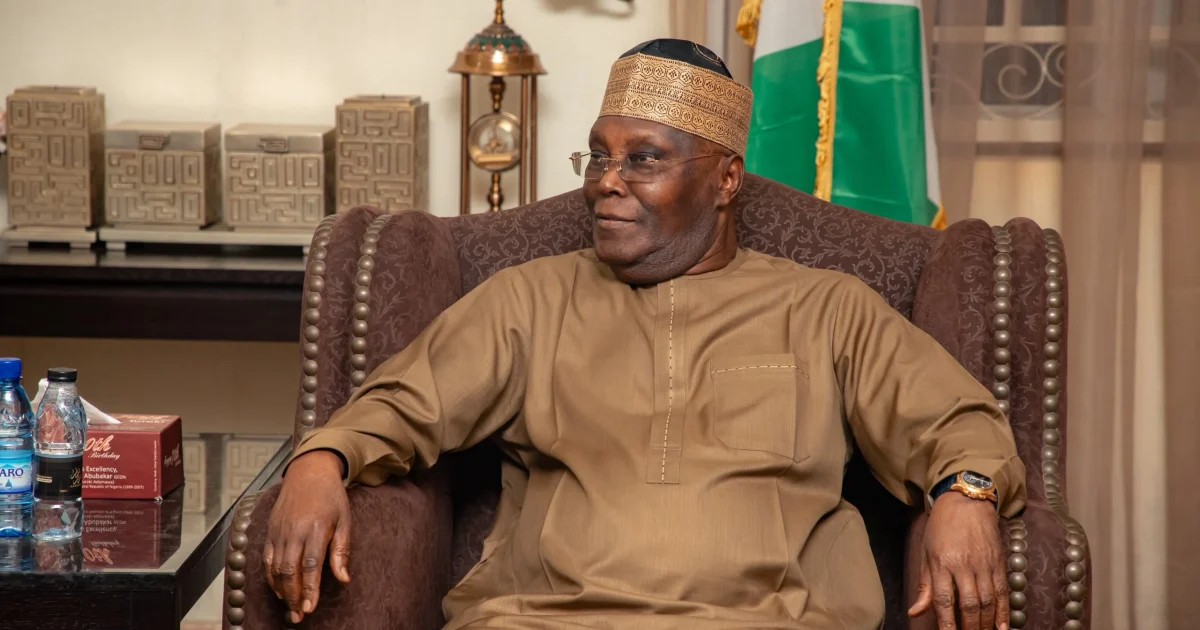
Former Vice President Atiku Abubakar has urged President Bola Tinubu to immediately increase the national minimum wage, citing the erosion of purchasing power due to rising costs of fuel, food, transportation, and housing. In a statement released on Sunday, Atiku argued that the current N70,000 wage, implemented in July 2024, has failed to protect workers from the effects of inflation. He emphasized that the wage increase has been rendered ineffective by the sharp decline in workers' purchasing power.
Atiku highlighted the stark contrast between the old and current wage levels, noting that at the April 2023 national average petrol price of N254.06 per litre, N30,000 could purchase about 118 litres of petrol, whereas N70,000 at N1,400 per litre would purchase only about 50 litres. He criticized the removal of the petrol subsidy, arguing that it was implemented before adequate protection was put in place for working families. According to Atiku, the impact of petrol prices extends beyond the filling station, affecting the prices of food and other essential commodities.
The former Vice President compared Nigeria's minimum wage unfavorably with those of other African oil-producing countries, when converted using current exchange rates. Atiku challenged President Tinubu to make his position on another wage increase clear, stating that workers should not be subjected to prolonged negotiations without a definite outcome. He urged the President to provide an answer, rather than leading the Nigeria Labour Congress and other labour leaders on.
Atiku promised that if elected in 2027, his administration would begin work on raising the wage floor from its first day in office. He proposed measures aimed at reducing the cost of living, including support for domestic production, targeted social protection, and interventions in the petroleum sector. Atiku's proposed targeted production subsidy would support petroleum products refined in Nigeria and sold to Nigerians, subject to spending limits, public accounting, and independent auditing.
Atiku emphasized that higher wages alone would not adequately address the pressures facing households if the cost of living continued to rise. He called for measures to stabilize the prices of essential goods and energy. The former Vice President maintained that the purchasing power of workers remained the central issue, stressing that Nigerians do not benefit from increased revenue allocations if their kitchen remains empty.
The Tinubu-led government has previously defended its wage and economic measures, stating that the N70,000 minimum wage was agreed after consultations with organised labour and other stakeholders. However, Atiku insisted that a living wage must buy a living and is not a privilege, but a basic right. He concluded by stating that President Tinubu has made life painfully expensive and promised to make life affordable again if elected.
Atiku's comments come amid renewed pressure over petrol prices and the wider cost of living. Recent reports indicate that petrol prices have reached about N1,400 per litre in Lagos and Abuja, with higher prices recorded in parts of northern Nigeria. This has intensified concerns about the effect of fuel costs on household budgets and transportation.
Key points
- Atiku Abubakar urges President Tinubu to increase the national minimum wage due to the erosion of purchasing power caused by fuel price hikes.
- The current N70,000 minimum wage has failed to protect workers from the effects of inflation, according to Atiku.
- Atiku promises to raise the wage floor and implement measures to reduce the cost of living if elected in 2027.