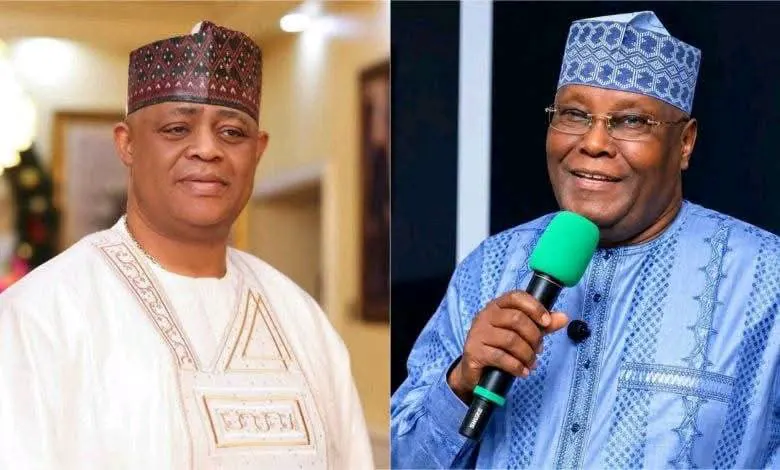
Atiku Abubakar, who served as Nigeria's Vice President from 1999 to 2007, has officially launched his seventh bid for the presidency. This latest attempt comes after six previous unsuccessful bids, with his most recent effort in 2023 resulting in a loss to Bola Tinubu. Abubakar's presidential ambitions have been a longstanding aspect of his political career, which spans over three decades.
Abubakar's history of contesting the presidency dates back to 1993, when he participated in the Social Democratic Party (SDP) presidential primaries but lost to MKO Abiola. He continued to pursue the presidency in 2007, 2011, 2015, 2019, and 2023, but was unsuccessful each time. His persistence has drawn comparisons to other international leaders who have also made multiple attempts at the presidency, including Pascual Racuyal of the Philippines, who contested 11 times, and Nicolás Zúñiga y Miranda of Mexico, who contested 10 times.
Despite his extensive experience in politics, Abubakar's career has been marred by controversy. In 2003, he attempted to mobilize PDP governors against his leader, President Olusegun Obasanjo, in a bid to take over as the party's presidential candidate. This move was seen as a betrayal by Obasanjo, who had previously nominated Abubakar as his running mate. Abubakar's actions were thwarted by Obasanjo's loyalists and a wealthy businessman from Kano.
Critics have described Abubakar as a "political wanderer" due to his frequent changes in party affiliation. Since joining politics in 1991, he has been a member of seven different political parties, including the PDP, which he left and rejoined twice. This has led to accusations that he prioritizes personal ambition over party loyalty.
Abubakar's latest bid for the presidency has been met with skepticism by some, who argue that his persistence is driven by obsession rather than a genuine desire to serve the nation. His opponents have highlighted his transactional and pragmatic approach to politics, which they claim is at odds with the qualities of sincerity, courage, and patriotism demonstrated by leaders like Abdoulaye Wade of Senegal.
Abubakar's stance on power rotation and zoning has also been a subject of controversy. He has consistently opposed the idea of a power shift to the South, which has been a prevailing argument among many in the political class. This has led to accusations that he has a sectional outlook rather than a national one.
As Abubakar embarks on his seventh presidential bid, he has reportedly employed the services of a foreign consultant to aid his campaign. This move has sparked debate about the role of external influence in Nigerian politics and the implications for the country's democratic development.
Key points
- Atiku Abubakar has launched his seventh bid for the Nigerian presidency, despite six previous unsuccessful attempts.
- Abubakar's persistence has drawn comparisons to international leaders who have made multiple attempts at the presidency.
- His campaign has been marred by controversy, including accusations of party hopping and a transactional approach to politics.