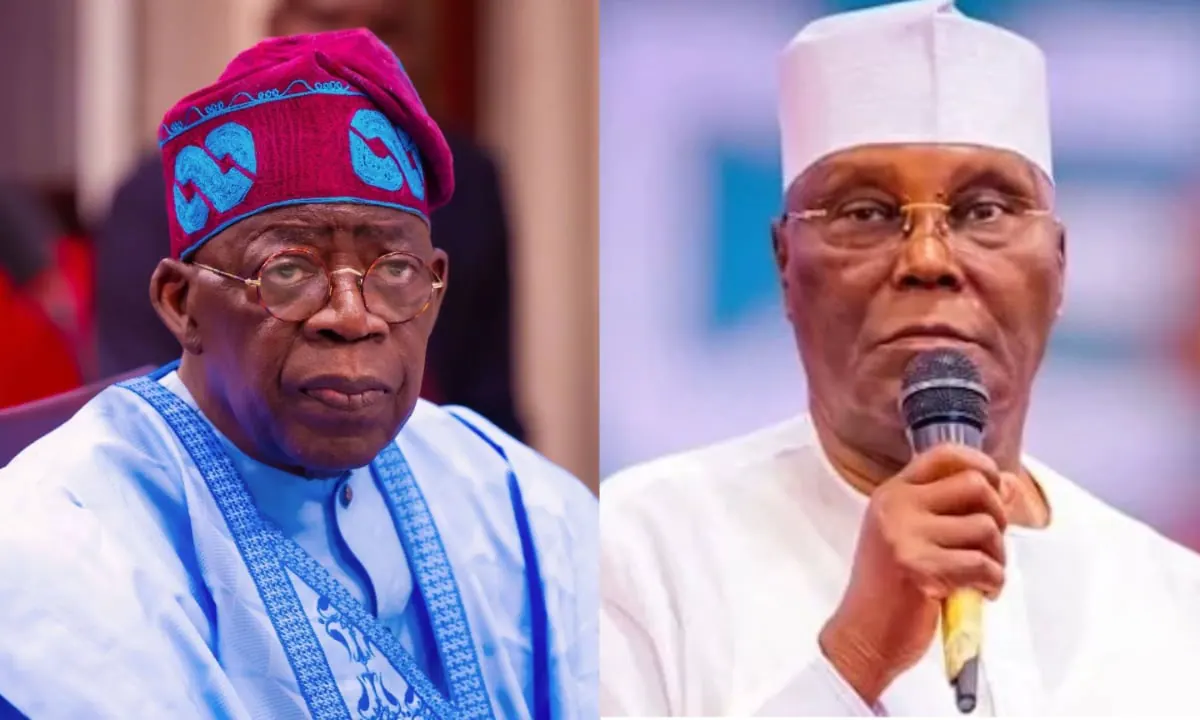
Former Vice President Atiku Abubakar has spoken out against President Bola Ahmed Tinubu's fuel subsidy policy, following a survey that revealed 67.4% of Nigerians reject the policy. In a statement released on Tuesday, Atiku's media aide, Phrank Shaibu, said the survey's findings represented a significant public rejection of the administration's policy. The survey, conducted by SBM Intelligence, showed that a substantial majority of Nigerians are unhappy with the policy's impact on their lives.
According to Atiku, the survey's results are more than just an economic statistic; they represent a growing majority of Nigerians who have rejected Tinubu's policy. He emphasized that the policy has caused far more harm than good, citing the explosion in transport costs, soaring food prices, and the collapse of businesses. Atiku also noted that the policy has destroyed purchasing power and pushed millions of families deeper into poverty.
Atiku's statement highlights the struggles of Nigerians under Tinubu's 'subsidy is gone' experiment, which has been in place for three and a half years. He argued that the policy has become a democratic question, with an overwhelming majority of Nigerians declaring that it is destroying their lives. Atiku urged responsible leadership to listen to the public's concerns and take action to address the suffering.
The former Vice President proposed the return of fuel subsidy, but President Tinubu has insisted that this would lead to more hardship for Nigerians. Tinubu, who is seeking re-election in 2027, has maintained that the subsidy policy is not feasible. Atiku's criticism of the policy is likely to resonate with many Nigerians who are struggling with the economic implications of the policy.
The SBM Intelligence survey provides valuable insights into public opinion on the fuel subsidy policy. The survey's findings suggest that a significant majority of Nigerians are unhappy with the policy's impact on their lives. Atiku's statement is likely to add to the growing pressure on the government to reconsider its policy and find alternative solutions to address the economic challenges facing Nigerians.
President Tinubu's government has faced criticism for its handling of the fuel subsidy policy. The policy's removal has led to significant increases in transport costs and food prices, which have had a devastating impact on many Nigerians. Atiku's criticism of the policy is likely to intensify the debate on the issue and put pressure on the government to find a solution.
The fuel subsidy policy has become a contentious issue in Nigerian politics, with different stakeholders holding varying opinions on the matter. While some argue that the policy is necessary to address the economic challenges facing the country, others believe that it is unsustainable and has caused more harm than good. As the debate continues, it remains to be seen how the government will respond to the growing criticism of its policy.
Key points
- Atiku Abubakar criticizes President Tinubu's fuel subsidy policy, citing a survey that shows 67.4% of Nigerians reject the policy.