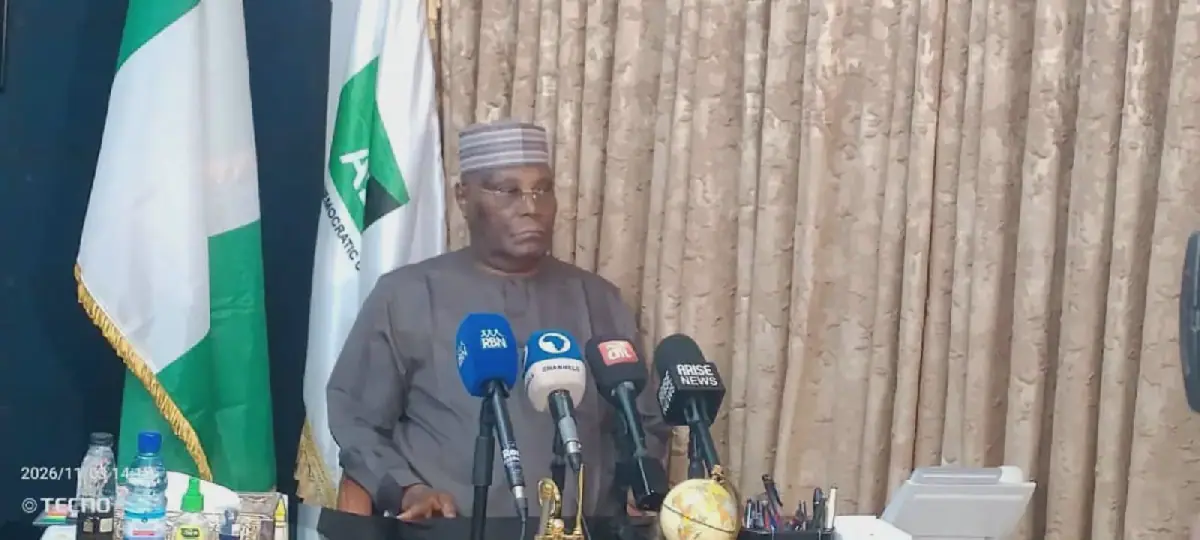
Former Vice President Atiku Abubakar has expressed concerns over President Bola Tinubu's request for Senate approval to borrow $7.7 billion, equivalent to approximately ₦10.79 trillion, to part-finance the 2026 budget deficit. Atiku questioned the frequency of the Federal Government's borrowing requests, arguing that Nigerians should not be expected to treat the growing debt burden as routine government business. He made these remarks in a statement released on November 4, 2026.
Atiku's criticism comes barely days after an external borrowing proposal of $20.52 billion and €1.045 billion was presented to the National Assembly. He warned that every additional foreign loan represented a financial obligation that Nigerians and future generations would eventually have to repay. According to him, the government cannot continue to present borrowing as a substitute for sound economic management while households and businesses bear the consequences of worsening economic conditions.
The former vice president said the latest borrowing proposal raised critical questions about the specific projects to be financed, their individual costs, repayment schedules, interest rates, and other loan conditions. He noted that the President's letter indicated that the final borrowing terms would depend on market conditions at the time the loan was priced, arguing that Nigerians deserved full disclosure before the government secured approval.
Atiku urged the National Assembly to exercise caution, insisting that President Tinubu should not commit Nigerians and future administrations to additional debt without transparency and rigorous legislative scrutiny. He also called on international agencies and lenders to suspend fresh loans to the administration until it provides transparent borrowing terms, a credible repayment plan, and evidence of how previous loans have benefited Nigerians.
Atiku further criticised the administration's economic management, arguing that despite removing the petroleum subsidy, Tinubu had presided over what he described as Nigeria's highest borrowing levels. He accused the government of worsening the cost-of-living crisis, saying millions of Nigerians were struggling to afford basic necessities while businesses faced mounting operational pressures and some were forced to close.
The former vice president also questioned the administration's infrastructure spending, alleging that Nigeria continued to experience significant infrastructure deficits despite the massive accumulation of debt. He said Nigerians were increasingly frustrated by rising living costs, inadequate public infrastructure, and what he described as the absence of effective social welfare interventions.
Atiku proposed an alternative economic approach aimed at reversing the country's growing poverty and debt burden, which includes restoring social welfare programmes through the introduction of production-based subsidies on petroleum products. He maintained that Nigeria could not borrow its way out of every budget deficit, urging lawmakers to remember that their primary responsibility was to Nigerians rather than the executive.
Key points
- Atiku Abubakar criticizes President Tinubu's $7.7 billion loan request, citing concerns over Nigeria's growing debt burden and lack of transparency in borrowing terms.
- The former vice president urges the National Assembly to exercise caution and scrutinize the proposal line by line before approving the loan.
- Atiku proposes an alternative economic approach to address Nigeria's poverty and debt burden, including production-based subsidies on petroleum products.