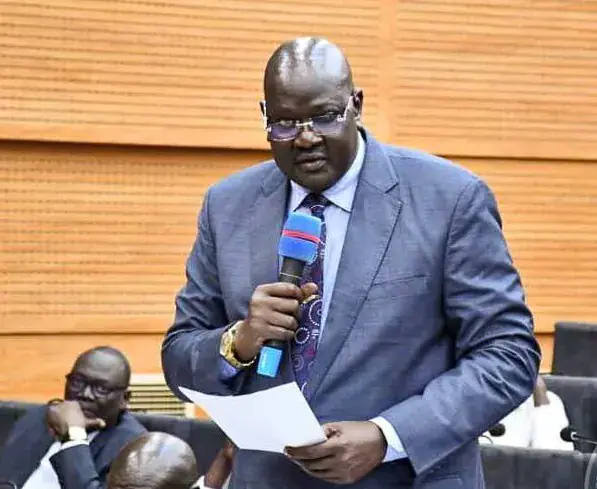
South Sudan's Caretaker Information Minister, Communication, Technology, and Postal Services, Ateny Wek Ateny, has defended the formation of the country's caretaker government amid criticism from opposition figures. The criticism was sparked by President Salva Kiir's caretaker appointments, with some officials retained or appointed to government positions. Minister Ateny stated that the formation of the caretaker administration is grounded in the 2018 peace agreement and the country's constitutional framework.
The criticism of the caretaker government came from Kornelio Kon Ngu, Chairperson of the National Alliance. Kon Ngu challenged President Salva Kiir's caretaker appointments, calling for broader consultation and politically neutral officials as the country prepares for elections. Kon Ngu's concerns reflect a broader debate about the neutrality of caretaker officials and how government institutions will operate during the election period.
Minister Ateny emphasized that the caretaker administration is a transitional arrangement that will oversee government affairs during the period leading to the December 2026 elections. He cited the country's Constitution of 2011, as amended, which provides for the Transitional National Unity Government to come to an end three months before the election. According to Ateny, this does not mean that political parties are responsible for forming the caretaker government.
Ateny pointed out that the caretaker government will still include members of various political parties. He cited Minister Par Kuol as an example, describing him as the head of the SPLM-IO. Ateny argued that it is not possible to have a 100% SPLM government, given the presence of members from other parties. This, he believes, reflects the inclusive nature of the caretaker administration.
In response to Kon Ngu's criticism, Ateny urged the Chairperson of the National Alliance to seek a political mandate through the upcoming elections. Ateny suggested that Kon Ngu could contest the election and, if voted in, would be able to participate in the government in December 2026. This exchange highlights the emerging debate about the caretaker government's composition and its implications for the country's transition.
The disagreement between Ateny and Kon Ngu comes as South Sudan enters a new phase ahead of the December 2026 elections. The caretaker administration is expected to play a crucial role in overseeing government affairs during the election period. The debate surrounding the caretaker government's composition and neutrality is likely to continue, with various stakeholders weighing in on the issue.
The formation of the caretaker government and the criticism it has faced reflect the complex and often contentious nature of South Sudan's transition. As the country prepares for elections, stakeholders will need to navigate these challenges and work towards a peaceful and inclusive transition. The caretaker administration's ability to effectively govern and manage the transition will be closely watched by citizens and international observers alike.
Key points
- The caretaker government has been formed in accordance with the 2018 peace agreement and the country's constitutional framework.
- The criticism of the caretaker government centers on concerns about the neutrality of its officials and the need for broader consultation.
- The debate surrounding the caretaker government reflects the complex and often contentious nature of South Sudan's transition.