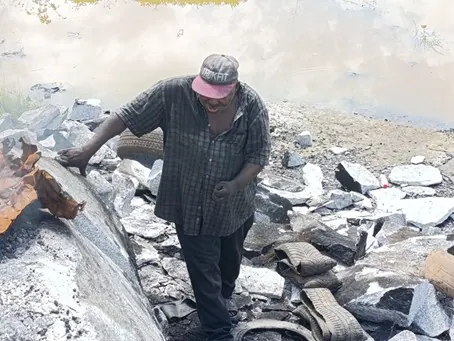
In the granite quarries of Manéah, about 40 kilometers from Conakry, the sound of hammers echoes through the air. Amidst the dusty environment, 68-year-old Abdoulaye Camara works tirelessly, his calloused hands a testament to decades of labor. With a calm demeanor, he shares his story, which is intertwined with the history of the Bambaya granite quarries. Camara's journey began at the age of 10, when he accompanied his parents to the quarries, learning the trade and developing the strength needed to survive in the demanding industry.
As a young boy, Camara was introduced to the quarries, where he learned to recognize the veins of the rock, handle a hammer, and avoid the hazardous debris. With no alternative, he dedicated himself to the work, which eventually became his family's primary source of income. Over the years, Camara has faced numerous challenges, including low pay and the physical toll of the job. Despite these difficulties, he persevered, driven by his responsibility to provide for his family. His story serves as a poignant reminder of the sacrifices made by workers in the informal sector.
In 1988, Camara married Mamaïssata Sylla, who has been his rock throughout his career. Together, they have five children, and Camara's determination to provide for them has been unwavering. He recounts the struggles of working in the quarries, where daily earnings range from 30,000 to 60,000 Guinean francs. Despite the meager pay, Camara and his family have managed to send their children to school, a feat they consider a significant accomplishment.
Camara's wife, Mamaïssata Sylla, has played a vital role in his life, offering encouragement and support during difficult times. Her contributions to the family, though often behind the scenes, have been invaluable. Together, they have built a life centered around their children, and their dedication to providing a better future for them has been a driving force in their lives.
Today, Camara resides in the family home, which he inherited from his father. The modest dwelling is filled with memories, and the presence of his family brings him joy. Though his physical strength has waned with age, his spirit remains unbroken. Camara's story serves as a testament to the resilience of workers in the informal sector, who often face significant challenges without complaint.
The granite quarries of Manéah continue to attract new workers, who face similar challenges and risks. Despite the difficulties, Camara's legacy serves as an inspiration to those who follow in his footsteps. His commitment to his family and his determination to provide for them, no matter the cost, have left a lasting impact on those who know him.
As Camara looks back on his life, he expresses no regrets or bitterness. Instead, he feels a deep sense of satisfaction, knowing that he has played his role as a husband, father, and worker. His story is a tribute to the countless workers who have built their lives through hard labor and sacrifice, often going unnoticed but leaving a lasting impact on their communities.
Key points
- Abdoulaye Camara's story highlights the challenges faced by workers in Guinea's informal sector, particularly in the granite quarries of Manéah.
- At 68, Camara continues to work in the quarries, exemplifying the resilience and determination of workers in the region.
- Camara's legacy serves as an inspiration to future generations, emphasizing the importance of hard work, family, and community.