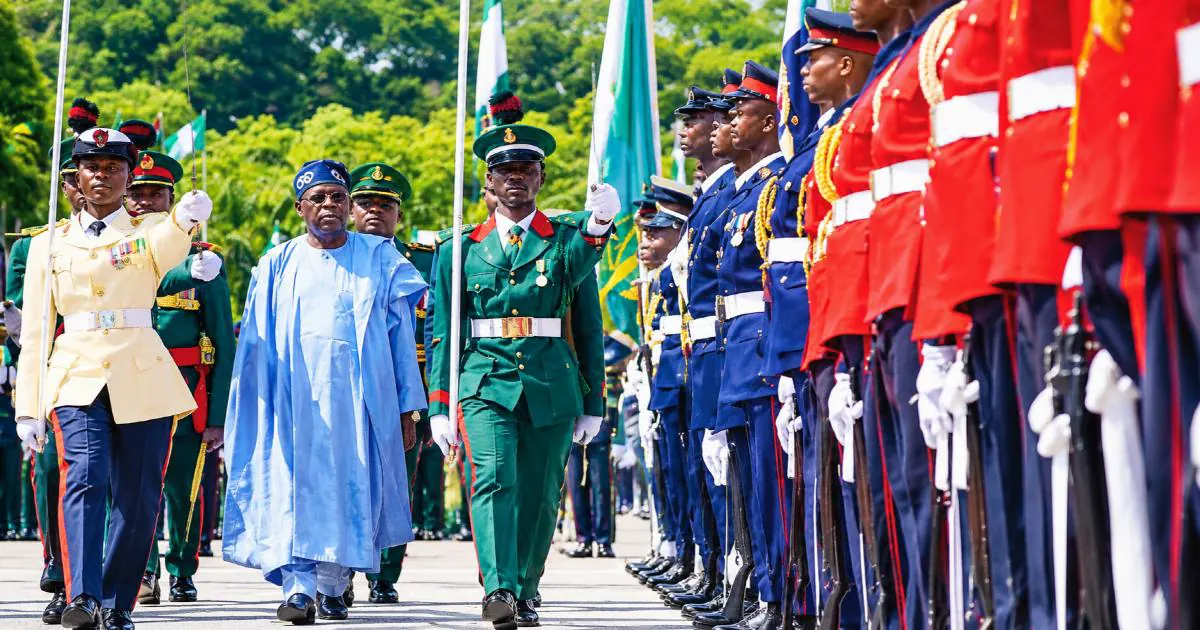
Nigeria marked its 66th Independence Anniversary on Thursday, with President Bola Tinubu delivering a national broadcast. Tinubu declared that Nigeria has moved beyond the painful phase of reforms and is now entering an “age of prosperity.” He stated that his administration’s overriding purpose for the past three years was to correct the nation’s economic course after years of postponed decisions and deep distortions. Tinubu listed the gains of his reforms, including over 4 per cent economic growth this year and reduced oil theft.
In contrast, former Anambra Governor and NDC presidential candidate, Peter Obi, presented a grim picture of Nigeria in his Independence Day broadcast. Obi said there is no correlation between the promises of the All Progressives Congress, APC-led government and the realities Nigerians face. He highlighted issues of insecurity, poverty, unemployment, and hunger, noting that the country has one of the largest populations of poor people in the world. Obi cited a recent visit to Sokoto State, where he and his running mate met thousands of women and children displaced by violence.
Atiku Abubakar, the ADC candidate and former Vice President, directly challenged Tinubu’s prosperity claim. Atiku stated that easing inflation does not restore what families have lost, comparing wages and fuel costs. He noted that a N70,000 minimum wage now buys only 50 litres of petrol, against 118 litres that N30,000 bought in April 2023. Atiku also questioned the Federal Government’s cash transfer programme, asking how 10 million recipients of N75,000 were identified and paid.
The three leaders then rolled out competing promises for what comes next. Tinubu promised an era focused on jobs, production, and lower cost of living. He pledged to expand mechanised irrigation and dry-season farming, improve access to seeds and fertiliser, and invest in storage and transportation. Tinubu also promised to use gas to power new industries, bring factories back to life, and expand digital connectivity.
Obi promised to confront insecurity decisively so that displaced Nigerians can return to their communities safely. He pledged to move Nigeria from a consumption-driven economy to a productive economy anchored on agriculture, manufacturing, and enterprise development. Obi vowed to prioritise education, healthcare, security, and productive enterprise, and lead by example by spending his holidays in various states to understand citizens’ challenges.
Atiku promised to make life affordable if elected in 2027, with a specific plan for fuel pricing. He proposed a capped, budgeted production subsidy tied to verified fuel refined in Nigeria only. Atiku also pledged transparency in governance, demanding publication of loan and contract records, and respect for electoral independence with prompt publication of polling-unit results.
The divergent views of the leaders set the stage for a 2027 contest built around who can truly deliver prosperity. While Tinubu insists the foundation has been repaired, Obi and Atiku argue that the suffering in IDP camps and markets shows the nation is still in deep waters. The competing promises and diagnoses highlight the challenges facing Nigeria and the different visions for its future.
Key points
- President Bola Tinubu claims Nigeria has moved beyond the painful phase of reforms and is now entering an “age of prosperity.”
- Peter Obi and Atiku Abubakar offer a grim picture of Nigeria, highlighting issues of insecurity, poverty, unemployment, and hunger.
- The three leaders have rolled out competing promises for what comes next, including job creation, economic development, and improved governance.