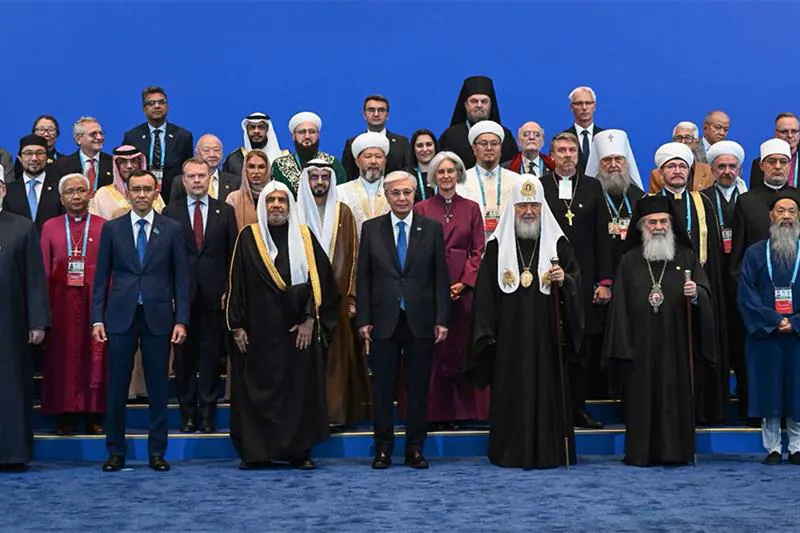
The 24th meeting of the Secretariat of the Congress of Leaders of World and Traditional Religions will take place in Astana, Kazakhstan, on October 7. This gathering, established over two decades ago to promote dialogue and cooperation among different faiths, will bring together religious leaders and representatives from 20 countries. The meeting aims to foster a platform for discussion and collaboration on pressing global issues.
The Congress of Leaders of World and Traditional Religions was launched in 2003 on the initiative of then-president Nursultan Nazarbayev. Its primary goal is to create a permanent international platform for dialogue among religious leaders and traditions. Since its inception, the Congress has developed into one of Kazakhstan's main international initiatives, with the eighth Congress held in Astana last year and the next scheduled for 2028.
The forthcoming meeting will focus on two key documents proposed by Kazakh President Kassym-Jomart Tokayev: a Code of Ethics for the Use of Artificial Intelligence in the Religious Sphere and a document on the role of religions in combating climate change. These documents aim to address the rapidly developing AI technology and its implications for religious institutions and communities.
The Code of Ethics for AI in the Religious Sphere raises questions about how religious institutions and communities should respond to AI-generated religious content. Although the full text of the proposed code has not been released, it is expected to establish principles for the responsible use of AI in the religious sphere. This initiative highlights the growing importance of addressing the intersection of technology and faith.
In addition to the AI code, the meeting will consider the "Charter on the Rights of the Incurable Child," which focuses on access to medical and psychological care for children with incurable conditions. This charter is part of a wider discussion about the role that religious and spiritual considerations can play in supporting seriously ill children.
Egypt will be represented at the meeting by Abdelrahman Mohamed Moussa, Advisor to the Grand Imam of Al-Azhar for Foreign Affairs, and Osama El-Gendy, Head of the Central Administration for Mosques and Quran Affairs at the Egyptian Ministry of Religious Endowments (Awqaf). Their participation underscores Egypt's commitment to interfaith dialogue and cooperation.
The meeting will take place at the Palace of Peace and Reconciliation, a distinctive pyramid-shaped building that has become the home of Kazakhstan's interfaith initiative. The Congress of Leaders of World and Traditional Religions serves as a vital platform for promoting understanding and cooperation among different faiths and nations.
Key points
- The meeting will address the role of AI in the religious sphere and its implications for faith communities.
- The Congress aims to promote dialogue and cooperation among different faiths and nations.
- Egypt will be represented by high-ranking officials from Al-Azhar and the Ministry of Religious Endowments.