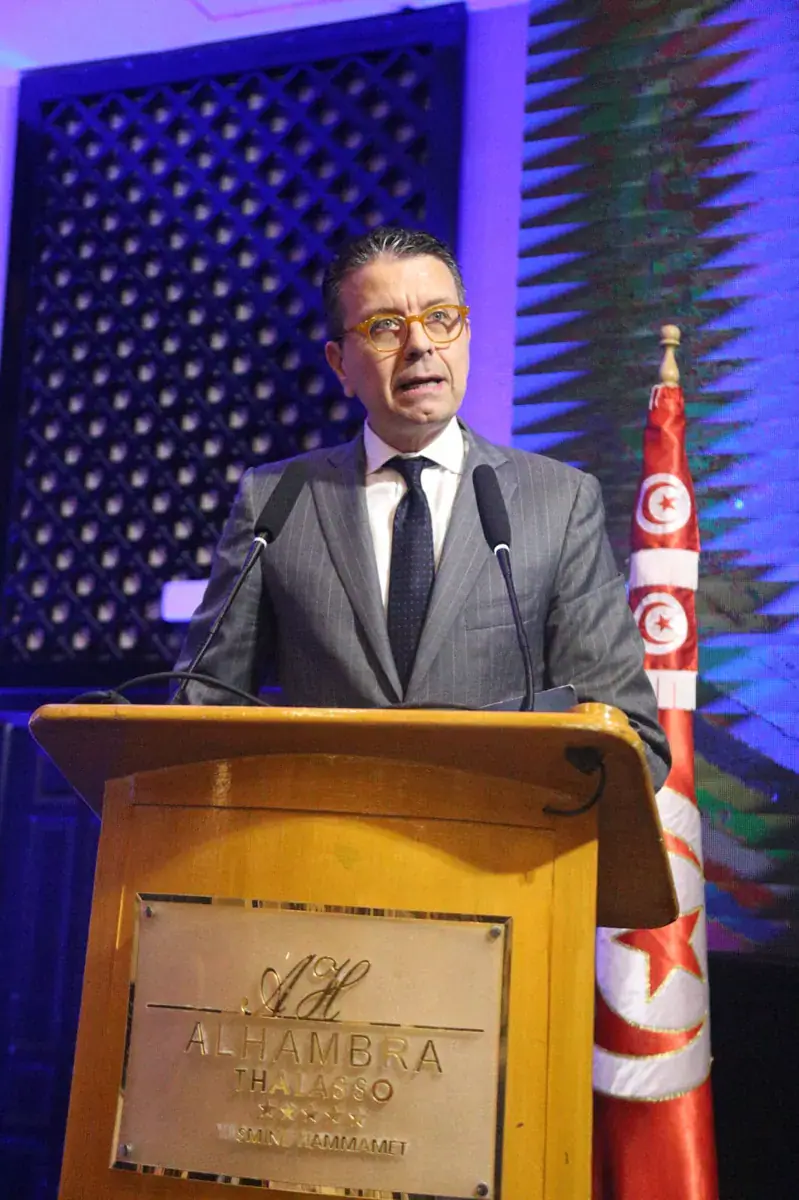
The 28th International Forum of Realities, held in Yasmine Hammamet, Tunisia, brought together industrialists and European partners to discuss potential collaborations. Aslan Berjeb, President of CONECT, presented three key proposals to strengthen Tunisia's industrial partnerships with Europe. He emphasized that Tunisia can become a more comprehensive co-production partner, increasing its design, technological mastery, and value-added production.
Berjeb highlighted Tunisia's existing strengths in the textile, automotive, and aerospace sectors, referring to them as the country's "triptyque industriel de confiance" or industrial trust triptych. This triptych has provided Tunisia with experience in international value chains, trained technicians, engineers, and executives, and enabled the emergence of companies capable of meeting high-quality requirements.
To further develop these sectors, Berjeb suggested expanding the functions exercised in Tunisia, such as increasing tooling or components for new mobilities in the automotive sector, developing products and technical textiles in the textile sector, and enhancing complex processes and technical services in the aerospace sector. He emphasized that public policy must support these efforts by identifying missing skills, necessary equipment, standards to master, and financing to mobilize.
Berjeb also stressed the importance of clarifying Tunisia's position in the new European industrial policy. He noted that Europe seeks to reduce strategic dependencies, particularly with China, and diversify its supplies. Tunisia can contribute to this effort through nearby production integrated into European industrial chains. Berjeb proposed translating this possibility into a precise offer, including available capacities, volumes, deadlines, and requirements that Tunisian companies can meet.
To facilitate this process, Berjeb recommended organizing partnerships by sector and territory. He suggested that investors should be able to quickly identify ecosystems offering the best conditions, including suppliers, testing facilities, training centers, logistical services, and partners for product development. Berjeb proposed constructing territorial co-production offers with European partners, presenting companies, skills, infrastructure, needs, and potential projects.
Berjeb also identified potential new sectors for collaboration, such as the maritime industry, which is a focus of the European Commission's industrial strategy. He noted that skills developed in cabling, mechanics, and engineering could be applied to shipbuilding, equipment, repair, and modernization. Berjeb concluded that these opportunities can be explored by matching Tunisian capabilities with European needs.
The proposals presented by Berjeb aim to strengthen Tunisia's industrial partnerships with Europe and capitalize on the country's existing strengths. By enhancing co-production, diversifying supplies, and clarifying Tunisia's position in the European industrial policy, Berjeb believes that Tunisia can take a significant step forward in its industrial development.
Key points
- Aslan Berjeb proposes three tracks for Tunisia to enhance industrial partnerships with Europe, focusing on expanding existing sectors, clarifying Tunisia's position in the European industrial policy, and organizing partnerships by sector and territory.