The 2026 Asian Games in Japan are set to close on Sunday, after a fortnight of competition that saw young athletes break records and shine, but also faced criticism over organizational issues and sparse crowds. Over 17,000 athletes and officials participated in the Games, which took place in Nagoya and Aichi prefecture. The event was notable for the achievements of young athletes, including Chinese swimmer Yu Zidi, who won three gold medals at the age of 13.
Yu Zidi's performances in the pool were particularly impressive, as she set multiple Games records in the 200m butterfly and 200m-400m individual medley events. Her achievements have generated excitement for the 2028 Los Angeles Olympics, where she is expected to be a major medal contender. Zidi was named a Games MVP on Sunday, despite her modest self-assessment, saying she doesn't consider herself a prodigy.
Other athletes also made their mark at the Games, including Japanese swimmer Shin Ohashi, who broke the men's 200m breaststroke world record at the age of 17. In athletics, Thai sprinter Puripol Boonson won the 100m-200m double and was named men's MVP, expressing confidence that his performance will translate to success at the Los Angeles Olympics.
Despite the achievements of the athletes, the Games were marred by organizational issues and criticisms of mismanagement. The event did not have a traditional athletes' village, with participants instead housed in temporary units, on a cruise ship, and in hotels. This setup led to complaints about cramped conditions and a shortage of beds, with one Thai Olympic official describing the situation as "like musical chairs".
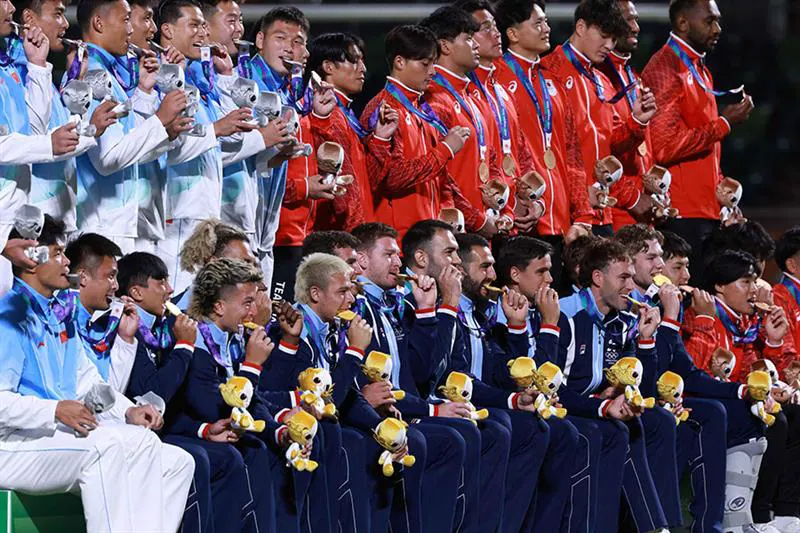
The issues continued to mount, with athletes' buses failing to arrive on time, teams being sent to the wrong venues, and mistakes during medal ceremonies. The Olympic Council of Asia defended the Games, pointing to the 50 world records broken during the event, but some officials were critical, with Ryu Seung-min, president of the Korean Sport and Olympic Committee, giving the organizers a "failure grade".
The Games also faced challenges with attendance, with the opening ceremony taking place in front of thousands of empty seats and some events drawing sparse crowds. However, some sports, including men's football, attracted large audiences, with 30,000 spectators attending the final between South Korea and Japan. Japanese Olympic Committee president Seiko Hashimoto acknowledged that there were problems, but expressed a desire to host more international events in the future.
The 2026 Asian Games saw the debut of several sports with ambitions of making the Olympics, including padel, MMA, and virtual taekwondo. The event also featured historic achievements, such as Yuki Kurihara's gold medal in eSports at the age of 11, making him the youngest Games champion in history. The Games will conclude with a closing ceremony on Sunday, as Japan hands over the baton to Doha.
Key points
- The 2026 Asian Games saw a record 50 world records broken during the event.
- Young athletes shone at the Games, including 13-year-old Chinese swimmer Yu Zidi, who won three gold medals.
- The event faced criticisms of mismanagement and organizational issues, including a shortage of beds and mistakes during medal ceremonies.