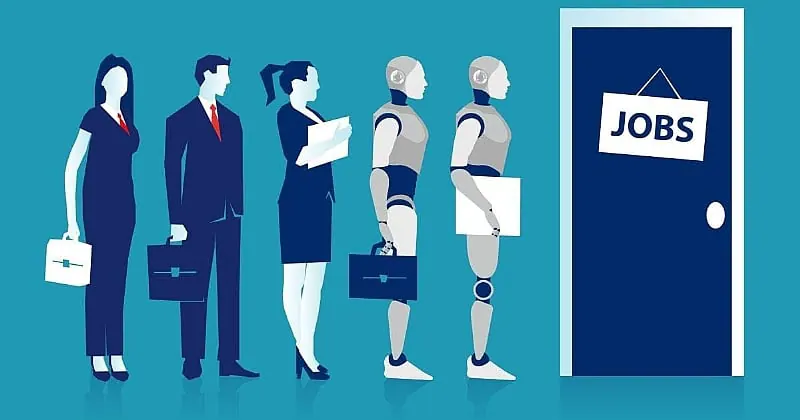
The use of artificial intelligence in the workplace has sparked debate about who should bear the cost of job displacement. Recent labour rulings in China have highlighted the issue, where a technology company was ordered to compensate an employee who was dismissed after AI systems took over his role. The court ruled that the company's decision to adopt AI was a deliberate business decision, and therefore, they were responsible for the employee's losses. This ruling sets a precedent for employers to consider the impact of AI on workers.
The Chinese cases involved two employees, Zhou and Liu, who were displaced due to AI adoption. Zhou was offered a lower-level position with a steep pay cut, which he refused, while Liu's contract was terminated after his department was closed. The courts ruled in favour of the employees, stating that employers must explore retraining, redeployment, and consultation with workers before replacing them with AI. This approach prioritizes worker protection and requires employers to manage the transition to AI.
Africa is not immune to the impact of AI-driven job displacement. As adoption accelerates, governments will need to develop administrative capacity and legal frameworks to ensure that firms manage disruption before displacement becomes widespread. The African workplace is already seeing the introduction of AI in various sectors, including customer service, document processing, and routine analysis. This shift has significant implications for young people who rely on these entry-level positions to gain formal employment.
The gap between the incentives to automate and the safeguards available to workers is widening. In many Western economies, firms have broad freedom to reorganize around new technologies, while employees may receive limited compensation. In Africa, worker protection is often weak, even for employees formally covered by labour law. An ILO study found that 88% of employees in eight West African countries experienced multiple violations of their labour rights.
The enforcement gap in Africa heightens the vulnerability of workers to AI-driven job displacement. AI is advancing before many economies have generated enough formal, productive, and decent work for their young populations. Persistent unemployment, widespread informality, and limited social protection increase the risk of displacement. Governments should begin by requiring firms to assess the employment effects of AI adoption and consult workers and unions.
To mitigate the impact of AI-driven job displacement, governments should invest in digital and vocational skills, data governance, and local-language AI. Workers need credible pathways from tasks that machines can perform to jobs that depend on judgement, supervision, and contextual knowledge. This requires stronger social protection, including portable benefits, targeted cash support, and retraining funds. Implementing these measures will require capable institutions and public expertise.
The adoption of AI in Africa presents an opportunity for governments to create a framework for sharing productivity gains while safeguarding human dignity and social stability. Firms should benefit from innovation, but not at the expense of workers and the public. Policy should reward responsible adoption, require consultation with national authorities, and support workers who are displaced due to AI adoption. By taking proactive measures, governments can ensure that the benefits of AI are shared fairly and that workers are protected from the negative impacts of job displacement.
Key points
- Governments should require firms adopting AI at scale to assess employment effects and consult workers and unions.
- Employers should explore retraining, redeployment, and consultation with workers before replacing them with AI.
- Stronger social protection, including portable benefits and retraining funds, is necessary to support workers displaced due to AI adoption.