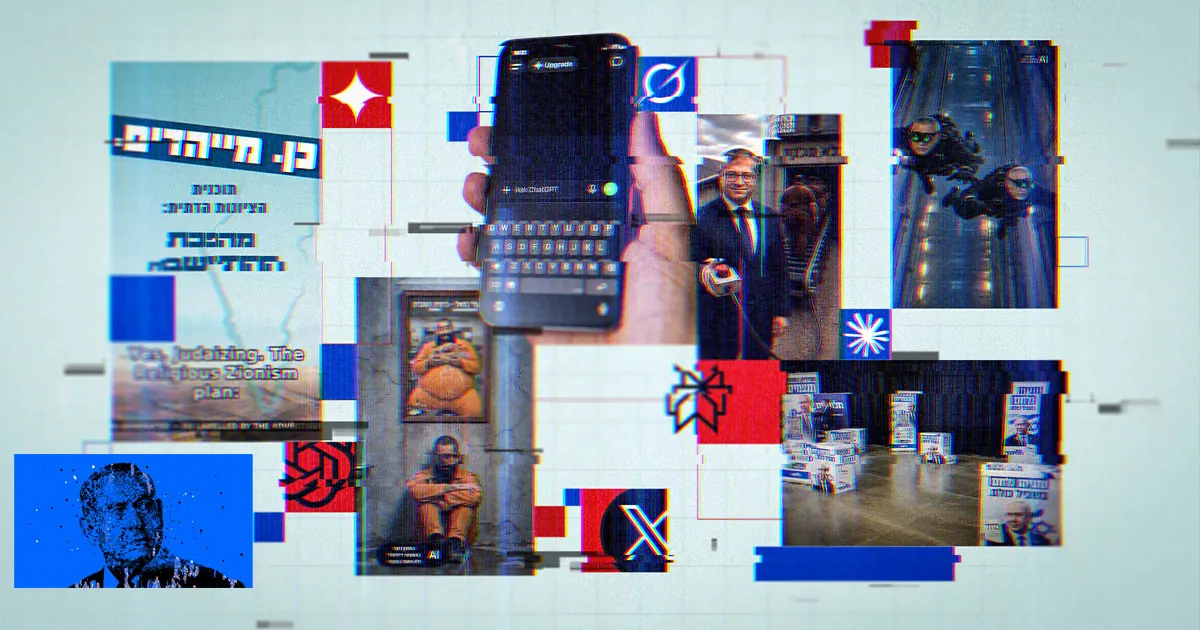
The Israeli legislative elections, set to take place on October 27, have seen a significant increase in the use of artificial intelligence (AI) by various political parties. This trend has raised concerns about the potential manipulation of voters and the spread of misinformation. According to experts, AI is being used to create personalized messages, videos, and even virtual avatars that can engage with voters and influence their decisions.
The use of AI in Israeli elections is not limited to just creating content. Political parties are also using AI to gather data on voters, including their preferences, location, and online behavior. This data is then used to create targeted messages and advertisements that are designed to persuade voters to support a particular party or candidate. Experts warn that this level of data collection and manipulation can be detrimental to the democratic process.
One notable example of AI being used in Israeli elections is the creation of a fake video meeting between Gadi Eizenkot, a candidate for prime minister, and Mahmoud Abbas, the Palestinian leader. The video, produced by the Religious Zionist Party, was designed to portray Eizenkot as a weak and compromising leader. Although the video was later removed by the Central Election Commission, it highlights the potential for AI to be used to spread misinformation and manipulate public opinion.
According to Karine Nahon, an Israeli expert on information and disinformation, the use of AI in elections is not just about creating fake content, but also about the way it can be used to manipulate voters behind the scenes. Nahon warns that AI can be used to monitor and manipulate voters, making it difficult to distinguish between what is real and what is not.
The Israeli government has invested heavily in AI technology in recent years, including in the area of online psychological warfare. Some of these tools are now being used in Israeli elections, with parties using AI to create sophisticated campaigns that target specific voters. Experts warn that this level of investment and use of AI can give some parties an unfair advantage.
The use of AI in Israeli elections has also raised concerns about the potential for bots and virtual avatars to influence voters. Companies have developed bots that can pose as human voters, engage in online discussions, and even vote in online polls. These bots can be used to create the illusion of public support for a particular party or candidate.
Experts warn that the use of AI in Israeli elections is just the beginning of a new era of digital manipulation. As the use of AI becomes more widespread, it will be increasingly difficult to distinguish between what is real and what is not. This trend highlights the need for greater regulation and transparency in the use of AI in elections, as well as efforts to educate voters about the potential risks and benefits of this technology.
Key points
- The use of artificial intelligence in Israeli legislative elections has raised concerns about the manipulation of voters and the spread of misinformation.
- AI is being used to create personalized messages, videos, and virtual avatars that can engage with voters and influence their decisions.
- Experts warn that the use of AI in elections can be detrimental to the democratic process, highlighting the need for greater regulation and transparency.