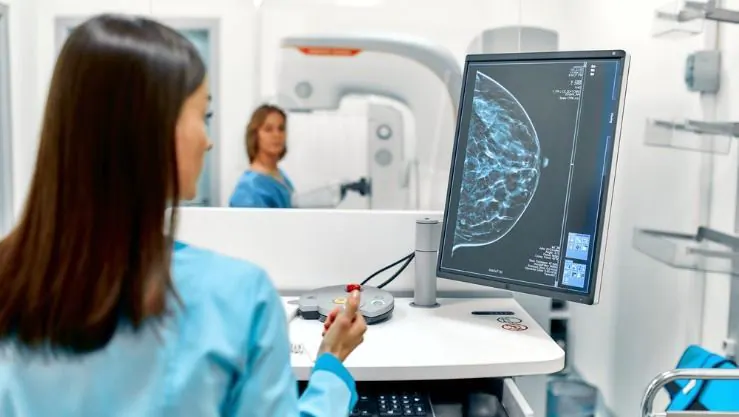
Recent studies have highlighted the potential of artificial intelligence (AI) in improving the early detection of breast cancer. By analyzing mammography images, AI systems can identify indicators of the disease that may not be apparent through traditional examination methods. This advancement could lead to earlier diagnosis and treatment for patients. A Swedish study published in the journal "Radiology" found that AI systems were able to detect signs of breast cancer in mammography images up to six years before diagnosis in some cases.
The study, which analyzed nearly 89,000 mammography images from 31,000 women, found that AI-detected signs of cancer were present in around 20% of cases up to six years before diagnosis. The researchers hope that this technology will help doctors identify women who may require more frequent monitoring. Another study published in "Nature Medicine" found that integrating AI into breast cancer screening increased the detection rate by 15.2% while reducing the workload of radiologists by 63.6%. These findings suggest that AI can be a valuable tool in the early detection of breast cancer.
Despite these technological advancements, early detection remains a critical factor in breast cancer survival rates. According to the World Health Organization (WHO), approximately 2.4 million women were diagnosed with breast cancer in 2024, and nearly 694,000 women died from the disease. The WHO's 2026 data shows significant disparities in survival rates, with a global average of 77.8% for five-year survival rates among women diagnosed between 2017 and 2021.
The disparities in survival rates are partly attributed to late diagnosis and limited access to treatment in low-income countries. The WHO reports that the five-year survival rate for breast cancer patients in high-income countries was 87.3%, compared to 41.9% in low-income countries. This highlights the need for improved access to early detection and treatment methods, particularly in resource-constrained areas.
The use of AI in breast cancer detection is not a replacement for human medical professionals but rather a tool to support their work. AI can help identify potential cases, allowing doctors to prioritize and monitor high-risk patients more effectively. However, it is essential to note that AI is not a substitute for regular check-ups and screenings.
As the world observes Breast Cancer Awareness Month, the importance of regular check-ups and screenings is emphasized. Women are encouraged to be aware of any unusual changes in their breasts and seek medical attention if they experience any symptoms. By combining AI technology with regular screenings and check-ups, it is hoped that breast cancer survival rates will improve.
The integration of AI in breast cancer detection has shown promising results, but it is crucial to ensure that this technology is accessible to those who need it most. Efforts to improve access to early detection and treatment methods, particularly in low-income countries, are essential to reducing breast cancer mortality rates.
Key points
- AI technology can detect signs of breast cancer up to six years before traditional diagnosis methods.
- Early detection remains a critical factor in breast cancer survival rates.
- AI is not a replacement for human medical professionals but rather a tool to support their work.