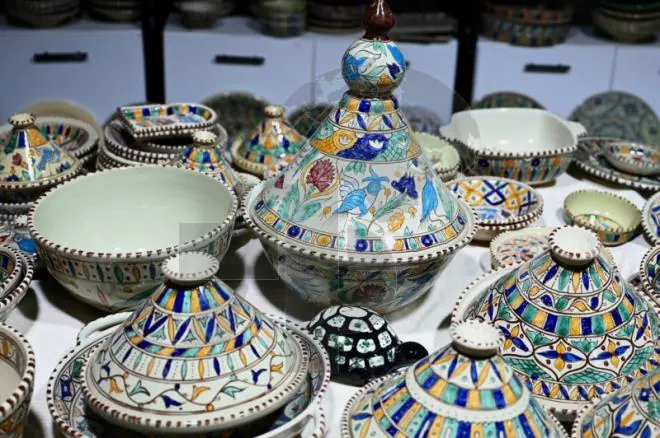
The Articrea exhibition, a premier event for Tunisia's handicraft sector, kicked off on October 7, 2026, at the Kram Exhibition Palace. The three-day event brings together 228 artisan enterprises, including 40% led by university graduates. The exhibition aims to promote Tunisian handicrafts, foster partnerships, and explore new markets for local artisans. High-profile attendees include international buyers, foreign delegations, and representatives from several diplomatic missions accredited in Tunisia.
Leila Messellati, Director-General of the National Handicraft Office, highlighted the significance of hosting international buyers, allowing them to experience Tunisia's diverse handicrafts and regional specialties firsthand. This exposure can lead to regular orders throughout the year, ensuring the sustainability of artisan enterprises. Key export products include olive wood, traditional ceramics, textiles, and plant fibers, as well as distilled herbs and flowers, which have seen remarkable growth.
According to Messellati, Tunisian handicraft exports reached approximately 85 million dinars by the end of August 2026, representing a 3% increase from the previous year. She believes the sector has untapped potential for exporting to European, American, and Arab markets. The growing interest of young university graduates in the handicraft sector is also noteworthy, with many seeing opportunities for economic activity and employment.
Claudio Duta, General Director of a Romanian company specializing in construction machinery and equipment, expressed his interest in exploring cooperation opportunities with Tunisian enterprises. He was impressed by Tunisia's rich cultural heritage and handicrafts, particularly traditional ceramics from Sejnane. Duta's visit to the exhibition allowed him to discover new products and identify potential cooperation opportunities.
Eton Micallef, Executive Director of the Maltese Handicraft Foundation, noted the similarities between Tunisian and Maltese handicrafts, particularly in broderie, ceramics, and traditional tiling. He sees potential for cooperation in promoting and exporting handicrafts between the two countries, allowing them to tap into each other's markets and leverage their experiences.
Micallef emphasized that Tunisian handicrafts not only preserve traditional methods but also demonstrate a commitment to creativity and innovation, aligning with Malta's experience. He advocated for increased exchanges between artisans and professionals, enabling them to better understand evolving consumer tastes and the appeal of traditional crafts.
The third edition of the Articrea exhibition will run until October 11, 2026, at the Kram Exhibition Palace, open to visitors from 10 am to 7 pm. A Chinese tourist visiting the exhibition praised the vibrant colors and unique aspects of Tunisian handicrafts, expressing her admiration for the creations she saw.
Key points
- The Articrea exhibition aims to promote Tunisian handicrafts and foster partnerships with international buyers and diplomats.
- Tunisian handicraft exports have seen a 3% increase, reaching 85 million dinars by the end of August 2026.
- The exhibition features 228 artisan enterprises, including 40% led by university graduates.