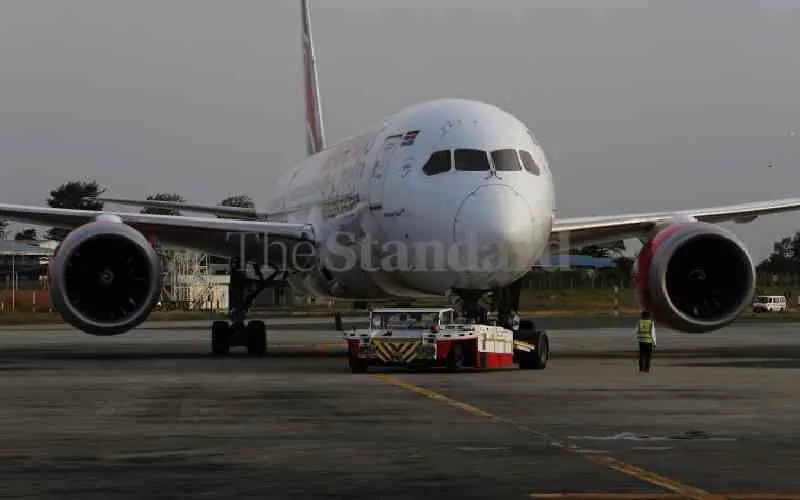
Kenya recently confirmed its first imported Ebola case after a passenger traveled from the Democratic Republic of Congo through Uganda. The incident has raised concerns about the safety of flights amid the outbreak. However, according to the World Health Organisation, the risk of Ebola transmission during air travel is low. Ebola is not an airborne infection like influenza or Covid-19, but rather spreads through direct contact with the blood or other body fluids of an infected person.
The US Centers for Disease Control and Prevention advises travelers in areas affected by Ebola to avoid contact with blood, urine, faeces, saliva, sweat, vomit, and other body fluids. Travelers are also advised to practice good hand hygiene by washing their hands regularly with soap and water or using an alcohol-based hand sanitizer. In Kenya, the Kenya Civil Aviation Authority has issued an Ebola travel advisory requiring temperature screening at points of entry for travelers with a fever of 38°C or higher.
The Kenya Civil Aviation Authority has also required travelers originating from the Democratic Republic of Congo or Uganda to complete an electronic traveler surveillance form. Operators of aircraft originating from or transiting through the two countries are required to provide passengers with access to the form before the journey begins. Additionally, travelers are required to observe routine hand hygiene, and operators must provide passenger manifests and health declaration forms to port health officers when requested.
Airlines play a crucial role in reducing the risk of Ebola transmission during flights. Cabin crew may be the first people to notice that a passenger has become unwell during a flight. The US CDC's guidance for cabin crew recommends measures to recognize and manage sick travelers and limit the spread of infectious diseases on aircraft. Airlines operating in Ebola-affected areas should maintain clear procedures for crew, screening, and aircraft cleaning.
Aviation safety expert and KCAA Head of Quality Safety Maurice Juma says airlines operating in Ebola-affected areas should have Ebola-related procedures in place, including the use of personal protective equipment and regular aircraft disinfection. Juma stated that airlines have had Ebola-related procedures in place since April, including passenger screening and regular aircraft disinfection. He emphasized that after every flight, the aircraft must be disinfected.
If a passenger develops symptoms that could indicate a serious infectious disease during a flight, the crew should follow the airline's procedures for managing a sick traveler and alert the relevant authorities. The risk to other passengers depends largely on the nature of the illness and whether the sick passenger has come into contact with other people or contaminated surfaces.
According to the US CDC's guidance for commercial aircraft carrying a traveler with a viral haemorrhagic fever, the cleaning response should depend on the symptoms the passenger displayed while on board. If a suspected Ebola patient had no vomiting, diarrhea, or bleeding during the flight, routine cleaning and laundering can be carried out even if laboratory testing later confirms a viral haemorrhagic fever.
Key points
- The risk of Ebola transmission during air travel is low, but precautions are necessary to prevent the spread of the disease.
- Airlines and health authorities have roles to play in reducing the risk of Ebola transmission during flights.
- Travelers can take precautions by practicing good hand hygiene and avoiding contact with sick individuals.