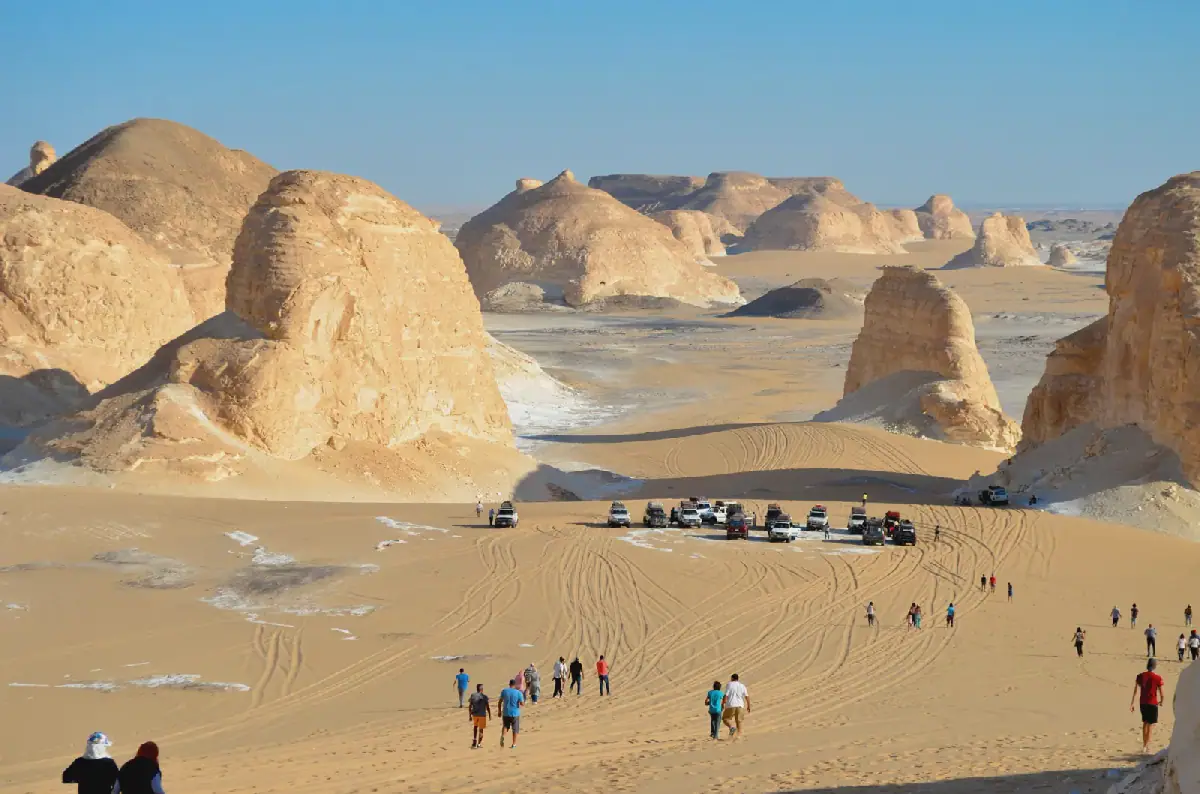
An Egyptian-Italian archaeological team has made a significant discovery in Egypt's Western Desert, uncovering the remains of a sizable prehistoric settlement that dates back around 8,500 years. The site, located on a plateau at the eastern edge of the Farafra Depression, is one of the largest prehistoric settlements documented in the region. According to officials, early analysis suggests that the settlement was an organized community rather than a temporary camp.
The archaeological team, led by Giulio Lucarini, recorded approximately 200 features at the site, including stone structures, hearths, and dense clusters of stone tools. By comparing the finds with those in Farafra's White Desert and in the Dakhla and Kharga oases, the team was able to establish a tentative date in the middle of the Holocene epoch. This dating could provide valuable insights into how people settled the area as the Sahara turned drier.
Hisham El-Leithy, secretary general of the Supreme Council of Antiquities, noted that the settlement's size and layout point to repeated, sustained habitation. The site's location on a plateau offered a suitable environment for settlement, with local stone available for building and toolmaking. Geological studies conducted by the mission found signs of a wetter climate than today's, including shallow depressions and ancient lake deposits.
The discovery sheds light on how ancient communities adapted to climate change, according to Sherif Fathy, the tourism and antiquities minister. The team's findings suggest that the settlement was occupied during a period of transition, as the Sahara began to dry out. This information could provide valuable insights into the lives of early inhabitants of the region and their ability to adapt to changing environmental conditions.
The Egyptian-Italian archaeological team began fieldwork on the plateau in 2023, and its 2025 season added excavations and geological analysis. Italian archaeologists have worked in Farafra since 1987, and earlier research traced village life in the oasis to roughly 7000 to 6000 B.C. The team's continued research with the Antiquities Council will likely provide further insights into the lives of the settlement's inhabitants.
The discovery of the 8,500-year-old settlement is significant, as it provides a unique window into the lives of early inhabitants of the region. The site's location in the Western Desert, an area not previously studied, offers a new perspective on the history of human settlement in Egypt. As the team continues its research, it is likely that further discoveries will be made, shedding more light on the lives of ancient communities in the region.
The archaeological team's findings have been welcomed by Egyptian officials, who recognize the significance of the discovery. The site's preservation and continued study will provide valuable insights into Egypt's rich cultural heritage and the lives of its early inhabitants. As research continues, the team is expected to uncover more secrets about the settlement and its place in the history of human settlement in the region.
Key points
- The discovery provides insights into how ancient communities adapted to climate change.