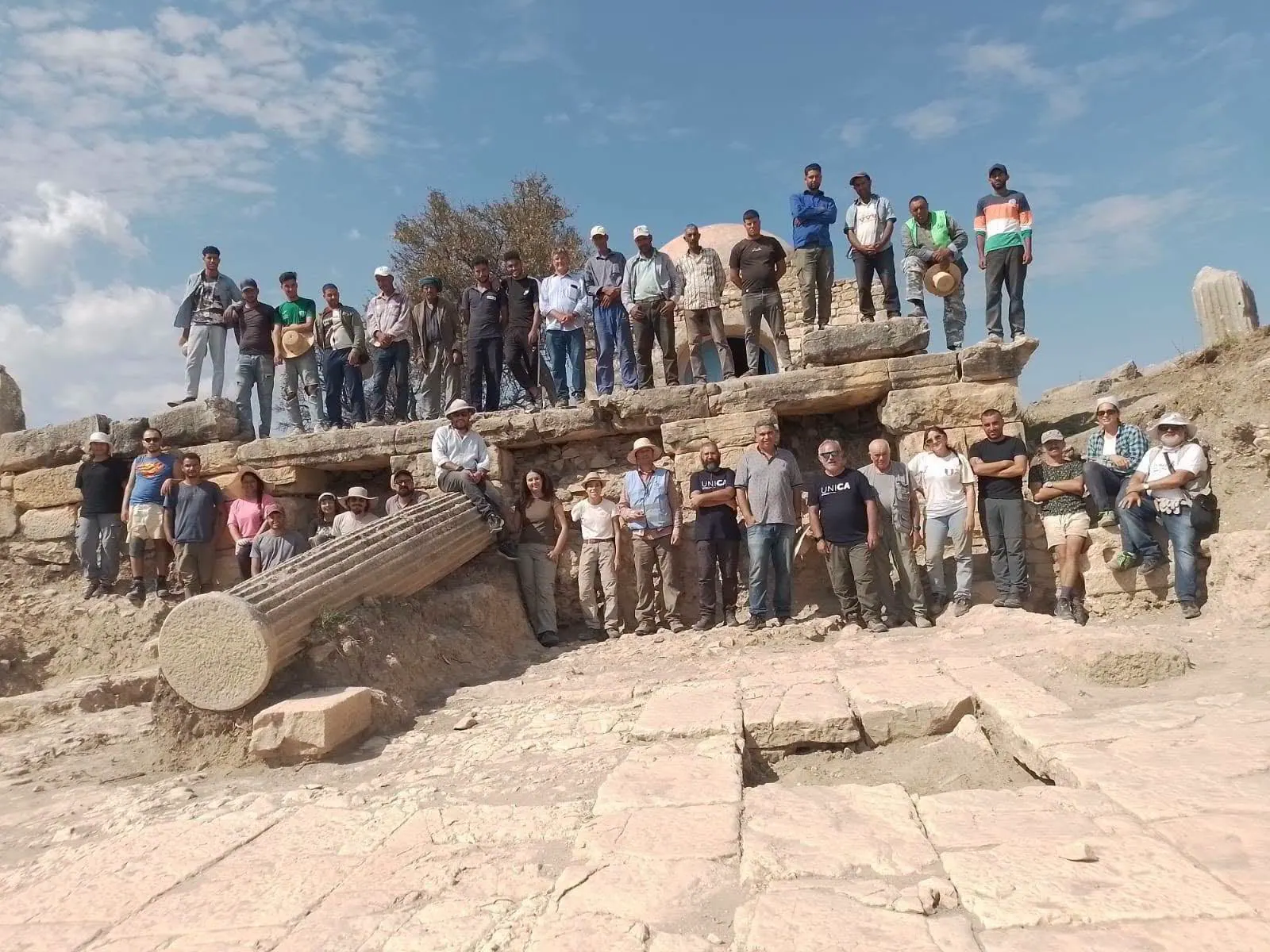
A recent archaeological excavation at the Henshir El Matria site in northern Tunisia has uncovered significant remains from the Roman period and the 5th century AD. The dig, conducted by the National Institute of Heritage in collaboration with the University of Sassari in Italy, took place from September 6 to October 4, 2026. The excavation involved researchers and students from various levels, who worked together to study and evaluate two main areas of the ancient city of Numluli.
The first area of excavation included the Capitoline Temple, built in 170 AD. The team discovered a range of artifacts, including public square pavement, a fountain, and various temple components such as capitals, columns, and geometric decorations. Additionally, fragments of statues were found, all dating back to the Roman period. These findings provide valuable insights into the architecture and art of the time.
The second area of excavation revealed a church and a baptistery constructed in the mid-5th century AD. The site included tombs for Christian dignitaries, various rooms, and walls. The team also discovered funerary jars, jars used for storing provisions, and unique mosaic panels. These artifacts reflect the lifestyle and cultural practices of the city's inhabitants during the late historical period.
The excavation was part of an international cooperation agreement between Tunisia and Italy. The National Institute of Heritage worked closely with the University of Sassari to ensure the success of the project. The involvement of students from different levels demonstrates the importance of collaboration and knowledge sharing in archaeological research.
The discovery of these artifacts highlights the rich history and cultural heritage of Tunisia. The findings at Henshir El Matria provide a unique window into the lives of people living in the region during the Roman and 5th-century AD periods. Further analysis and study of the artifacts are expected to shed more light on the significance of the site.
The excavation is a significant addition to Tunisia's archaeological record. The country's rich history, with its strategic location in North Africa, has made it an important center for trade and cultural exchange. The discovery of the Capitoline Temple and the church and baptistery underscores the region's importance in the ancient world.
The National Institute of Heritage and the University of Sassari plan to continue their collaboration on the project. Further research and analysis of the artifacts are expected to provide more insights into the history and culture of the region. The excavation has also sparked interest in promoting cultural tourism in Tunisia, which could contribute to the country's economic development.
Key points
- The excavation uncovered Roman and 5th-century AD artifacts at the Henshir El Matria site in northern Tunisia.
- The Capitoline Temple, built in 170 AD, and a church and baptistery from the 5th century AD were discovered during the excavation.
- The findings provide valuable insights into the architecture, art, and cultural practices of the region during the Roman and 5th-century AD periods.