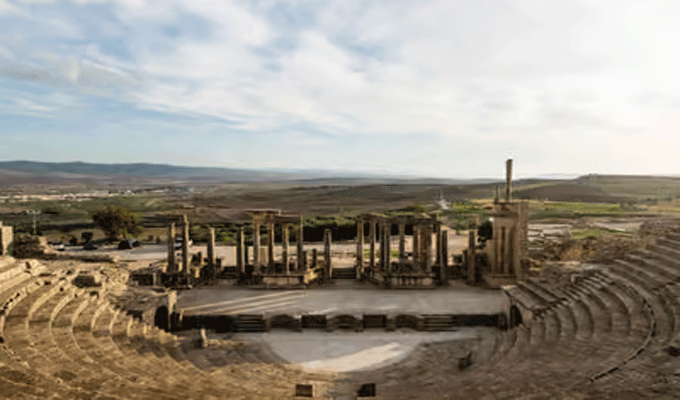
A recent archaeological campaign in Henchir Matria, located north of Téboursouk, Tunisia, has made significant discoveries that could potentially enrich the region's cultural and tourist landscape. The campaign, conducted from September 6 to October 4, 2026, by the Institut national du patrimoine (INP) in cooperation with the University of Sassari in Italy, has unearthed a Roman Capitol built in 170 AD and a Vandal basilica dating back to the mid-5th century.
The Roman Capitol, constructed in 170 AD, features a public square, a fountain, chapiters, columns, geometric decorations, and fragments of statues. The Vandal basilica, built in the mid-5th century, includes Christian notable burials, various rooms, walls, funerary jars, storage vessels, and mosaic panels. These findings provide valuable insights into the history of the ancient city of Numluli.
The discovery of the Roman Capitol and the Vandal basilica raises questions about the potential for cultural and tourist development in the region. Téboursouk is already home to the archaeological site of Dougga/Thugga, a UNESCO World Heritage Site since 1997, covering approximately 75 hectares and showcasing over 17 centuries of history. The new findings could contribute to a broader patrimonial offer around Téboursouk.
However, transforming the archaeological site into a tourist destination requires several steps, including documenting the state of conservation of the ruins, assessing accessibility, and establishing necessary visitor facilities and cultural mediation. While there is no documented information on the current tourist frequentation of Numluli, the region has shown potential for cultural and solidarity tourism, as seen in the "Visit Dougga" program launched in 2025.
The "Visit Dougga" program, carried out with the municipality of Téboursouk and Swiss cooperation, aimed to develop cultural and solidarity tourism, including homestay accommodations. The new discoveries in Henchir Matria could add a new piece to Téboursouk's patrimonial landscape, but converting it into a tourist destination remains a challenge.
Key dates and figures related to the archaeological campaign include the period of excavations from September 6 to October 4, 2026, the construction of the Capitol in 170 AD, and the dating of the Vandal basilica to the mid-5th century. The site of Dougga/Thugga was inscribed as a UNESCO World Heritage Site in 1997 and covers approximately 75 hectares.
As the region considers the potential for cultural and tourist development, stakeholders will need to address various factors, including conservation, accessibility, and visitor infrastructure. The Institut national du patrimoine (INP) and other involved parties will likely play a crucial role in determining the future of Numluli as a tourist destination.
Key points
- The archaeological campaign in Henchir Matria has uncovered significant historical ruins, including a Roman Capitol and a Vandal basilica.
- The discovery raises questions about the potential for cultural and tourist development in the region, particularly around Téboursouk and the existing UNESCO World Heritage Site of Dougga/Thugga.
- Transforming the site into a tourist destination will require careful planning, including conservation, accessibility, and visitor infrastructure considerations.