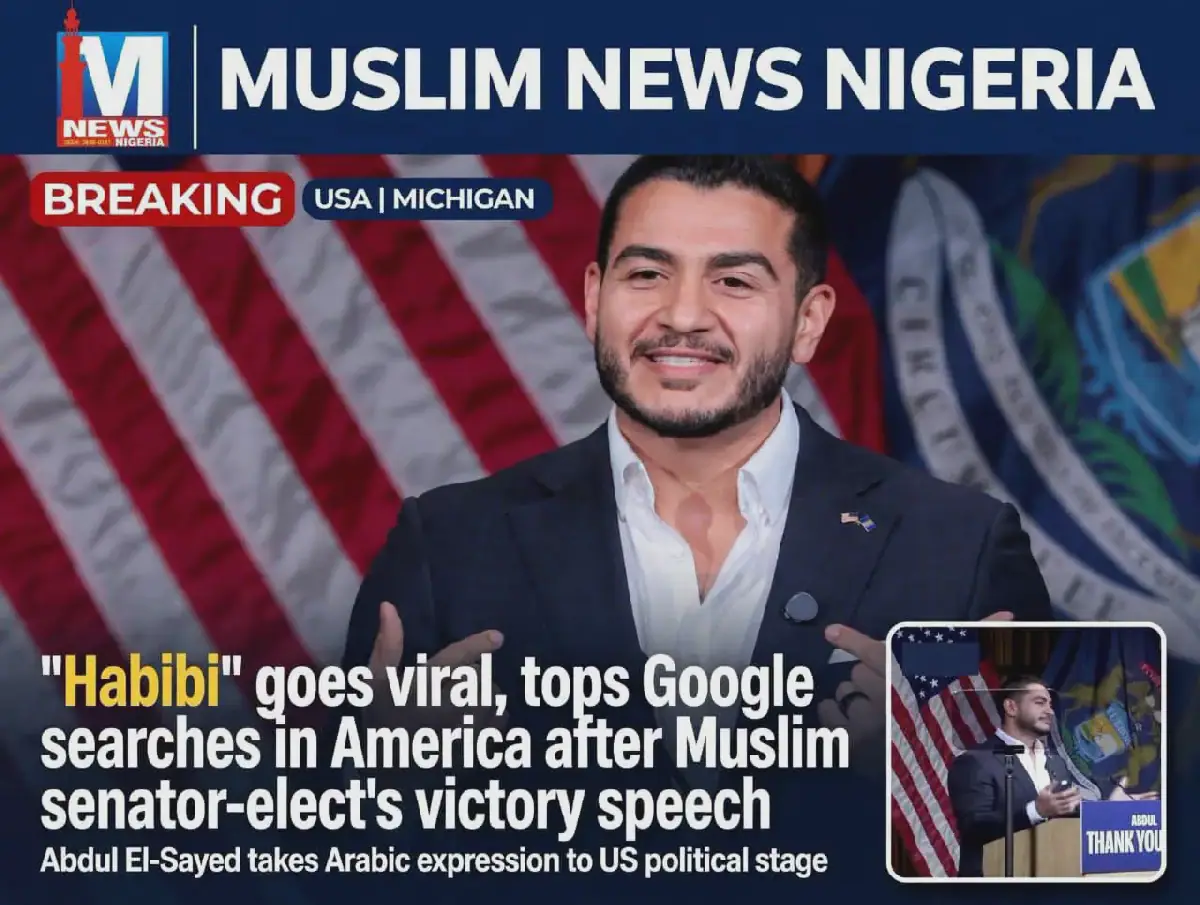
An Arabic expression of affection, Habibi, has become a trending Google search term in the United States following the victory speech of Egyptian-American Muslim politician, Dr Abdulrahman Mohamed El-Sayed. El-Sayed used the word while addressing US Vice President JD Vance during his speech in Detroit on November 4, after winning Michigan's US Senate election. Habibi, which means "my beloved", "my dear" or "my love", sparked curiosity among Americans, with searches for its meaning reportedly surging.
El-Sayed defeated Republican candidate Mike Rogers in the November 3 election, making history as the first Muslim elected to the United States Senate. His victory marked a significant moment for Muslim representation in American political institutions. During his speech, El-Sayed highlighted the irony that Vance, who had criticised him during the election campaign, would be constitutionally required to administer his oath of office when the new Senate convenes in January 2027.
El-Sayed's use of Habibi was not the only Arabic expression that featured prominently in his victory speech. He recalled repeatedly saying Insha Allah, meaning "God willing", whenever people asked about his chances of winning the election. Following his victory, he told supporters that they could turn that "Insha Allah" into an "Alhamdulillah", an expression of gratitude commonly used by Muslims worldwide.
Habibi is an Arabic term of endearment derived from Habib, meaning beloved, with the suffix i meaning "my". It is commonly used to address loved ones, family members and friends, although its meaning and tone can vary depending on the relationship and context. The feminine equivalent is Habibti. Both expressions are widely used across Arabic-speaking communities and have become familiar among Muslims around the world.
The development has brought an expression familiar to millions of Arabic speakers and Muslims worldwide into the spotlight of American public conversation. Arabs across the Middle East and beyond celebrated El-Sayed's victory, with social media users sharing music clips and humorous posts featuring Habibi following his remarks. Egyptian academic Khalil al-Anani praised the moment, describing Habibi as "the sweetest word" and thanking El-Sayed for bringing joy to Egyptians.
El-Sayed's use of Arabic expressions resonated with Arabs and Muslims, many of whom celebrated his election and his willingness to embrace his Egyptian heritage on a major American political stage. The moment serves as another reminder that Muslim faith, names, language and cultural heritage are not obstacles to public participation or leadership. They are part of the identities Muslims have every right to express with dignity and confidence.
The sudden popularity of Habibi may have been triggered by a political exchange, but its wider significance lies in the visibility it has given to Arabic language and the rich cultural heritage shared by Muslim communities across the world. For Muslims, the moment is a celebration of their cultural pride and an opportunity to share their traditions with a broader audience.
Key points
- Dr Abdulrahman Mohamed El-Sayed used the Arabic term 'Habibi' in his US Senate victory speech, sparking widespread interest and searches for its meaning.
- El-Sayed's use of Arabic expressions brought familiar elements of Muslim religious and cultural life into the American political conversation.
- The trending of 'Habibi' highlights the growing visibility of Arabic language and Muslim cultural heritage in American public life.