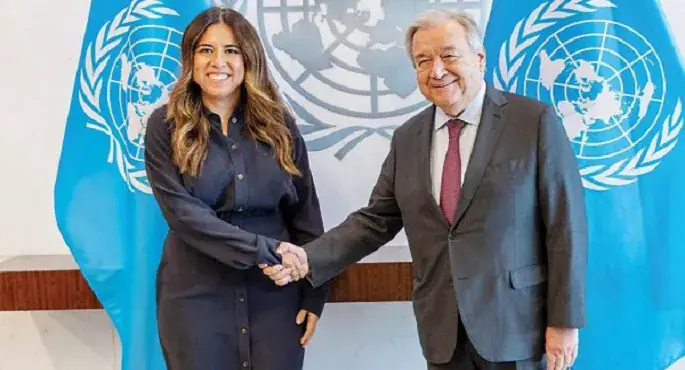
The United Nations is set to begin a new phase in the selection process for its next Secretary-General, with the Security Council conducting its seventh round of informal voting. This round marks the first time that Lana Zaki Nuseibah, the United Arab Emirates' candidate, will participate in the process. Nuseibah's entry brings the total number of candidates to seven. The current frontrunners include Rebecca Greenspan of Costa Rica, Rafael Mariano Grossi of Argentina, and Caroline Rodriguez Birkett of Guyana.
The UAE formally submitted Nuseibah's candidacy on October 21. She participated in an interactive dialogue with members of the General Assembly on October 27 and an informal discussion with Security Council members the following day. The Security Council's voting process is a critical step in the selection process, as it allows members to gauge each candidate's level of support. According to the UN Charter, the General Assembly appoints the Secretary-General based on the Security Council's recommendation.
The previous round of voting, the sixth, did not yield a clear frontrunner. Rebecca Greenspan emerged as the top candidate in the overall tally, while Rodriguez Birkett and Grossi remained strong contenders. Each of the top three candidates received two "disencouraging" votes from permanent members, keeping the competition open. The Security Council used colored ballots in the sixth round to distinguish between votes from permanent members and elected members.
The seventh round of voting will take place with non-distinct ballots, a change that coincides with Nuseibah's entry into the competition. Some members felt that it was essential to give the council an opportunity to assess Nuseibah's level of support before reverting to colored ballots. The UAE's candidacy adds a new dimension to the competition, as countries from different regions vie for the position.
The selection process for the UN Secretary-General is influenced by geographical and political considerations, although the UN Charter does not provide for a mandatory regional rotation. The Latin American and Caribbean region has expressed a desire for one of its members to take on the role. The Security Council's decision will ultimately determine the next Secretary-General, who will succeed Antonio Guterres.
The voting process is expected to conclude before the end of Guterres' term on December 31. The new Secretary-General will assume office on January 1, 2027. The Arab region's bid, led by Nuseibah, may change the dynamics of the competition. The Security Council's decision will be closely watched by UN member states.
The seventh round of voting will begin at 1:30 PM New York time. The council's president will announce that the round has taken place, but the results will not be made public. The outcome of this round will provide insight into Nuseibah's position within the competition and whether her candidacy will alter the balance of the race.
Key points
- The UAE's Lana Zaki Nuseibah joins the competition for the UN Secretary-General position.
- The Security Council conducts its seventh round of informal voting.
- The selection process for the UN Secretary-General is influenced by geographical and political considerations.