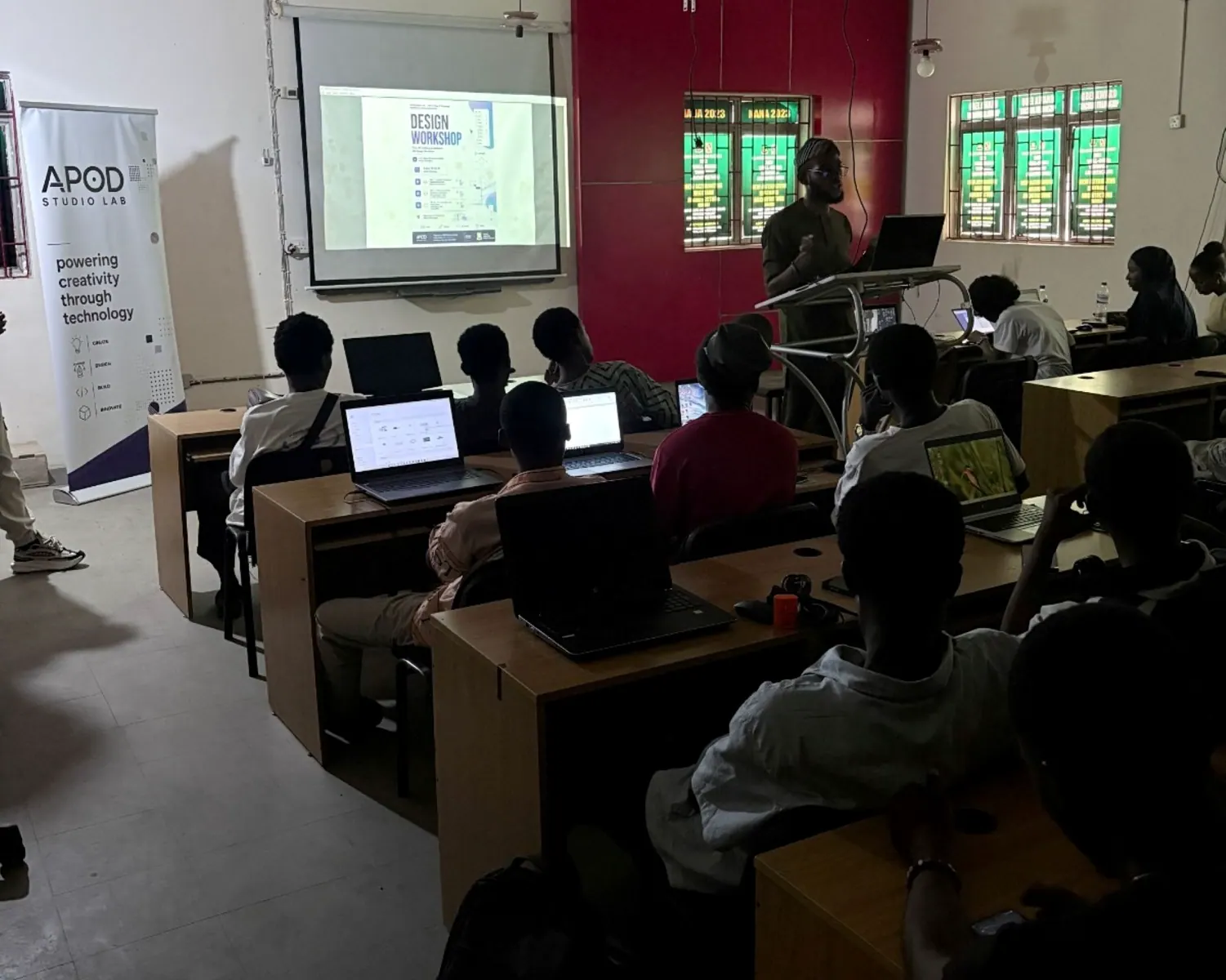
APOD Studio Lab, the creative learning and innovation arm of APOD Studios, has partnered with the Architecture Students’ Association of Yaba College of Technology (YABATECH) to equip students with digital design skills and practical knowledge of emerging technologies in architecture. The partnership resulted in a three-day workshop held in August 2026, themed “From 2D Drafting to Intelligent 3D Design Workflows”. The workshop aimed to expose participants to digital tools and professional processes used in contemporary architectural practice.
The training covered AutoCAD, Revit and Building Information Modelling (BIM), with participants undertaking practical exercises that involved converting 2D architectural drawings into basic 3D models. The programme also introduced students to digital workflow optimisation and automation, helping them understand how different software applications can be integrated to improve efficiency, precision and design documentation. This hands-on experience enabled students to apply theoretical knowledge in a practical setting.
The workshop was facilitated by Page Tsewinor, a spatial designer and creative strategist specialising in workspace and interior architecture, 3D visualisation and emerging digital workflows. Tsewinor guided participants through practical applications of digital design tools, project development and the communication of architectural concepts. His professional experience provided valuable insights into the industry, enabling students to understand the practical applications of their academic knowledge.
According to Tsewinor, the training was designed to help students understand how their academic knowledge could translate into professional practice, particularly as they prepare for internships and careers in the architecture industry. He emphasised the importance of being able to work across tools and understand how a design moves from drafting to modelling and documentation. This skillset enables students to add value when entering a professional environment.
The Head of the Department of Architecture at YABATECH, Dr Oshike E. Emmanuel, commended APOD Studio Lab for the partnership, describing the training as a valuable contribution to students’ digital skills development. Emmanuel noted that the workshop enhanced students’ drafting and modelling capabilities while strengthening their preparedness for professional practice in an increasingly technology-driven industry. He called for sustained collaboration between industry and academic institutions to promote innovation, creativity and professional excellence in architectural education.
The President of the Architecture Students’ Association, Comr. Adolor Humphrey S., expressed satisfaction with the workshop, stating that it helped participants understand how digital design tools could be integrated into practical architectural workflows. Humphrey noted that the workshop showed students how the tools they hear about can actually fit into a real design workflow. He expressed hope that similar programmes would be organised to provide students with further opportunities to develop industry-relevant skills.
The Founder of APOD Studio Lab, Mide Falegan, said the initiative was designed to help creatives understand technology beyond individual software applications and explore its potential to improve how they work and solve problems. Falegan stated that the organisation’s goal is to help creators understand these changes not simply as new tools to learn, but as new possibilities for how they can think, create, solve problems and work. APOD Studio Lab plans to extend similar initiatives to other creative disciplines, including artificial intelligence for designers, visual communication and digital visualisation.
Key points
- APOD Studio Lab partners with YABATECH to train students in digital design skills and emerging technologies in architecture.
- The three-day workshop covered AutoCAD, Revit and Building Information Modelling (BIM).
- The initiative aims to help creatives understand technology beyond individual software applications and explore its potential to improve their work.