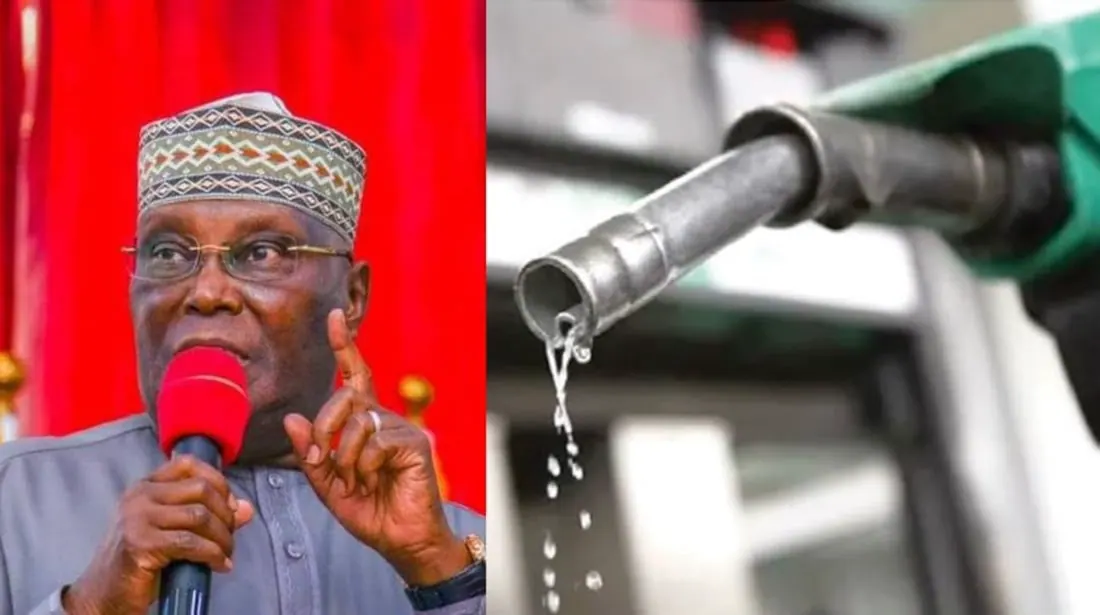
The All Progressives Congress Presidential Campaign Council (APC-PCC) has challenged the proposal by African Democratic Congress (ADC) presidential candidate, Atiku Abubakar, for the Federal Government to intervene in petrol and diesel prices and provide cheaper crude oil to local refineries. APC-PCC spokesperson, Dele Alake, stated that Atiku's proposal raises important legal, fiscal, and practical questions that must be answered.
Alake noted that Section 205(1) of the Petroleum Industry Act (PIA) 2021 provides for wholesale and retail prices of petroleum products to be determined under unrestricted free-market conditions. He cited the Nigerian Midstream and Downstream Petroleum Regulatory Authority (NMDPRA), which recently stated that it does not fix pump prices or issue administrative price templates except where statutory conditions for intervention are met.
The APC-PCC spokesperson challenged Atiku to explain the legal framework for government intervention in the downstream petroleum sector and whether refineries receiving support would be required to sell petrol at a government-prescribed price. Alake also demanded details of the cost and funding mechanism for Atiku's proposal, expressing reservations about the proposed preferential pricing of crude for domestic refineries.
According to Alake, any discount on crude would reduce the value accruing to the Federation and, consequently, the revenue available to the federal, state, and local governments. The cost of the proposed intervention could run into several trillions of naira annually, depending on the size of the discount, the volume of crude covered, and whether the support applied to the entire barrel or only petrol sold domestically.
The APC-PCC stated that the government is pursuing alternative measures to reduce transportation costs through compressed natural gas (CNG) and electric mass transit, with CNG and electric buses already operating on some routes. The council acknowledged the pressure caused by rising petrol prices but maintained that the Tinubu administration would continue implementing measures aimed at cushioning the impact on Nigerians.
Petrol had sold for about ₦830 per litre before the Middle East crisis pushed crude oil prices above $100 per barrel, and any de-escalation of the crisis could ease global crude prices and, consequently, petrol and diesel prices. The NMDPRA is working with the Federal Competition and Consumer Protection Commission (FCCPC) on alleged price-gouging and with the Nigeria Customs Service to tackle the diversion of petroleum products across Nigeria's borders.
The APC-PCC's position was contained in a statement issued on Sunday by Dele Alake, following Atiku's call at a media briefing in Abuja for measures to reduce the cost of petroleum products and support domestic refining. The council's statement reflects the ongoing debate on the government's role in regulating petrol prices and supporting local refineries.
Key points
- The APC-PCC has challenged Atiku Abubakar's proposal for government intervention in petrol prices, citing the Petroleum Industry Act 2021.
- The proposed intervention could reduce the value accruing to the Federation and affect revenues available to the federal, state, and local governments.
- The government is pursuing alternative measures to reduce transportation costs through CNG and electric mass transit.