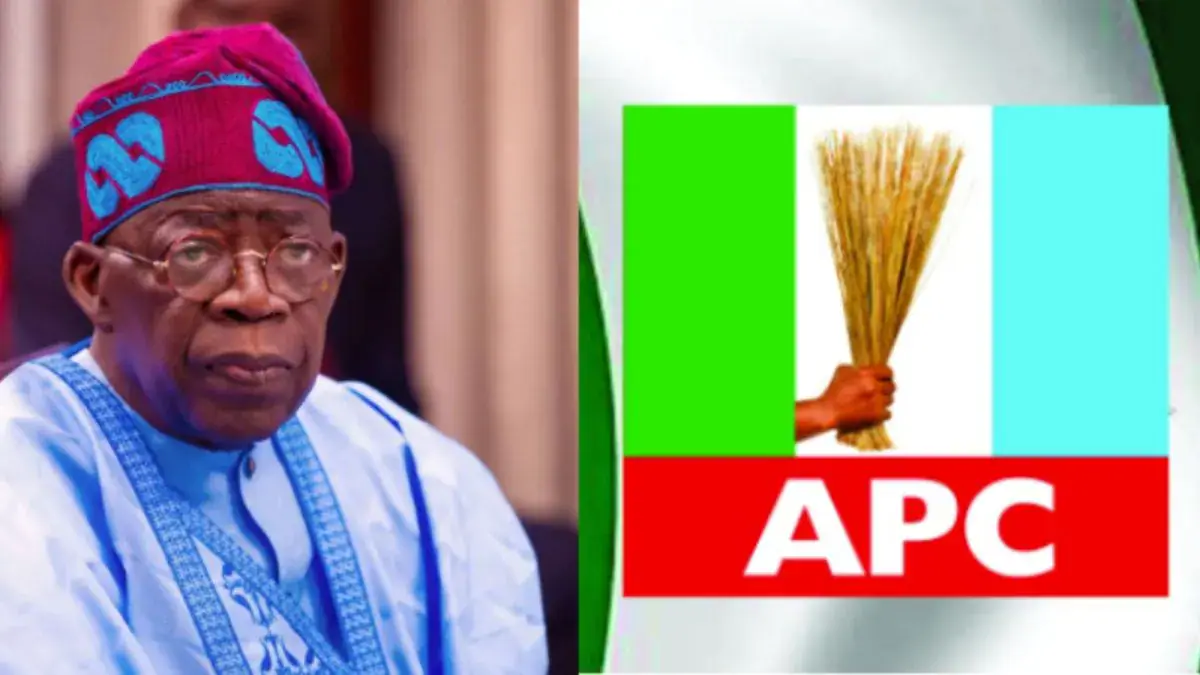
The Presidential Campaign Council of All Progressives Congress (PCC-APC) has responded to public scrutiny of President Bola Tinubu's 2023 campaign promise to address Nigeria's persistent electricity challenges. The party stated that fixing the country's troubled power sector is an ongoing process and that Tinubu has introduced several reforms and interventions to address longstanding challenges in the industry. Dele Alake, spokesperson for the council, made these remarks in an article published on Sunday.
During a meeting with members of the Organised Private Sector (OPS) in Lagos before the 2023 elections, Tinubu promised to tackle the country's electricity challenges, particularly estimated billing. He declared that Nigerians would have electricity and not pay for estimated bills anymore. Tinubu also challenged Nigerians to reject his second-term ambition if he failed to deliver on the promise. Alake noted that some public commentators reproduced the pledge without including Tinubu's concluding qualification that he would explain any failure to meet the target before seeking another mandate.
According to Alake, Tinubu signed the Electricity Act, 2023, on June 9, less than two weeks after taking office. The legislation opened up the electricity market by allowing state governments to participate in power generation, transmission, and distribution. Several states, including Lagos, Enugu, Abia, Ekiti, Oyo, Kaduna, and Niger, have established electricity regulatory agencies to take advantage of the new law and attract private investment. This move aims to improve the power sector's efficiency and effectiveness.
The APC spokesperson highlighted the administration's achievements in addressing legacy debts accumulated in the power sector between 2015 and 2025, which total over N6 trillion. The administration introduced the Presidential Metering Initiative to address an estimated metering gap of more than seven million customers. Over 1.5 million electricity customers have been metered under the initiative in the last three years. The administration also adjusted electricity tariffs towards cost-reflective levels to improve liquidity in the market.
Alake disclosed that the Rural Electrification Agency has connected universities, hospitals, and rural communities to solar power. The government is also pursuing plans to modernize the Osogbo Grid Control Centre, built over 60 years ago, and construct an East-West super grid. These efforts aim to improve the country's power infrastructure and increase access to electricity. The administration's initiatives have shown progress in addressing the power sector's challenges.
On outstanding debts in the electricity market, Alake said the administration established a N4 trillion bond program to clear verified legacy debts owed to 21 electricity generation companies (Gencos) and gas companies (Gascos). The first and second tranches of the program raised over N1.2 trillion to settle part of the outstanding obligations. This intervention has reduced investment risks in the sector and encouraged power generation companies to invest in upgrading their facilities.
The APC spokesperson acknowledged that Tinubu inherited some electricity projects from the administration of former President Muhammadu Buhari, including the Presidential Power Initiative (PPI). Tinubu reviewed the existing agreement and signed an Acceleration Agreement with German partners in December 2023 to speed up projects aimed at improving the national transmission grid. The Federal Executive Council (FEC) approved the first batch of contracts in December 2024 for the upgrade of five Transmission Company of Nigeria (TCN) substations in major electricity load centers.
Key points
- The APC has defended President Bola Tinubu's 2023 campaign promise to end estimated electricity billing and ensure stable power supply.