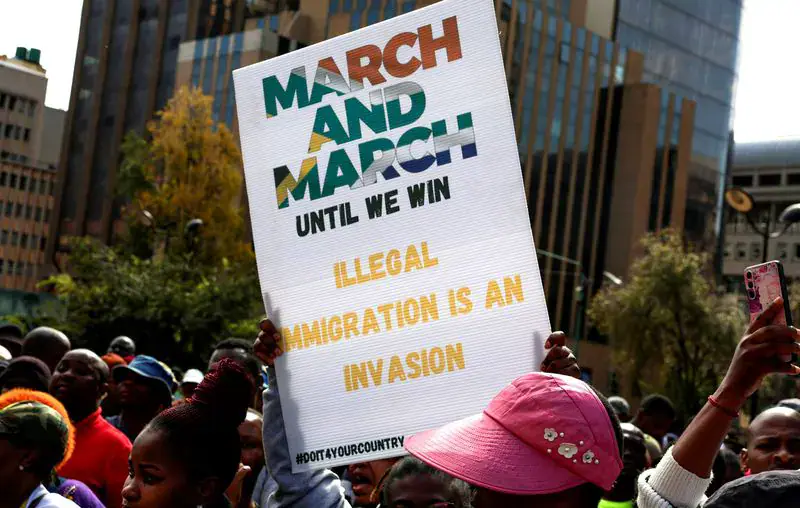
With less than a week to go before the 4 November local elections in South Africa, the anti-foreigner movement has intensified its attacks on the state, casting the government as being at war with its own citizens. The movement's share of online conversation rebounded sharply, with two anti-foreigner communities producing 43% of all posts on social media platform X from 25% of accounts. This resurgence comes as the movement faces off against the state, with the acting police minister seeking to stop protests in Durban and the President deploying soldiers to KwaZulu-Natal.
The anti-foreigner movement's narratives have centered on several key grievances, including the claim that the state is silencing citizens, that the army protects foreigners rather than citizens, and that foreigners are receiving preferential treatment. Notable figures such as Jacinta Ngobese-Zuma and Vuyo Zungula have been instrumental in promoting these narratives, with Ngobese-Zuma's community producing 32% of posts from 17% of accounts. The movement has also sought to frame the issue as an ethnic one, with Ngobese-Zuma accusing police of labeling marchers as "Zulus".
The movement's online campaigns have been characterized by focused amplification, with small groups of accounts repeatedly reposting key influencers. However, it is unclear whether this amplification is due to genuine enthusiasm or coordinated behavior. The movement's content has also emphasized the alleged preferential treatment of foreigners, with Zungula claiming that R1.3-billion was spent on grants for permanent residents, refugees, and asylum seekers in 2025/26.
The anti-foreigner movement's attacks on the state have been met with pushback from critics, including ANC campaigner Buthanani Thobela, who accused Ngobese-Zuma of hiding behind immigration issues rather than engaging openly in politics. Liberal commentators have also argued that the movement's content has been influenced by foreign governments, with Phumzile van Damke suggesting that anti-halaal and anti-Muslim content has been imported from the US.
The EFF, which had previously seen a surge in online activity, fell back to 14% of posts from 8% of accounts as it responded to allegations that the State Security Agency had planted insiders to spy on the party. The EFF condemned the alleged "weaponization" of the SSA by the ANC and sought access to the trial record. The party's leader, Julius Malema, continued to campaign, addressing rallies in Madibeng and Nkomazi.
Other political factions, including the MK party and RET activists, have also grown in online presence, framing the KwaZulu-Natal SANDF deployment as an attempt to intimidate MK voters. The RET bloc has claimed that the Phala Phala scandal is linked to the late taxi boss Mlungisi.
As the local elections approach, the anti-foreigner movement's influence on online conversation is likely to remain significant. The movement's ability to mobilize supporters and shape public discourse has raised concerns about the potential for further polarization and conflict.
Key points
- The anti-foreigner movement has intensified its attacks on the state ahead of local elections.
- The movement's online campaigns have been characterized by focused amplification and coordinated messaging.
- The EFF has faced allegations of being infiltrated by the State Security Agency.