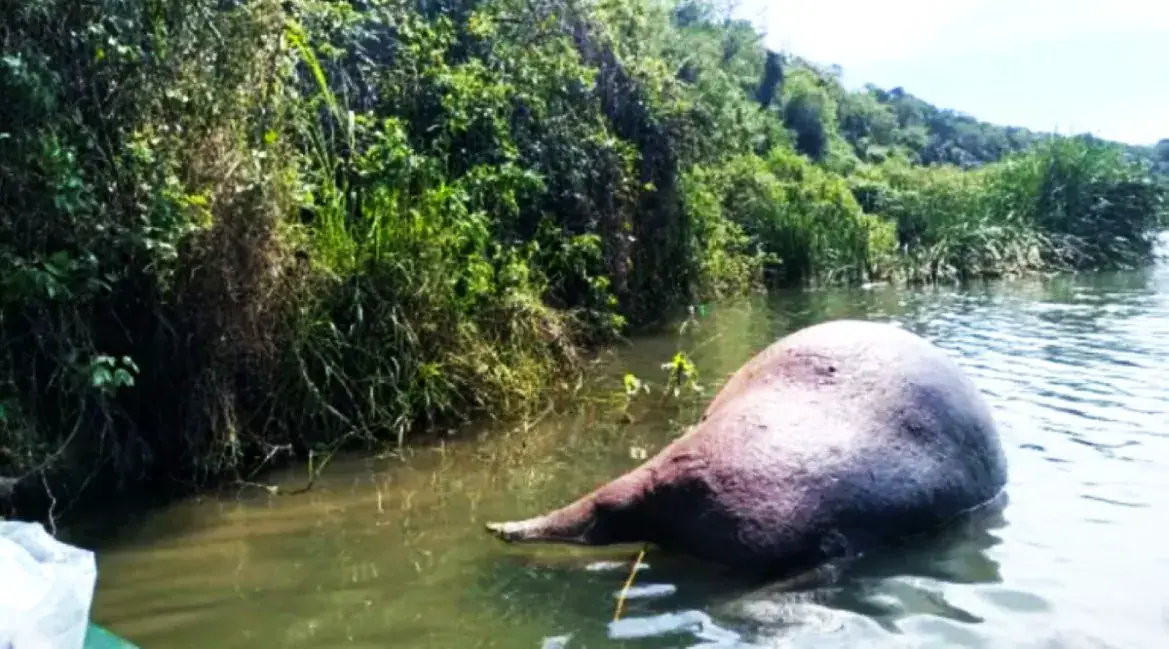
A deadly anthrax outbreak has killed over 30 hippos in the Virunga National Park in the Democratic Republic of Congo. The outbreak was confirmed by park officials following laboratory tests. The deaths were reported in the Semuliki River, west of the national park, over the past four weeks. Residents living along the riverbanks have expressed concern about the situation, especially with the country still grappling with the deadliest Ebola outbreak in its history.
According to Michael Kambale, a resident of the Vitshumbi enclave, the mass deaths of hippos in the Semuliki River began in mid-September. Vitshumbi is located about 100 kilometers north of Goma, the capital of North Kivu province. The Virunga National Park management confirmed that the deaths were caused by anthrax, a disease caused by the bacterium Bacillus anthracis. The park officials stated that over 28 hippos died over approximately one month.
Anthrax can be transmitted to humans through contact with a dead or sick animal or by consuming its meat. Joel Mbusa Mapoli, an expert in ecology and veterinary medicine, said the deaths represented a significant loss for Virunga National Park and called for urgent action to contain the outbreak. He explained that hippos act as ecosystem engineers, altering nutrient flows and the ecological conditions of their habitats.
Virunga National Park said it was focusing on surveillance, the safe management of carcasses, and reducing risks to wildlife and local communities. Teams are monitoring the affected area, recording new cases of mortality, and coordinating the safe handling and disposal of carcasses. People living in the affected area and its surroundings are being informed about the outbreak and advised not to touch, skin, or consume animals found dead.
The park's efforts to contain the outbreak are being hindered by the ongoing conflict between the Congolese army and M23 fighters, which has resulted in the park losing control of a significant part of its territory over the past four years. Olivier Ndoole Bahemuke, a Congolese environmental activist, said the armed conflict had fueled poaching and deforestation in the region.
This is not the first anthrax outbreak in Virunga National Park. In 2025, an anthrax outbreak killed 65 hippos in the park. Park officials said anthrax outbreaks had previously been observed among hippos and other wild animals in the ecosystem during periods of drought. Several factors contribute to recurring anthrax outbreaks, including the persistence of the bacterium in the environment and deteriorating ecological and climatic conditions.
The February 2026 census estimated the hippo population in Virunga National Park at more than 2,700, distributed across 171 groups. Experts warn that anthrax can survive for decades in the soil in the form of spores. Mapoli said the response to anthrax should combine conservation measures with public health interventions, in line with the One Health principle, which recognizes the links between human, animal, and environmental health.
Key points
- The anthrax outbreak has killed over 30 hippos in Virunga National Park, posing a risk to humans and wildlife.
- The outbreak is being contained by park officials through surveillance, safe management of carcasses, and public awareness campaigns.
- The ongoing conflict in the region is hindering conservation efforts, including the protection of Virunga National Park.