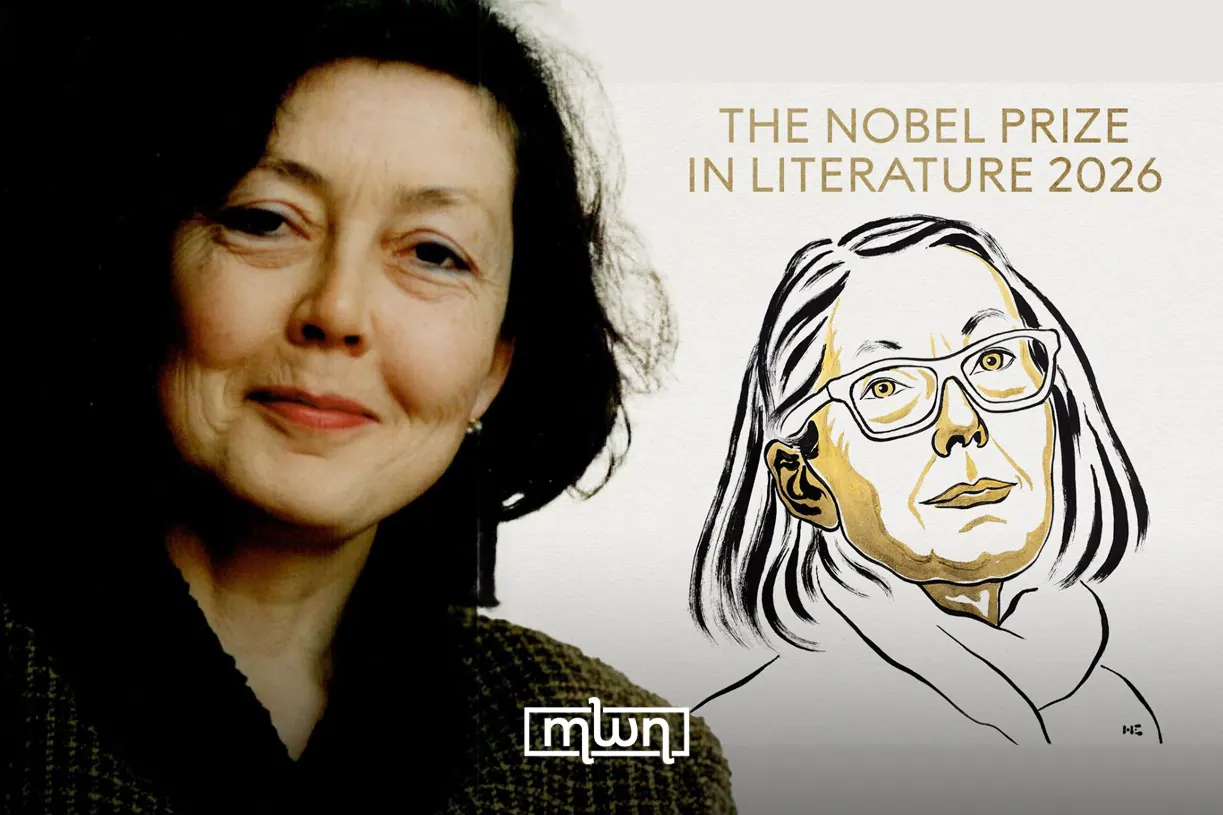
The Swedish Academy has recognized Anne Carson, a 76-year-old Canadian poet, essayist, classicist, and translator, with the 2026 Nobel Prize in Literature. The Academy selected Carson for her "bold and inventive oeuvre that, in playful dialogue with the classical tradition, has created new forms for contemporary literature." Carson's work has persistently challenged the boundaries between literary genres and brought the ancient world into conversation with contemporary life.
Born in Toronto in 1950, Carson developed an interest in classical literature while still at school. She studied classics at the University of Toronto, eventually earning a PhD in the field, and later taught classical languages and literature at universities in Canada and the United States. Her classical training became one of the defining features of her literary career, influencing her approach to literature and translation.
Carson's first major book, "Eros the Bittersweet", published in 1986, examined desire through ancient Greek literature and established a method that would characterize much of her later work. Her best-known work, "Autobiography of Red", published in 1998, reimagined the ancient Greek myth of Geryon as the story of a sensitive adolescent navigating love, heartbreak, and identity. This work blurred the line between an ancient myth, a contemporary coming-of-age story, and a work of experimental poetry.
Carson's contribution to contemporary literature also extends to translation. She has translated works by ancient Greek writers including Sappho, Euripides, Sophocles, and Aeschylus. Her 2002 "If Not, Winter: Fragments of Sappho" preserved the gaps and missing passages in Sappho's surviving poetry rather than attempting to conceal what has been lost over centuries. Her translations have questioned what it means to carry a work from one language and historical period into another.
Carson's work has consequently resisted easy placement within the traditional literary canon. Rather than choosing between poetry and criticism, or between the ancient and modern worlds, she has repeatedly treated those categories as material that can be rearranged. Her approach has earned her a reputation as one of the most distinctive figures in contemporary poetry. She has received numerous major literary honors, including the Griffin Poetry Prize and the T.S. Eliot Prize.
Carson's significance extends beyond her individual books. Her work has contributed to a wider rethinking of the literary canon by demonstrating that ancient texts can be neither museum pieces nor objects of purely academic study. They can instead become raw material for contemporary writers seeking new ways to approach subjects that remain remarkably persistent across centuries.
The Nobel Prize in Literature is awarded for an author's overall body of work rather than a single book. Carson will receive the Nobel medal and diploma and a prize of 12 million Swedish kronor, approximately $1.2 million, at the Nobel ceremony in Stockholm in December. According to Ingrid Carlberg, permanent secretary of the Swedish Academy, she informed Carson of the decision by telephone shortly before the public announcement.
Key points
- Anne Carson's work challenges traditional literary genres and boundaries.
- Carson's classical training and expertise in translation have significantly influenced her literary career.
- The Nobel Prize in Literature recognizes Carson's overall body of work, which has contributed to a wider rethinking of the literary canon.