The Angolan Journalists' Union (SJA) has denounced a new form of violence against journalists, involving blackmail through restriction of access to the job market. This development was announced during a conference on journalist safety, organized by the SJA with support from the European Union (EU). The event marked the International Day to End Impunity against Journalists, observed on November 2. According to Mário Maiato, president of the SJA's Ethics and Professional Deontology Council, the modus operandi in Angola has been lenient since the 1990s.
Maiato noted that while the current situation is considered "lenient," it does not mean Angola is a safe place for journalists to practice their profession. He observed a change in the way authorities act, with a shift from targeting individual journalists to targeting media companies. The safety of journalists is compromised through phone tapping, interference, and impediments to covering certain activities. Maiato stated that critical journalists are often unwanted and face persecution, threats, intimidation, detention, and even dismissal.
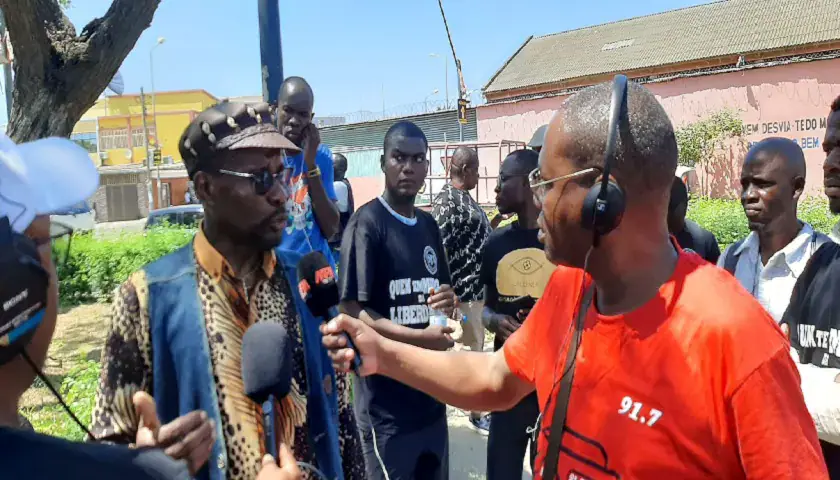
During the conference, several journalists shared their experiences of facing detention, confiscation of work materials, psychological and physical pressure, and impediments to their work. The SJA's secretary-general, Pedro Miguel, emphasized the importance of open dialogue between journalists, public authorities, security forces, and employers to ensure safe working conditions for journalists. The EU's chargé d'affaires in Angola, Jean-Ludovic de Lhoneux, highlighted the EU's support for independent journalism and the reinforcement of professional capacities in the media.
De Lhoneux stressed that maintaining public order during large gatherings can be complex, and threats can come from any side. He noted that the EU has financed independent journalism in the Southern African region, including Angola. According to de Lhoneux, ensuring journalist safety during democratic processes and manifestations is a shared responsibility between security forces and political parties.
The National Police spokesperson, sub-commissioner Mateus Rodrigues, emphasized the importance of journalists being properly identified during large events and communicating their presence in advance. Angola has been ranked 109th in the World Press Freedom Index, with a decline of nine places due to ongoing censorship and control over information. The country has the worst ranking among the Portuguese-speaking countries.
In contrast, Cape Verde occupies the 40th position, having dropped 10 places, but still ranks second among Portuguese-speaking countries, after Portugal. The Reporters Without Borders (RSF) report noted that Cape Verde provides a favorable work environment for journalists, but the government's direct appointment of state media directors is a concern. The RSF also highlighted the poor situation in Guinea-Bissau and Equatorial Guinea, where authorities control information and media outlets.
The RSF report also noted that the global press freedom situation is at its lowest level in 25 years, mainly due to the criminalization of journalism. The organization emphasized that protecting journalists is essential to protecting democracy. In Angola, the situation for journalists remains challenging, with ongoing intimidation, violence, and restrictions on their work. Key points include the need for greater protection and support for journalists, the importance of press freedom, and the role of the international community in promoting journalist safety.
Key points
- The Angolan Journalists' Union has denounced new forms of violence against journalists, including restriction of access to the job market and intimidation.
- The country's ranking in the World Press Freedom Index has declined, with ongoing concerns about censorship and control over information.
- The international community, including the European Union, has expressed support for independent journalism and journalist safety in Angola.