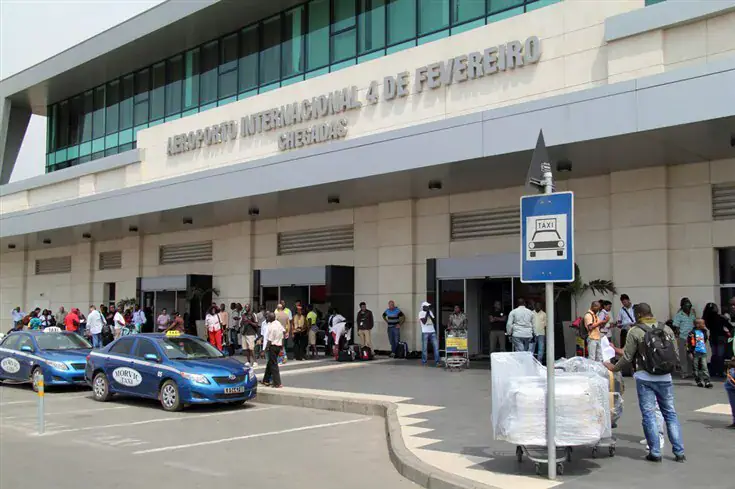
Angolan economist Samuel Candundo recently expressed his frustration with the inefficient use of public resources in the country. On September 17, Candundo traveled from Catumbela to Luanda with a layover at Lubango Airport on a SonAir flight. Upon arrival at Luanda's 4 de Fevereiro International Airport, he was surprised to find that the baggage claim process was similar to that of international flights, despite it being a domestic flight. Only four passengers disembarked with a few bags.
The baggage claim process involved activating the conveyor belt for approximately eight minutes, and then the passengers were required to pass their luggage through a scanner, similar to international flights. When Candundo questioned the customs officials about the necessity of this process, they replied that they were following superior orders. This response sparked Candundo's reflection on the efficiency of public resource utilization.
Candundo argues that maintaining such procedures has significant economic and operational costs. The use of the conveyor belt and scanner consumes electricity, requires maintenance, and depreciates over time. Additionally, the officials operating these equipment are paid with public funds, including taxes such as the Imposto sobre os Rendimentos do Trabalho (IRT) and Imposto sobre o Valor Acrescentado (IVA).
The economist questions the rationale behind such procedures, especially when they are not necessary. He wonders how many similar procedures are carried out daily in airports, public institutions, and state-owned enterprises across the country, and how many resources are wasted without adding value. Candundo emphasizes that producing more is not enough; Angola also needs to learn to produce better, administer better, and spend better.
Candundo highlights the need for a cultural shift in Angola, from a culture of mechanical compliance to one of responsible questioning and continuous improvement. He argues that "fulfilling superior orders" should not be the end of management, but rather a starting point for reflection on whether such procedures are still necessary. This mindset affects not only the competitiveness of businesses but also the efficiency of the state.
The economist suggests that small inefficiencies, when multiplied by thousands of procedures, hundreds of institutions, and 365 days a year, can have a significant economic impact. He advocates for a simple question to be asked before repeating any procedure: "For what purpose?" The answer should be clear, demonstrate the objective, and justify the resources consumed.
Candundo concludes that good administration involves not only creating procedures but also reviewing and eliminating those that no longer add value. He believes that this mindset can help transform small questions into better institutions and ultimately lead to greater productivity for Angola. The responsibility for this transformation lies not only with those in public office but also with every citizen.
Key points
- The inefficient use of public resources in Angola has significant economic and operational costs.
- The country's productivity can be improved by adopting a culture of responsible questioning and continuous improvement.
- Small inefficiencies can have a significant economic impact when multiplied by thousands of procedures and institutions.