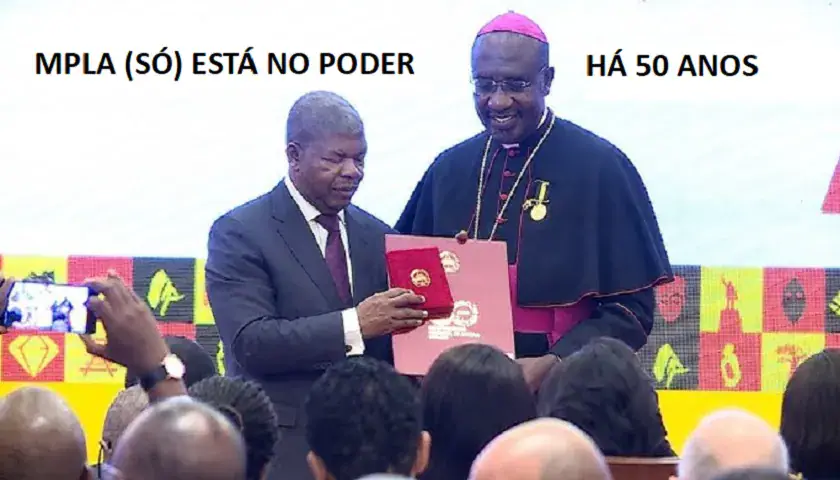
The Angolan Catholic Church has called for the establishment of a permanent dialogue table to promote national reconciliation and address the country's ongoing challenges. This recommendation was made during the 1st Archdiocesan Congress, which took place in the province of Lubango over the weekend. The congress, organized by the Justice and Peace Commission and the Integrity of Creation of the Episcopal Conference of Angola and São Tomé (CEAST), brought together participants from various dioceses.
According to the congress's conclusions and recommendations, the participants acknowledged that despite the end of the armed conflict, Angola still lacks effective reconciliation. They noted that the conflict's end did not lead to genuine reconciliation among all Angolans, with various forms of exclusion persisting, including political, economic, social, cultural, and ecological exclusion. The participants emphasized the need for a culture of dialogue and practical conflict resolution, particularly during electoral periods.
The congress also highlighted the issue of natural resource exploitation and its impact on the environment and society. The participants noted that mining activities have caused climate change and socio-environmental conflicts, which are challenges to national reconciliation, social justice, and social cohesion. They stressed that true peace is one that integrates everyone and is synonymous with development and social justice.
The participants recommended six commitments to be taken by political and social actors, religious organizations, and Christians and people of goodwill. These commitments include the establishment of a national pact of non-violence, the creation of a permanent dialogue table, and the promotion of activities to raise awareness and provide training on electoral matters. They also emphasized the need for transparent and verifiable electoral results.
The congress's recommendations come as Angola prepares for its next general elections in August 2027. The country's President, João Lourenço, recently inaugurated a memorial to victims of political conflicts, which was criticized by the leader of the opposition party, UNITA, Adalberto Costa Júnior. The church's call for reconciliation and dialogue is seen as a crucial step towards promoting peace and stability in the country.
In July 2025, the Angolan bishops noted that the country's 50 years of independence had been marked by "alarmingly" diverted public funds, "scandalous" capital flight, and "empty" speeches that contradicted the country's reality. The CEAST's pastoral message on Angola's 50 years of independence highlighted the achievements of independence but also pointed to the challenges that persist, including the need for reparations for past injustices.
The Angolan Catholic Church's recommendations for national reconciliation and dialogue are seen as a significant contribution to promoting peace and stability in the country. The church's emphasis on the need for genuine reconciliation, social justice, and environmental sustainability is expected to resonate with Angolans who are seeking a more equitable and prosperous future.
Key points
- The Angolan Catholic Church has called for a permanent dialogue table to promote national reconciliation.
- The church's recommendations aim to address ongoing social, economic, and environmental challenges.
- The country's next general elections are scheduled for August 2027.