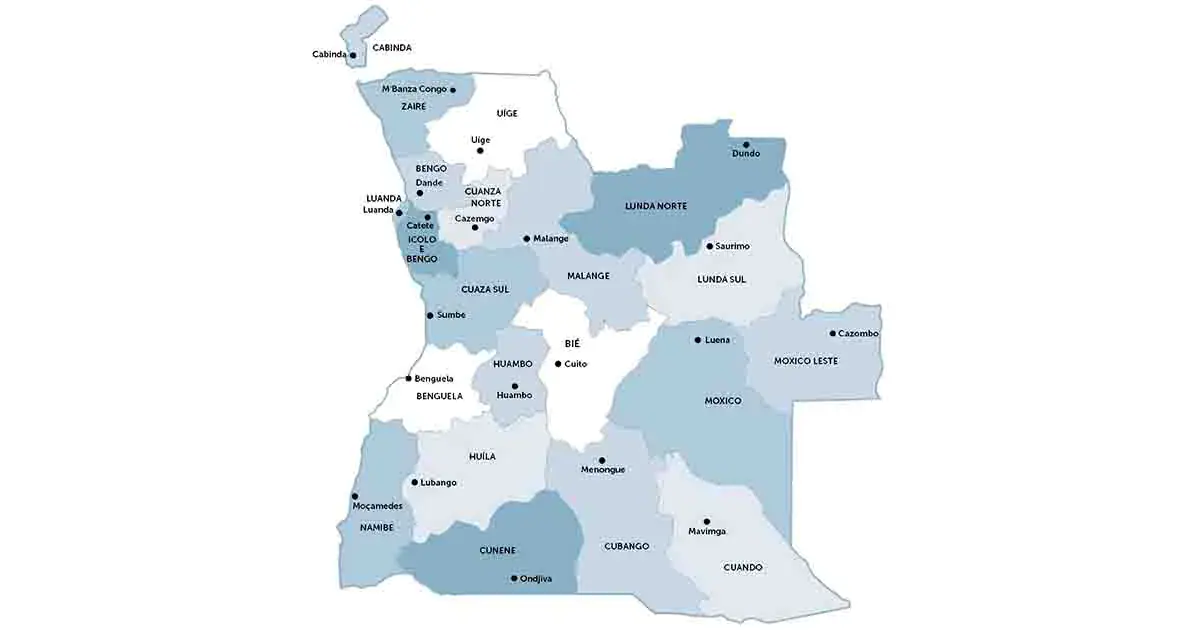
Angola's new territorial division, effective January 1, 2025, has increased the number of provinces from 18 to 21 and municipalities from 164 to 326. This reform aims to bring public administration closer to citizens and promote balanced territorial development. The new provinces are: Bengo, Benguela, Bié, Cabinda, Cuando Cubango, Cuanza-Norte, Cuanza-Sul, Cunene, Huambo, Huíla, Icolo e Bengo, Luanda, Lunda-Norte, Lunda-Sul, Malanje, Moxico, Moxico Leste, Namibe, Uíge, and Zaire.
The new territorial division is established by Law No. 14/24, of September 5, 2024. The law reorganizes Angola's administrative divisions, with 326 municipalities and 378 communes. This change modifies the territorial limits of different administrative units, requiring adaptations in the functioning of local state organs. However, the existence of new provinces does not automatically translate to better economic and social conditions.
The creation of the 21 provinces is part of a reform aimed at responding to territorial organization needs, demographic growth, and bringing public services closer to communities. The legislation sets objectives to reduce regional asymmetries, improve administrative efficiency, and promote harmonious development. These purposes are relevant in a country characterized by significant differences between urban centers and rural communities.
In some localities, accessing administrative services requires citizens to travel and incur expenses. A more proximate administrative structure may help reduce these difficulties, provided it has qualified personnel, adequate facilities, and financial resources. However, the increase in public institutions also implies additional management and financing responsibilities.
The success of the reform should not be evaluated solely by the installation of new administrations but by the results achieved in service delivery. The development of the 21 provinces will depend on the ability of institutions to transform the administrative reform into more accessible public services, economic opportunities, adequate infrastructure, and efficient local management.
The new territorial division raises a fundamental question: will the creation of new provinces and municipalities translate into better living conditions for the population? The reform's impact on education, health, employment, and citizens' quality of life will be crucial in evaluating its success.
Ultimately, the reform's effectiveness will depend on the availability of resources and the organization of territorial administration. The improvement of public services will be critical in determining whether the creation of new provinces and municipalities achieves its intended objectives.
Key points
- The new territorial division aims to reduce regional asymmetries and promote harmonious development.
- The success of the reform depends on the ability of institutions to deliver more accessible public services and economic opportunities.
- The impact of the reform on education, health, employment, and citizens' quality of life will be crucial in evaluating its success.
Reporting sources
- 21 províncias de Angola: 5 desafios da nova divisão · Hold On Angola