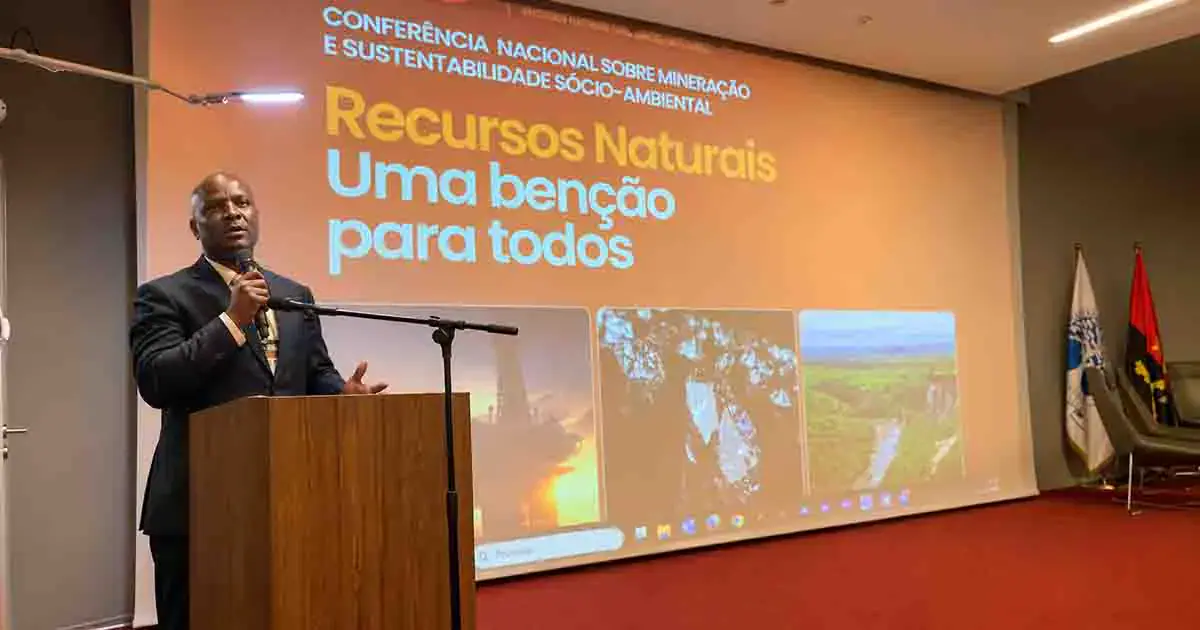
The director of the Legal Office at Angola's National Mineral Resources Agency (ANRM), Domingos Francisco João, has raised concerns about the environmental and public health risks linked to the use of mercury and cyanide in gold mining in Angola. He emphasized the need for stronger regulation and oversight of mining activities. This warning was given at the National Conference on Mining and Socio-Environmental Sustainability, held on November 17.
The conference, organized by the Episcopal Commission for Justice and Peace and Integrity of Creation (CEJPIC-CEAST) and the Tchota Platform, focused on the legal framework of the mining sector. Domingos Francisco João highlighted that the diversification of extractive activities requires a more comprehensive regulatory approach, considering the exploitation of various mineral resources and their environmental impacts. Historically, Angola's mining sector has been associated with diamond extraction.
However, the growing interest in other minerals has presented new challenges to regulatory authorities. The director cited the artisanal extraction of gold, copper, and quartz as examples, stressing the need to adapt control mechanisms to the characteristics of each activity. He specifically pointed out the use of mercury and cyanide as major environmental concerns related to gold extraction, citing risks to the environment and human health.
The use of these substances without proper safety conditions and oversight can have detrimental effects, particularly in areas where artisanal mining is prevalent. Domingos Francisco João noted that there are indications of possible harmful effects associated with the use of chemicals in mining areas. He advocated for a deeper assessment of the situation and stronger collaboration between authorities responsible for mineral resources, environment, and public health.
The ANRM director also highlighted the challenges related to regulating small-scale mining activities, particularly regarding environmental requirements for operators. He explained that Angola's Mining Code was created to consolidate previously dispersed legal provisions into a single instrument. The evolution of the sector and diversification of mined minerals justify continuous reflection on the adequacy of existing regulations.
Domingos Francisco João discussed the participation of small companies and cooperatives in mining activities, citing challenges related to oversight, environmental protection, and compliance with legal requirements. In the context of diversification, he mentioned measures aimed at promoting the transformation of minerals within the country, rather than exporting them in their raw state.
The ANRM director emphasized the need for updated regulations to address the changing landscape of Angola's mining sector. The country's authorities must balance the need for economic growth with environmental and health concerns. Effective regulation and oversight are crucial to preventing damage to communities and ensuring sustainable mining practices.
Key points
- ANRM warns of environmental and health risks associated with mercury and cyanide use in Angola's gold mining.
- The need for stronger regulation and oversight of mining activities in Angola.
- Effective regulation and oversight are crucial to preventing damage to communities and ensuring sustainable mining practices.
Reporting sources
- ANRM alerta para riscos ambientais da exploração de ouro em Angola · Hold On Angola