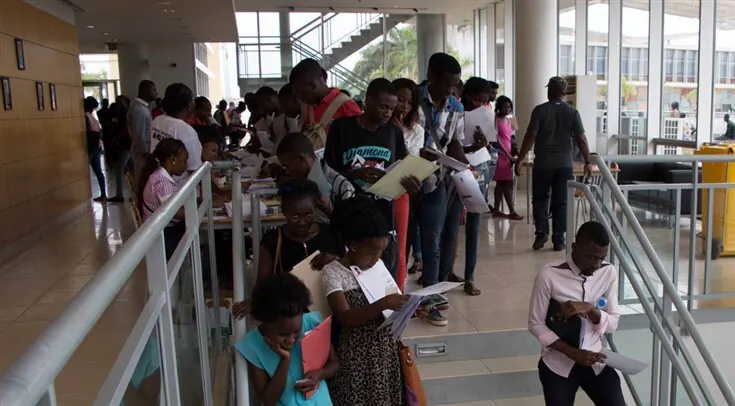
The 2026/2027 academic year in Angola's higher education sector is set to commence on Friday, October 2, in the province of Huambo. According to the Ministry of Higher Education, Science, Technology, and Innovation (MESCTI), over 300,000 new students are enrolled to attend institutions of higher learning this year. The official opening ceremony will be attended by Minister of State and Chief of the President's Civil House, Dionísio da Fonseca. The event is themed "Consolidating quality, transforming knowledge, and serving Angola".
The MESCTI reports that Angola currently has 12,340 national teachers, a number that is still insufficient to meet the needs of the higher education subsystem. To address the shortage, the government has been recruiting foreign teachers, particularly from Cuba. In the past two years, public competitions have been held to admit new teachers, but the sector still faces a deficit of 2,500 educators. The ministry is working to improve the quality of education and increase the number of teachers.
Angola has a total of 106 higher education institutions, comprising 31 public and 75 private institutions. The national network includes 22 universities, one academy of high studies, 76 polytechnic institutes, and seven technical schools. Notably, the provinces of Cuando and Moxico Leste do not have university centers, resulting from the new Political-Administrative Division. The MESCTI is working to expand access to higher education across the country.
Despite the official opening of the 2026/2027 academic year on October 2, classes will begin on October 5 and end on July 30, 2027. The academic calendar consists of 40 weeks of classes, divided into two semesters, with 19 weeks in the first semester and 21 weeks in the second semester. The MESCTI has put in place measures to ensure a smooth academic year.
The higher education sector in Angola faces significant challenges, including a shortage of teachers and infrastructure. However, the government is committed to improving the quality of education and increasing access to higher education. The MESCTI is working to address the teacher shortage by recruiting foreign teachers and holding public competitions.
The opening of the 2026/2027 academic year is a significant milestone for Angola's higher education sector. With over 300,000 new students enrolled, the sector is expected to play a critical role in shaping the country's future. The government is working to ensure that the sector provides quality education and serves the needs of the country.
As the academic year commences, students and teachers are expected to work together to achieve the goals of the higher education sector. The MESCTI is committed to providing support to institutions and students to ensure a successful academic year. The sector's progress will be closely monitored, and efforts will be made to address any challenges that arise.
Key points
- The 2026/2027 academic year in Angola's higher education sector begins with over 300,000 new students enrolled.
- The sector faces a shortage of 2,500 teachers, which the government is working to address through recruitment and public competitions.
- Angola has 106 higher education institutions, with 31 public and 75 private institutions.