Angola's education system has undergone significant changes since gaining independence from Portugal in 1975. The country's first education reform aimed to provide equal opportunities for all citizens, with a focus on access and continuity of studies. The government made education free, including materials and uniforms, leading to an increase in enrollment. By 1977, the number of students enrolled in primary school had risen to 1,026,291, up from 512,942 in 1973.
Despite these efforts, the education system faced significant challenges. The country's economic crisis and civil war exacerbated poverty, displacement, and the need for children to contribute to their families' subsistence. As a result, many children dropped out of school or failed to complete their studies. By the 1980s, it was reported that only 142 out of every 1,000 students who started primary school completed it without repeating any grades.
In 2001, the government introduced a new education reform aimed at expanding access, improving teaching and learning, and promoting equity. The reform led to the construction of nearly 18,000 new classrooms and an increase in the compulsory education age from four to six years. As a result, the number of students completing primary school improved significantly, with 911 out of every 1,000 students finishing their studies.
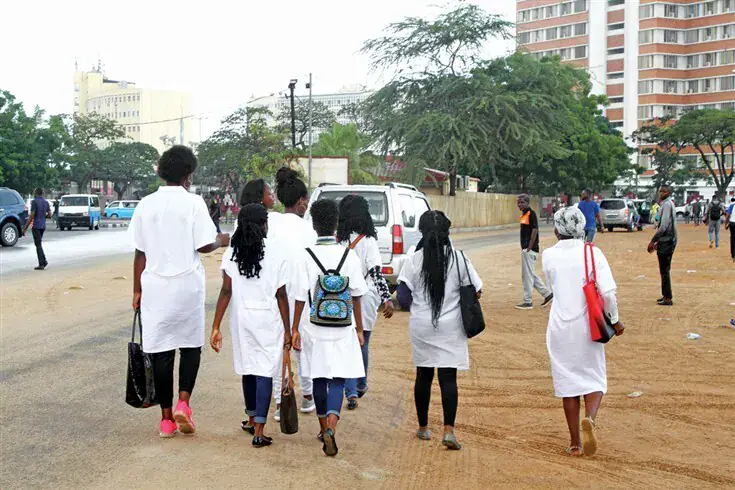
However, despite these advances, challenges persist. Many children still have to walk long distances to attend school, and some families are required to pay unofficial fees, undermining the principle of free education. According to Francisco Caloia Alfredo, these issues perpetuate inequality and hinder the realization of the government's education goals.
To understand the evolution of Angola's education system, it is essential to consider the concepts of democratization of education, as proposed by Antoine Prost and Georges Felouzis. They argue that democratization involves not only expanding access but also reducing inequalities in education outcomes and experiences. Angola's education system has made progress in expanding access, but more work is needed to address persistent inequalities.
The Angolan government has taken steps to address these challenges, including increasing investment in education infrastructure and revising the curriculum to make it more relevant and inclusive. However, more needs to be done to ensure that all children have access to quality education, particularly in rural and disadvantaged areas.
Fifty-one years after independence, Angola's education system still faces significant challenges. While progress has been made in expanding access and improving education outcomes, persistent inequalities and challenges remain. Addressing these issues will require sustained investment and commitment from the government and other stakeholders to ensure that all Angolan children have access to quality education.
Key points
- Angola's education system has made progress since independence, but still faces challenges in providing equal access to quality education for all.
Reporting sources
- 51 anos depois, a escola angolana é para todos? · novojornal.co.ao