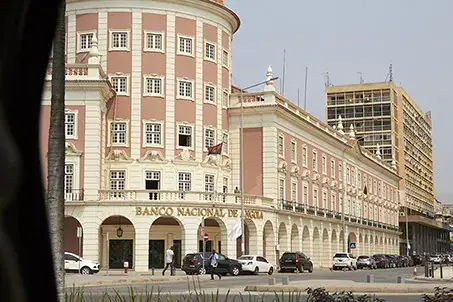
The Banco Nacional de Angola (BNA) has reduced its key interest rate, known as the Taxa BNA, from 14.75% to 14%, citing a slowdown in inflation. The decision was made by the BNA's Monetary Policy Committee (CPM) during a two-day meeting in Saurimo, Lunda Sul province. The committee also lowered the Permanent Liquidity Facility rate from 15.75% to 15% and the Permanent Liquidity Absorption Facility rate from 13.75% to 13%.
According to the BNA, the inflation rate slowed to 8.16% in October 2026, down from 8.43% in September. This decrease was observed across most of the country, with 16 provinces recording single-digit inflation rates. The lowest inflation rates were recorded in Cuanza Norte (5.97%), Cuanza Sul (6.35%), Lunda Norte (6.38%), and Huambo (6.40%). Only Cubango (12.47%) and Cabinda (10.31%) had inflation rates above 10%.
The BNA attributed the slowdown in inflation to favorable macroeconomic prospects in the short and medium term. The central bank also noted that the education sector was the only category to record a double-digit inflation rate, at 15.82%. The stock of credit to the economy in national currency grew 4.60% in October, equivalent to 349.14 billion kwanzas, accumulating a 12.64% year-on-year expansion.
The BNA reported that the monetary base in kwanzas contracted 5.63% in October, while the M2 aggregate increased by 1.30%. In the external sector, Angola's trade balance recorded a cumulative surplus of $18.04 billion up to October, an increase of $5.33 billion compared to the same period in 2025. This was driven by exports, which reached $33.76 billion, exceeding imports of $15.72 billion.
The surge in imports was largely due to the purchase of fuel from abroad, which increased by 97.50%. The country's international reserves stood at $15.15 billion at the end of October, providing coverage for 6.10 months of imports of goods and services. The BNA's decision to cut interest rates is expected to stimulate economic growth and maintain stability in the financial markets.
The CPM will meet again on January 14-15, 2027, in Luanda to review the country's economic situation and make further decisions on monetary policy. The BNA's move to cut interest rates follows a similar trend in other countries, which have also reduced their interest rates in response to slowing inflation and economic growth.
The reduction in interest rates is expected to have a positive impact on Angola's economy, which has been recovering from a recession in 2020. The country's economic growth is expected to pick up in the coming months, driven by increased investment and consumption. The BNA's decision to cut interest rates is a welcome move for businesses and consumers, who are expected to benefit from lower borrowing costs.
Key points
- The BNA cut its key interest rate to 14% from 14.75% amid a slowdown in inflation to 8.16%.
- The country's international reserves stood at $15.15 billion at the end of October, providing coverage for 6.10 months of imports.
- The BNA's Monetary Policy Committee will meet again on January 14-15, 2027, to review the country's economic situation.
Reporting sources
- BNA corta taxa de juro directora para 14% à boleia... · novojornal.co.ao